

Why Are My Wiper Blades Noisy? Causes, Fixes, and Prevention Tips?
Dec 18,2025
That sharp squeak every time I turn on my wipers drives me crazy. It breaks focus, feels unsafe, and always seems to happen in the worst weather.
Wiper blades become noisy because of dry wiping, dirty glass, hardened rubber, uneven pressure, or surface coatings. Most noise issues come from friction problems and can be fixed with cleaning, adjustment, or timely replacement.

I have dealt with wiper noise for years, both on my own cars and through customer feedback. Once you know where the sound comes from, the fix becomes simple and predictable.
What Common Causes Make Windshield Wipers Noisy in Any Weather?
I hear customers say their wipers scream even in rain. That sound always means friction is out of control.
The most common causes of noisy wipers are dry glass, dirt buildup, hardened rubber, uneven arm pressure, and windshield coatings that change friction across the glass surface.
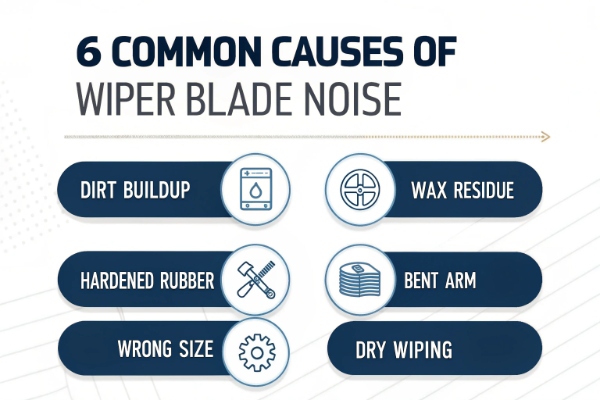
Dry wiping and washer fluid problems
I see this mistake every day. Drivers turn on wipers before using washer fluid. Rubber drags across dry glass and starts to squeal. Even light mist is not enough lubrication. Low washer fluid makes this worse.
Contamination on glass and blades
Road film, oil vapor, pollen, and dust stick to the windshield. The rubber edge grabs and releases in tiny steps. This creates chatter and squeaks. Dirty blades repeat the problem on every pass.
Rubber aging and weather damage
Sun, heat, cold, and salt change rubber fast. Old rubber turns hard and loses flexibility. When that happens, it skips instead of gliding. Noise is the first warning sign.
Pressure and alignment issues
A bent wiper arm or weak spring causes uneven pressure. One part of the blade presses harder than the rest. This creates vibration across the wipe path.
Coatings and wax residue
Wax, polish, and water repellent coatings are uneven. The blade grips some areas and slips on others. Light rain makes this problem louder.
Quick reference table
| Cause | Typical Sound | Common Fix |
|---|---|---|
| Dry glass | High-pitch squeak | Use washer fluid |
| Dirty glass | Chatter | Clean glass |
| Hardened rubber | Skipping noise | Replace blade |
| Bent arm | Rhythmic chatter | Adjust arm |
| Wax residue | Screech in light rain | Strip coating |
How Can You Diagnose Whether the Noise Is From the Blades, Arm, or Glass Surface?
Before I replace anything, I always locate the real source. Guessing wastes time and money.
You can diagnose wiper noise by checking blade condition, testing arm pressure, cleaning the glass, and listening for mechanical sounds separate from rubber-on-glass contact.
Step one: inspect the rubber edge
I lift the blade and run my finger along the rubber. Cracks, flat spots, or stiffness tell me the blade is done. If the edge feels smooth and soft, I move on.
Step two: clean and retest
I clean the windshield with glass cleaner and wipe the blade with alcohol. Then I test again. If the noise stops, dirt was the cause.
Step three: check arm pressure and angle
I watch the blade while it moves. If it chatters in one direction only, the blade may not flip correctly. That points to arm angle or twist issues.
Step four: listen for mechanical noise
Clicking or scraping sounds often come from loose nuts, worn linkage joints, or cowl contact. These noises happen even with the blade lifted off the glass.
Step five: feel the glass surface
I lightly run my hand across the windshield. Rough spots, water stains, or fine scratches can catch the rubber edge. New blades will not fix this alone.
Diagnostic checklist
| Test | What I Look For | What It Means |
|---|---|---|
| Blade feel | Hard or cracked rubber | Replace blade |
| Clean test | Noise disappears | Dirt issue |
| Direction change | Noise mid-stroke | Angle problem |
| Lifted blade test | Noise remains | Mechanical issue |
| Glass texture | Rough or gritty | Glass treatment needed |
What Simple Cleaning and Maintenance Steps Can Eliminate Wiper Noise Fast?
Most noise problems I solve never need new parts. They need basic care.
Cleaning the windshield, wiping the blade edge, topping washer fluid, and avoiding dry wiping can remove most wiper noise in minutes.
Cleaning the windshield correctly
I start with a proper glass cleaner. I avoid household detergents that leave residue. I wipe until the glass feels smooth, not slick.
Cleaning the rubber edge
I use a clean cloth with warm soapy water or rubbing alcohol. I wipe until no black residue appears. That residue is old rubber and road grime.
Washer fluid habits
I always fill washer fluid before winter and summer. I spray first, then wipe. This one habit prevents most squeaking issues.
Regular inspection routine
Every month, I check blade flexibility and edge shape. It takes less than a minute and prevents noise surprises in heavy rain.
What not to do
I never apply oil or grease to rubber. That damages the blade. I also avoid cheap glass wax that leaves uneven coatings.
Maintenance frequency table
| Task | Frequency |
|---|---|
| Clean windshield | Every 2–4 weeks |
| Wipe blade edge | Monthly |
| Check washer fluid | Weekly |
| Inspect rubber | Monthly |
| Replace blades | 6–12 months |
When Should You Adjust, Realign, or Replace Your Wiper Blades to Stop Noise?
I replace blades only when adjustment no longer works. Timing matters.
You should adjust wipers when noise happens mid-stroke, realign arms if pressure is uneven, and replace blades when rubber hardens, cracks, or keeps chattering after cleaning.

When adjustment is enough
If the blade squeaks only in one direction, I check the arm angle. A small twist can help the blade flip correctly. This often stops mid-stroke noise.
When realignment is needed
If part of the blade lifts off the glass, the arm may be bent. I gently bend it back to restore even pressure. This works when springs are still strong.
When replacement is the only fix
Once rubber hardens, cleaning will not help. Skipping, streaking, and noise together mean replacement time. I tell customers not to wait.
Replacement timing rules
In hot climates, I replace blades every six months. In mild areas, one year is safe. Marine and coastal use needs more frequent changes due to salt.
Cost versus risk
A new blade costs little. Poor visibility costs much more. Noise is an early warning, not a minor issue.
Are There Special Products or Lubricants That Help Keep Wipers Quiet?
Many people ask me about sprays and treatments. Most are misunderstood.
Glass cleaners, coating removers, and mild rubber conditioners help reduce noise, but oils and grease should never be used on wiper blades.

I use alcohol-based cleaners for blades. For glass, I sometimes use a polish to remove water spots and micro-pitting. This reduces friction changes.
Water repellent caution
Some repellents improve visibility but increase chatter. I only recommend them when applied evenly and maintained often.
Rubber conditioners
Light rubber conditioners can restore flexibility for a short time. They do not replace worn blades. I treat them as temporary fixes… For lasting quiet performance, Topex T-100 Hybrid uses premium materials that resist hardening.
Products to avoid
I never recommend silicone spray, engine oil, or grease. They attract dirt and destroy rubber over time.
Product decision table
| Product Type | Short-Term Help | Long-Term Safe |
|---|---|---|
| Glass cleaner | Yes | Yes |
| Alcohol wipe | Yes | Yes |
| Rubber conditioner | Limited | No |
| Water repellent | Depends | Depends |
| Oil or grease | No | No |
Conclusion
Wiper noise is a warning sign. I fix it by cleaning first, adjusting next, and replacing only when needed. Quiet wipers mean clear vision and safer driving.
--- END ---
Related Blogs


