
Conventional vs. Beam vs. Hybrid Wiper Blades: Which One Belongs on Your Car
Jul 18, 2026
Walk into any auto parts store and the wiper blade aisle is overwhelming. Conventional. Beam. Hybrid. Silicone. Winter. Rear. The names do not tell you much about how they actually perform on the road.
The differences matter. The wrong blade chatters across the windshield, leaves streaks in the rain, or freezes into a useless slab in a snowstorm. TOPEX manufactures all three main types of wiper blades for wholesale buyers worldwide. This guide explains what sets them apart and which one fits which driving situation.
Three Types of Wiper Blades
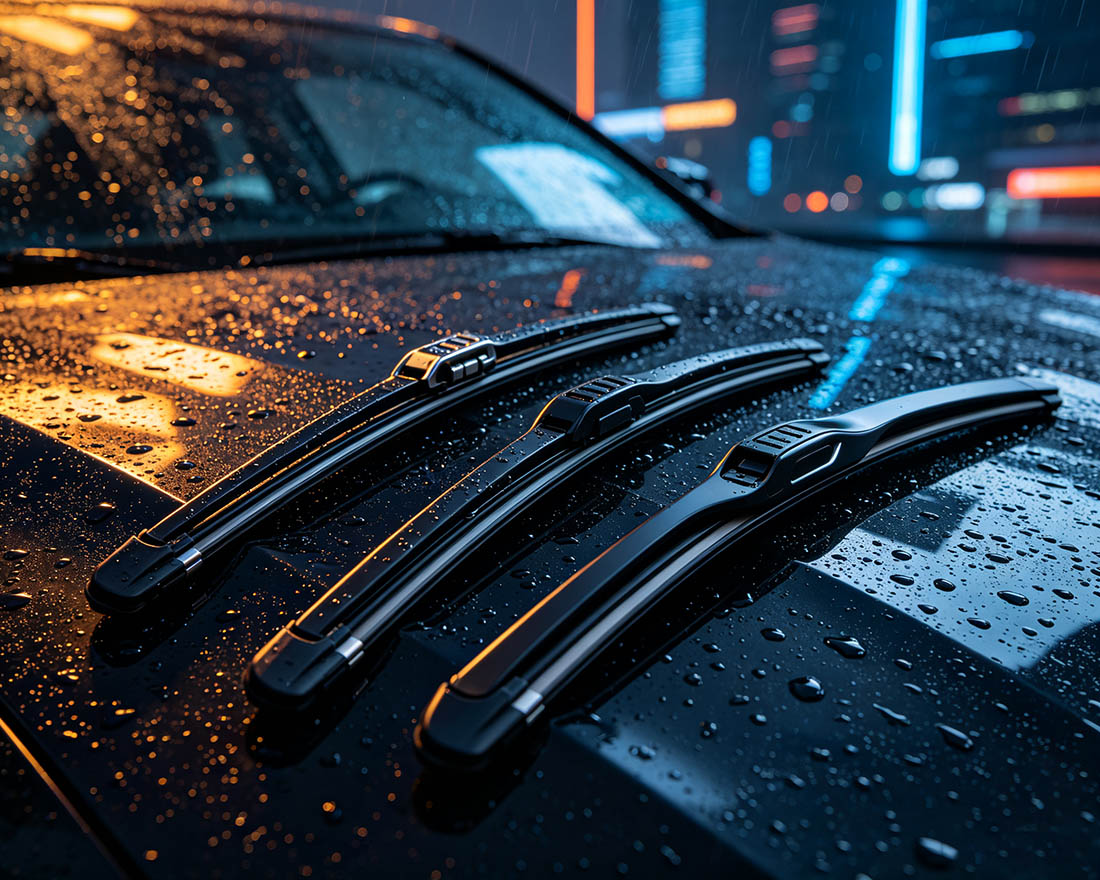
Conventional blades have a metal frame with multiple pressure points. Beam blades have a single curved spring steel strip with no external frame. Hybrid blades combine a beam-style internal spring with a partial external frame.
Each type costs differently. Each performs differently. Understanding the trade-offs saves you from buying the wrong type for your climate.
01
Conventional Wiper Blades: How They Work and Where They Still Fit
A conventional wiper blade has a metal bridge frame that connects to the rubber blade at four to eight pressure points. Springs in the frame distribute pressure across the windshield.
These blades have been around for decades. They are the least expensive to manufacture. They work well on older vehicles with flatter windshields.
The downside is the exposed metal frame. In freezing weather, ice and snow pack into the joints between the frame and the blade. The frame locks up. The blade stops conforming to the glass. The wiper arm moves but the rubber barely touches the windshield.
Conventional blades still make sense for budget-conscious buyers in mild climates. They also fit older cars where beam blades in the right connector size are hard to find.
02
Beam Wiper Blades: Why They Took Over the Market
A beam blade has no external metal frame. A single curved strip of spring steel runs the full length of the blade. The rubber element is bonded directly to the steel.
The spring steel distributes pressure evenly across the entire blade. There are no joints. No gaps. No spots with too much or too little pressure.
This design gives three concrete advantages. One, the blade conforms tightly to curved modern windshields. Two, there is no frame to pack with ice, so beam blades perform better in winter. Three, the low profile reduces wind lift at highway speeds. The blade stays planted on the glass instead of lifting off at 70 miles per hour.
Beam blades cost more than conventional blades. Most drivers find the upgrade worth it for the quieter, cleaner wipe and longer service life.
03
Hybrid Wiper Blades: The Best of Both Worlds
A hybrid blade combines the internal spring steel beam of a beam blade with a partial external shell. The shell is typically aerodynamic plastic that wraps around the spring steel.
The idea is to get the even pressure distribution of a beam blade plus the structural rigidity and wind-cheating shape of an aerodynamic cover. The external shell also protects the internal spring from direct ice buildup.
Hybrid blades tend to be the most expensive of the three types. They are marketed as premium all-weather blades. For drivers in regions with extreme temperature swings, heavy rain, and regular snow, the extra cost can pay off in consistent performance.
Rain, Snow, and Highway Performance
Heavy Rain
Beam blades win. The even pressure distribution leaves fewer streaks. Hybrid blades are a close second.
Snow and Ice
Beam and hybrid blades both outperform conventional blades. The sealed design prevents ice from jamming the mechanism. Conventional blades can freeze solid.
Highway Driving
Beam blades win again. The low-profile aerodynamic shape stays pressed against the glass at high speeds. Conventional blades can lift and chatter. Hybrid blades do well but are heavier, which can reduce contact pressure slightly at very high speeds.
Value for Money
Conventional blades win on upfront cost. Beam blades win on cost per mile of service life. Hybrid blades are the premium option for drivers who want maximum performance and are willing to pay for it.
What the Frame Material and Rubber Compound Actually Do
The frame material determines how the blade handles ice and corrosion. Galvanized steel resists rust. Powder-coated steel adds a layer of protection. Stainless steel clips and joints last longest in coastal and winter-salt environments.
The rubber compound determines how the blade wipes. Natural rubber gives a smooth, quiet wipe and handles temperature changes well. Synthetic rubber blends resist UV and ozone degradation better. Silicone rubber lasts the longest, repels water, and handles extreme heat and cold. A silicone blade can last twice as long as a natural rubber blade in harsh conditions.
For wholesale buyers and fleet operators, rubber compound choice directly affects replacement intervals and total cost of ownership over hundreds or thousands of vehicles.
How to Match the Blade Type to Your Driving Conditions
Mild climate with mostly light rain. Conventional blades do the job at the lowest cost.
Mixed weather with occasional snow and highway driving. Beam blades are the sweet spot of performance and price.
Harsh winters with heavy snow and ice. Hybrid or beam blades with a sealed frame. Look for winter-specific blades with a rubber boot that covers the entire mechanism.
Coastal regions with salt air and intense sun. Silicone beam blades. The silicone compound resists UV cracking and salt corrosion better than natural rubber.
Fleet vehicles that run high mileage year-round. Silicone hybrid or beam blades. The longer service life reduces maintenance stops.
Signs It Is Time to Replace Your Wipers
Streaking
The blade leaves lines of water on the glass. This means the rubber edge has worn unevenly or hardened.
Chattering
The blade skips and jumps across the windshield instead of gliding smoothly. The rubber has lost flexibility or the frame is bent.
Splitting
Visible cracks or tears in the rubber edge. Immediate replacement.
Smearing
A hazy film left behind after the blade passes. Oil, road grime, or rubber breakdown. Clean the blade first. If the problem persists, replace it.
TOPEX Wiper Blade Solutions for Wholesale Buyers
TOPEX manufactures the full range of wiper blade types for wholesale distributors, auto parts retailers, and fleet operators.
Conventional metal-frame blades for budget markets. Beam blades in one-piece spoiler and flat styles for modern vehicles. Hybrid blades for all-weather performance. Silicone blades for extended service life. Snow blades with sealed rubber boots for winter conditions.
Custom colors, private labeling, and OEM packaging are available. Every blade is tested for wipe quality, noise level, and durability before shipping.
Frequently Asked Questions
Check your owner’s manual or use an online wiper blade finder tool. Enter your vehicle make, model, and year. The tool tells you the correct blade length and connector type. Most modern cars accept beam blades. Older cars may need conventional blades with the specific connector style.
For most drivers, yes. Silicone blades last roughly twice as long as natural rubber blades and perform better in extreme heat and cold. If you replace your blades once a year with rubber, silicone may let you go 18 to 24 months between replacements.
Usually yes, as long as the connector matches. Some older vehicles use unique connector styles that limit beam blade options. Check the connector type before ordering.
Chatter comes from three main causes: worn or hardened rubber, a bent wiper arm that changes the contact angle, or buildup of wax and road grime on the windshield. Clean the glass thoroughly and check the wiper arm angle before replacing the blades.
Every 6 to 12 months for natural rubber blades. Every 12 to 18 months for silicone blades. Replace them at the start of winter and again in spring if you drive in harsh conditions.
TOPEX manufactures conventional, beam, hybrid, and silicone wiper blades for wholesale and OEM buyers. Contact us for bulk pricing, custom branding, and private label options.

--- END ---


