
Silicone vs. Rubber Wiper Blades: Which Material Lasts Longer and Wipes Better
Jul 19, 2026
Most people replace their wiper blades when they start streaking, never thinking about what the blade is actually made of. That is a mistake.
The rubber compound inside the blade determines how long it lasts, how quietly it wipes, and whether it survives a summer in Arizona or a winter in Minnesota.
TOPEX manufactures wiper blades in natural rubber, synthetic rubber, and silicone for wholesale buyers worldwide. This guide explains the material differences so you know what you are paying for.
Not All Wiper Rubber Is the Same: Natural, Synthetic, and Silicone
Wiper blades use three main types of rubber compound. Natural rubber. Synthetic rubber blends. Silicone.
Each one costs differently. Each one performs differently in heat, cold, and direct sun. Each one has a different service life. The choice affects how often blades need replacement on every vehicle in your fleet or on your store shelf.
Natural Rubber: Why It Has Been the Standard for Decades
Natural rubber comes from latex, the sap of rubber trees. It is flexible. It conforms well to curved glass. It produces a smooth, quiet wipe when new.
Natural rubber is also the least expensive compound to manufacture. That is why most budget and mid-range wiper blades use it.
The trade-off is durability. Natural rubber breaks down under UV light. Sun exposure hardens the rubber edge. Ozone in the air causes microscopic cracks. After 6 to 12 months of exposure, a natural rubber blade loses flexibility and starts streaking.
In moderate climates with regular cloud cover, natural rubber blades perform fine and cost the least. In sunny or extreme climates, they degrade faster and need more frequent replacement.
Synthetic Rubber Blends: Better UV and Ozone Resistance
Synthetic rubber blends mix natural rubber with petroleum-based polymers like EPDM (ethylene propylene diene monomer). The synthetic component resists UV radiation and ozone better than pure natural rubber.
The result is a blade that lasts 20 to 40 percent longer than a pure natural rubber blade under the same conditions. The wipe quality and noise level are comparable to natural rubber when new. The synthetic blend holds its flexibility longer as it ages.
Synthetic rubber blades cost more than natural rubber but less than silicone. They are the middle ground. Better durability without the full price jump to silicone.
Silicone: What Makes It Last Twice as Long
Silicone is a synthetic polymer with a completely different molecular structure from natural or synthetic rubber. The silicon-oxygen backbone is naturally resistant to UV light, ozone, and temperature extremes.
- Longevity: A silicone blade lasts roughly twice as long as a natural rubber blade under the same conditions. Twelve to 18 months instead of 6 to 12.
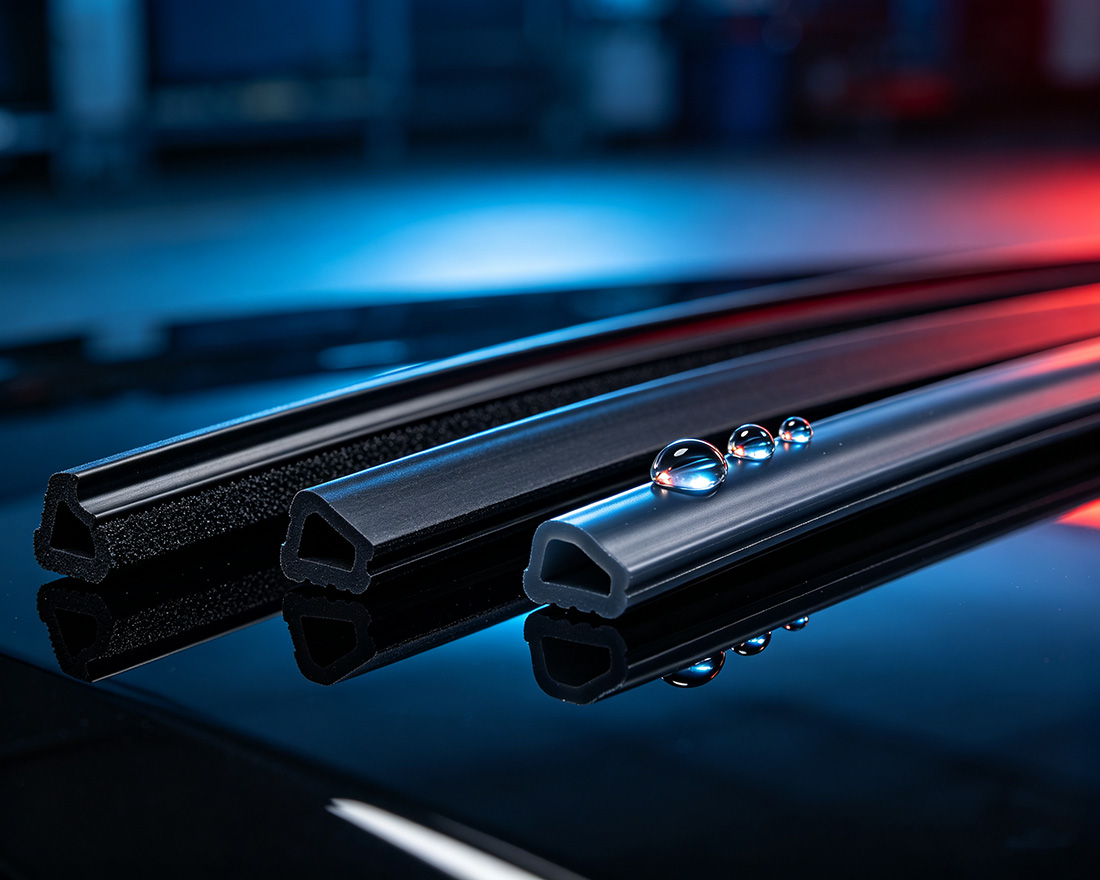
- Water Repellency: Silicone repels water naturally. As the blade wipes, it leaves a microscopic hydrophobic film on the glass. Water beads up and rolls off between wiper passes. Natural rubber does not do this.
- Temperature Resistance: Silicone handles extreme temperatures better. It stays flexible at minus 40 degrees Fahrenheit and does not soften or deform at 120 degrees Fahrenheit. Natural rubber stiffens in extreme cold and softens in extreme heat.
The downside is cost. A silicone wiper blade costs 50 to 100 percent more than a natural rubber blade of the same size and type. Over the life of the blade, the cost per month is often lower because you replace it half as often.
Wiper Blade Coatings: Graphite, Teflon, and Silicone
Most wiper blades have a coating on the rubber edge. The coating reduces friction between the rubber and the glass. Less friction means a quieter wipe and less wear on the rubber.
Graphite
Graphite is the most common coating. It is a dry lubricant applied as a powder or bonded layer. It works well initially but wears off after a few months of use. Once the graphite is gone, the bare rubber contacts the glass directly.
Teflon (PTFE)
Teflon (PTFE) coatings last longer than graphite. The fluoropolymer bonds more durably to the rubber surface. Teflon-coated blades stay quieter for more of their service life than graphite-coated blades.
Silicone
Silicone coatings sit between graphite and Teflon in durability. They also add water repellency. A silicone-coated natural rubber blade is not the same as a full silicone blade. The coating wears off, revealing the rubber underneath. A full silicone blade performs consistently because the entire compound, not just the surface, is silicone.
Cost Over Time: Rubber vs. Silicone Across Three Years
Natural Rubber
Costs about $8 to $15 per blade at retail. Replace it twice a year. Over three years, that is six blades.
Synthetic Rubber
Costs about $12 to $20. Replace it every 9 to 12 months. Over three years, that is three to four blades.
Silicone Blade
Costs about $18 to $30. Replace it every 12 to 18 months. Over three years, that is two to three blades.
The math is close. The deciding factor is not just cost. It is the performance during those months between replacements. Silicone blades wipe better in months 6 through 12 than natural rubber blades do. If streak-free visibility matters to you or your customers, the premium is justified.
Which Material Works Best in Extreme Heat, Cold, and Sun
Intense UV, summer temperatures above 110 degrees Fahrenheit. Natural rubber degrades in under 6 months. Silicone lasts 12 to 18 months. Silicone is the clear winner.
Sub-zero winters, road salt, freeze-thaw cycles. Natural rubber stiffens and chatters. Silicone stays flexible. Beam or hybrid silicone blades handle winter conditions best.
Mild temperatures, frequent rain, moderate UV. Natural rubber and synthetic rubber both work fine. The advantage of silicone is less pronounced because UV and temperature extremes are not the main stressors.
High humidity, salt air, intense UV. Silicone blades resist salt corrosion and UV degradation better than natural rubber in coastal environments.
How to Identify a Quality Silicone Blade
Not every blade labeled silicone is a full silicone blade. Some are natural rubber blades with a thin silicone coating. The coating wears off quickly. After a month or two, what you have is basically a natural rubber blade.
- The Feel Test: A full silicone blade feels different. The rubber edge has a slightly slicker, smoother feel than natural rubber. If you run a fingernail gently across the edge, silicone recovers its shape immediately. Natural rubber may leave a slight temporary mark.
- Packaging Check: Full silicone blades usually say 100 percent silicone or pure silicone. Coated blades say silicone coated or silicone infused. The difference matters.
- Wholesale Verification: For wholesale buyers, ask the manufacturer for the material specification sheet. It should state the base compound, not just the coating. A legitimate silicone blade manufacturer will provide this without hesitation.
TOPEX Silicone Wiper Blade Wholesale Solutions
TOPEX manufactures silicone wiper blades in one-piece spoiler, flat beam, and hybrid styles for wholesale and OEM buyers.
Every silicone blade uses a full silicone compound, not a surface coating. The material is tested for UV resistance, low-temperature flexibility, and wipe durability before production approval. Custom branding, private labeling, and custom color options are available.
Frequently Asked Questions
A: For most drivers, yes. Silicone blades last about twice as long as natural rubber blades and perform better in extreme heat, cold, and sun. The cost per month of service is often lower, and the wipe quality stays consistent for longer.
A: Full silicone blades feel slightly slicker than rubber. The packaging says 100 percent silicone or pure silicone. Coated blades say silicone coated. Ask the manufacturer for the material specification sheet if you are buying in bulk.
A: Yes. Silicone stays flexible at much lower temperatures than natural rubber. Beam or hybrid silicone blades with a sealed frame perform well in snow and ice. Some winter-specific blades add a rubber boot over the frame for extra protection.
A: A quality silicone blade typically lasts 12 to 18 months under normal conditions. In extreme UV or temperature environments, it still outlasts natural rubber by a wide margin. Replace when streaking or chattering starts.
A: Graphite is a dry powder lubricant. It wears off after a few months. Teflon is a fluoropolymer that bonds more durably to the rubber. Teflon-coated blades stay quieter and smoother for more of their service life. Both are coatings. Neither replaces the quality of the base rubber compound.
A: TOPEX manufactures full silicone wiper blades in beam, hybrid, and conventional styles for wholesale, OEM, and private label buyers. Contact us for material specifications, pricing, and minimum order quantities.

--- END ---


