
Wiper Blade Supplier Audit Checklist for B2B Buyers
Sep 01, 2026
Selecting a wiper blade supplier is not simply a matter of comparing quotations and choosing the lowest price. Two blades can look almost identical while using different rubber specifications, spring-steel profiles, connector tolerances, coatings, packaging materials, and quality-control processes.
These differences may not appear during the first sample inspection. They often become visible after mass production, when customers report streaking, noise, loose adapters, incomplete windshield contact, or incorrect vehicle compatibility.
A professional wiper blade supplier audit should verify the company’s legal identity, manufacturing role, quality system, production capacity, material controls, fitment database, product testing, traceability, packaging capability, delivery performance, and corrective-action process. Approval should remain conditional until the supplier successfully completes a controlled trial order.
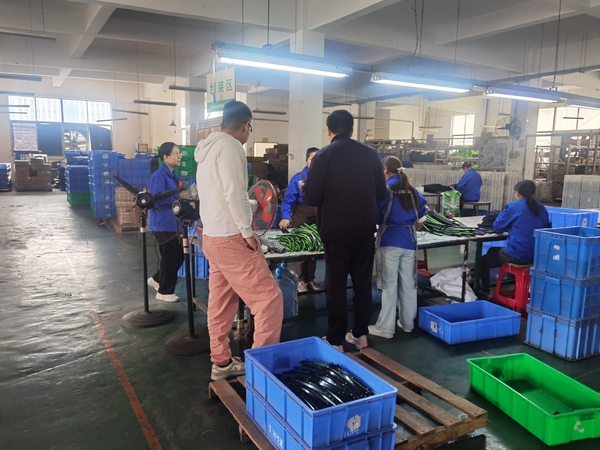
I am Jacky Huang, CEO of Xiamen TOPEX Auto Parts Co., Ltd. When buyers evaluate a supplier, I encourage them to examine the complete operating system rather than one carefully prepared sample. A dependable supplier must be able to repeat the approved specification across multiple blade lengths, adapters, production batches, and shipments.
The purpose of an audit is not to collect the largest possible number of documents. It is to identify whether the supplier can consistently deliver the products, data, packaging, and service that the buyer’s market requires.
Why a Low Quotation Is Not Enough to Approve a Wiper Blade Supplier
The quoted price tells the buyer how much the supplier plans to charge under a particular specification and Incoterm. It does not prove that the blade fits the listed vehicles, performs consistently, or will be delivered on time.
A low-cost product can become expensive when it creates returns, warranty replacements, sorting, repacking, emergency replenishment, or lost customer confidence.
A low quotation is not enough because supplier approval must consider total commercial risk. Fitment errors, unstable wiping, inconsistent materials, weak packaging, and delivery delays can erase the original price advantage and reduce the buyer’s actual margin.
Similar Products May Use Different Specifications
Catalogue photographs do not reveal every quality difference. Buyers should confirm:
- Rubber material and edge profile
- Rubber hardness range and surface treatment
- Spring-steel material, thickness, and curvature
- Frame or spoiler construction
- Adapter material and dimensions
- Connector locking method
- Rivets, clips, joints, and end caps
- Corrosion-resistant treatment
- Individual packaging
- Master-carton protection
A quotation should identify the specification being priced. If two suppliers include different materials, adapters, packaging, or inspections, their prices are not directly comparable.
Fitment Problems Create Immediate Returns
Blade length alone cannot determine compatibility. The product must match the vehicle’s arm connection, blade position, installed angle, and windshield curvature.
A blade can be the correct length and still fail because:
- The adapter does not fit the arm.
- The connector does not lock completely.
- The blade sits at an unsuitable angle.
- Pressure is uneven across the windshield.
- The application table lists the wrong model year.
- The driver and passenger positions are reversed.
- The package contains the wrong adapter.
- The installation instructions are unclear.
Fitment accuracy should therefore be treated as part of product quality rather than separate marketing information.
Delivery and Replenishment Affect Inventory
A supplier may produce acceptable samples but fail to maintain the agreed lead time during mass production. Delayed delivery can create stockouts during rainy or winter seasons, while unreliable replenishment forces buyers to hold more safety stock.
The audit should examine production planning, peak-season capacity, raw-material availability, subcontracted processes, and shipment history. Capacity should be evaluated for the selected product range—not only as one factory-wide output figure.
The Supplier Approval Mistakes That Create Quality and Inventory Risk
Supplier approval often fails when buyers rely too heavily on one form of evidence. Certificates, samples, factory photographs, and sales presentations can all be useful, but none provides a complete answer by itself.
The most common mistakes are approving a supplier from one sample, accepting certificates without checking their scope, failing to verify the real factory, purchasing only by length, trusting unverified coverage percentages, and comparing quotations based on different product or packaging specifications.
Approving the Supplier from One Sample
A single sample may not represent different lengths, adapters, windshield curvatures, or production batches. Longer flat blades can reveal pressure-distribution problems that remain hidden on shorter versions.
A representative sample set should include:
- Short, medium, and long lengths
- High-volume local applications
- U-hook and non-U-hook adapters
- Driver- and passenger-side products
- Relevant rear wiper blades
- Flat and more strongly curved windshields
- Each product structure included in the order
The buyer should record the vehicle, adapter, test conditions, and result for every sample.
Treating Certificates as Complete Proof
A quality-management certificate may provide useful evidence that a system has been assessed, but it does not guarantee that every shipment meets the buyer’s product specification.
Check the following details:
| Document | What the buyer should verify |
|---|---|
| Business license | Legal entity, address, status, and business scope |
| Quality certificate | Certificate holder, facility, scope, issuer, and validity |
| Test report | Product identity, method, conditions, result, and laboratory |
| Material report | Covered material, batch, date, and applicable requirement |
| Audit report | Facility, audit date, findings, and corrective actions |
| Inspection record | Product, lot, quantity, criteria, and disposition |
Documents should be connected to the actual factory, product, and production process being considered.
Failing to Verify the Manufacturing Role
A supplier may be a complete manufacturer, assembly factory, trading company, or a business combining several roles. None of these structures is automatically unacceptable, but the buyer needs transparency.
The audit should establish:
- Which legal company receives the order and payment
- Where final assembly occurs
- Which components are produced internally
- Which processes are subcontracted
- How subcontractors are approved
- Who controls incoming materials
- Who performs final inspection
- Who is responsible for complaints and corrective actions
A live video audit can support initial screening, but an onsite or independent audit provides stronger evidence for larger or higher-risk orders.
Accepting Broad Coverage Claims
A large catalogue or high coverage percentage does not necessarily provide useful coverage in the buyer’s market. The supplier should demonstrate which local vehicles are covered and how those applications were verified.
Reliable coverage of high-demand vehicles can create better inventory turnover than a larger range built on incomplete application data.
How to Audit a Wiper Blade Supplier Step by Step
A supplier audit should move from company verification to production control, fitment data, product testing, packaging, and after-sales support. The buyer should record findings and identify which issues must be corrected before approval.
A complete audit should verify the supplier’s identity and factory, review its quality-management and traceability systems, inspect production processes, evaluate vehicle-fitment data, test representative blades, review packaging and capacity, and examine how complaints and corrective actions are handled.
Step 1: Verify the Company and Factory
Confirm the supplier’s:
- Registered company name
- Business-registration information
- Factory address
- Exporting entity
- Bank beneficiary
- Ownership or operating relationship
- Main product categories
- Years of relevant manufacturing experience
- Number of production employees
- Main equipment
- Subcontracted processes
The quotation, contract, invoice, certificate, and payment details should identify the correct entities and relationships.
Step 2: Review the Quality System
The audit should examine how the factory turns an approved specification into repeatable production.
Ask to review:
- Approved supplier procedures
- Incoming-material inspection
- Work instructions
- Product drawings and specifications
- First-piece approval
- In-process inspection
- Final inspection
- Calibration records
- Nonconforming-product control
- Batch identification
- Staff training
- Corrective-action records
- Customer-complaint analysis
A written procedure is valuable only when employees can show how it is used in production.
Step 3: Inspect the Production Process
Different wiper structures use different processes. Conventional blades may require stamping, forming, riveting, and corrosion protection. Flat and hybrid blades depend strongly on spring-steel shaping, molded components, adapters, and controlled assembly.
The audit may review:
| Production stage | Audit focus |
|---|---|
| Rubber components | Profile, edge condition, coating, storage, and identification |
| Spring steel | Material, dimensions, curvature, and lot control |
| Metal frame | Forming, riveting, alignment, and corrosion protection |
| Plastic injection | Dimensions, flash, deformation, color, and locking features |
| Assembly | Correct parts, orientation, length, and component security |
| Testing | Method, equipment, frequency, criteria, and records |
| Packaging | Correct SKU, adapters, labels, barcodes, and protection |
| Finished goods | Lot identification, storage, and release status |
If important processes are subcontracted, the buyer should understand how their quality is controlled.
Step 4: Audit Fitment Data
The supplier’s application system should contain more than blade lengths.
Review whether it includes:
- Vehicle make
- Model
- Model year
- Body type where relevant
- Driver-side length
- Passenger-side length
- Rear application
- Wiper-arm type
- Adapter code
- OE reference where available
- Installation instructions
- Data source
- Last update
- Correction procedure
Select several important vehicles from the target market and trace them from the application database to the physical blade, adapter, package, and installation instructions.
The TOPEX article on wholesale wiper blade selection and vehicle coverage explains why retailers and distributors should build ranges around local applications rather than the supplier’s complete catalogue.
Step 5: Test Representative Samples
Performance testing should use written acceptance criteria. Samples should be installed on representative vehicles or suitable test equipment.
Check:
- Installation difficulty
- Connector locking
- Retention security
- Windshield contact
- Pressure distribution
- Wet wiping
- Streaking
- Smearing
- Missed areas
- Chatter and skipping
- Noise
- Blade movement
- End contact
- High-speed stability where relevant
Climate-related tests should reflect the destination market. Hot climates may require greater attention to heat, UV exposure, and rubber hardening. Winter markets may require low-temperature flexibility and corrosion testing. Coastal regions may need stronger attention to moisture and salt exposure.
Step 6: Review Packaging and Delivery Controls
Packaging must protect the blade and communicate the correct application. Inspect:
- Package dimensions
- Blade support
- Adapter containment
- Printed size
- Arm compatibility
- Installation instructions
- Barcode
- Product code
- Carton quantity
- Shipping marks
- Carton strength
- Pallet or container loading
Ask how artwork revisions are controlled. Outdated package files can create incorrect labels even when the physical product is correct.
Step 7: Review Complaints and Corrective Actions
A dependable supplier should not claim that problems never occur. It should demonstrate how complaints are recorded, investigated, corrected, and prevented from recurring.
A corrective-action record should connect the complaint with:
- Product and batch
- Defect description
- Immediate containment
- Root-cause analysis
- Corrective action
- Responsible person
- Completion date
- Verification of effectiveness
This process reveals how the supplier may respond when a real order develops a problem.
How TOPEX Supports Fitment Accuracy and Consistent Bulk Production
At TOPEX, I prefer to begin supplier discussions with the buyer’s target country, vehicle applications, product structures, quality level, packaging, and expected quantity by SKU. These details help us recommend a focused range and identify potential fitment or inventory risks early.
TOPEX supports B2B sourcing through multiple wiper blade structures, application and connector information, representative samples, OEM packaging, documented product requirements, quality inspections, and controlled trial-order planning.
Product Range and Fitment Evaluation
The TOPEX flat wiper blade range supports buyers requiring modern beam-style products with different adapters and application requirements. Buyers seeking a covered structure can also evaluate the TOPEX hybrid wiper blade range.
Before recommending a range, we can discuss:
- Target vehicle market
- Important makes and model years
- Blade lengths and positions
- Wiper-arm and adapter types
- Flat, hybrid, conventional, OE, or rear products
- Price and quality position
- Climate requirements
- Packaging
- Order volume by SKU
- Replenishment plan
This approach helps buyers focus on commercially relevant coverage instead of adding unnecessary SKUs.
Samples and Production References
Representative samples should be evaluated before mass production. Once approved, the product specification, golden sample, adapter set, packaging, artwork, and inspection checklist can become controlled references.
Incoming materials, key component dimensions, assembly, appearance, packaging, and finished products can then be reviewed against those references.
OEM Packaging and Trial Orders
OEM or private-label support may include:
- Logo and product color
- Retail boxes, cards, sleeves, or blister packs
- Labels and barcodes
- Installation diagrams
- Product codes
- Carton markings
- Product images
- Online information
A controlled trial order tests whether the supplier can reproduce the approved quality, control the packaging files, meet the schedule, prepare accurate documents, and respond professionally to feedback.
A Final Approval Checklist Before Placing the First Order
Passing the factory audit does not automatically authorize a large purchase. The buyer should close open findings, freeze the product specification, and confirm how production will be inspected.
Before final approval, buyers should sign the product specification and golden sample, establish inspection and AQL requirements, approve packaging files, confirm lead time and capacity, define warranty and claims procedures, and place a controlled trial order.
Product and Quality Approval
Confirm the following:
- Product model and blade length
- Blade structure
- Rubber specification
- Spring-steel or frame specification
- Adapter and connector
- Coating and appearance
- Approved vehicle applications
- Performance criteria
- Golden sample
- Change-control requirement
The supplier should not substitute materials, components, molds, or subcontractors without the agreed approval process.
Inspection and AQL Agreement
The buyer and supplier should agree on:
- Inspection stage
- Sampling plan
- Lot definition
- Critical, major, and minor defects
- AQL levels where appropriate
- Functional-test quantity
- Packaging inspection
- Acceptance and rejection rules
- Reinspection
- Sorting or rework
- Required inspection report
AQL is a sampling tool, not permission to ship known defects. Safety-related or critical connector failures may require stricter treatment than minor cosmetic issues. The sampling plan should be established with qualified quality professionals and appropriate to the product risk.
Commercial and Delivery Approval
Confirm:
| Approval item | Required decision |
|---|---|
| Price | Final specification, currency, and validity |
| Incoterm | Named port or delivery location |
| MOQ | Quantity per SKU and packaging version |
| Lead time | Materials, production, inspection, and shipment |
| Packaging | Final artwork, barcodes, cartons, and labels |
| Payment | Deposit, balance, and required documents |
| Warranty | Covered problems, period, and evidence |
| Claims | Notification, investigation, and remedies |
| Tooling | Ownership, storage, and maintenance |
| Documentation | Invoice, packing list, origin, and agreed reports |
Trial-Order Evaluation
Supplier approval should remain conditional until the first production shipment has been reviewed.
Measure:
- Bulk consistency
- Fitment accuracy
- Inspection results
- Packaging accuracy
- Carton damage
- Production lead time
- Document quality
- Delivery performance
- Communication
- Corrective-action response
- Customer returns
- Reorder performance
A supplier that passes this stage has demonstrated more than sample-making ability. It has shown that its operating system can support a commercial order.
Conclusion
Approving a wiper blade supplier requires more than comparing prices, reviewing certificates, or testing one carefully prepared sample. B2B buyers should verify the supplier’s manufacturing role, quality-control system, fitment data, production consistency, packaging capability, delivery performance, traceability, and after-sales process.
Representative samples must be tested for adapter security, windshield contact, wiping quality, noise, weather resistance, and installation simplicity. The approved specification and golden sample should then become the reference for production inspections and future orders.
A controlled trial order provides the clearest evidence of whether the supplier can deliver consistent products—not just convincing sales claims. Buyers should expand volume only after the supplier has demonstrated repeatable product quality, accurate packaging, dependable delivery, and an effective response to problems.
Frequently Asked Questions About Wiper Blade Supplier Audits
What documents should a wiper blade supplier provide before approval?
Useful documents include the business license, relevant quality-system certificates, product specifications, test reports, material information, inspection records, fitment data, packaging files, and corrective-action examples. Buyers should verify the entity, factory, product scope, dates, and issuing organizations instead of collecting documents without reviewing them.
How can buyers verify whether a supplier is a factory or trading company?
Review the legal registration, factory address, production equipment, employees, work records, subcontracted processes, and bank beneficiary. Conduct a live video review, onsite visit, or independent audit. The objective is to understand who manufactures the product and who controls quality, not merely to obtain a “factory direct” claim.
Which wiper blade performance tests should be completed before ordering?
Testing should cover installation, adapter locking, connector retention, windshield contact, wet wiping, streaking, smearing, missed areas, noise, chatter, and representative blade lengths. Depending on the market, buyers may also require durability, temperature, UV, ozone, corrosion, or high-speed stability tests.
How should buyers verify vehicle and adapter compatibility?
Check make-model-year data, blade position, length, arm type, adapter code, and installation instructions. Test high-demand applications physically where possible. Coverage percentages should be verified against important local vehicles rather than accepted as sufficient evidence.
Why is a golden sample important for bulk-production control?
The golden sample represents the approved physical product. Together with specifications, drawings, test criteria, colors, and packaging files, it gives production and inspection teams a controlled reference. It helps buyers identify unapproved substitutions or differences during mass production.
Should buyers conduct a factory audit before placing a large order?
Yes, particularly when the order value, customization, or quality risk is significant. The audit can be onsite, independent, or initially conducted by live video depending on risk. However, the audit should be combined with sample testing, documented specifications, pre-shipment inspection, and a controlled trial order.

--- END ---


