
Wiper Blade Landed Cost: A Step-by-Step Guide for Importers
Aug 31, 2026
The factory price of a wiper blade is only the beginning of its import cost. Before the product reaches an importer’s warehouse, the order may generate origin charges, international freight, insurance, customs duties, import taxes, brokerage, port handling, inspection, inland transportation, and banking expenses.
These charges can change the commercial result of an order. A supplier offering the lowest unit price may use larger packaging, load fewer blades per carton, provide less accurate documentation, or produce more defective goods. The initial saving can disappear through higher freight, customs delays, returns, and warranty replacements.
Wiper blade landed cost is the total cost required to purchase the goods and bring sellable inventory to the importer’s warehouse. A practical calculation should include the product, packaging, origin logistics, freight, insurance, customs duty, import taxes, brokerage, port fees, inspection, and inland delivery. Importers should then allocate these costs to each SKU using a method that reflects value, weight, volume, or quantity.
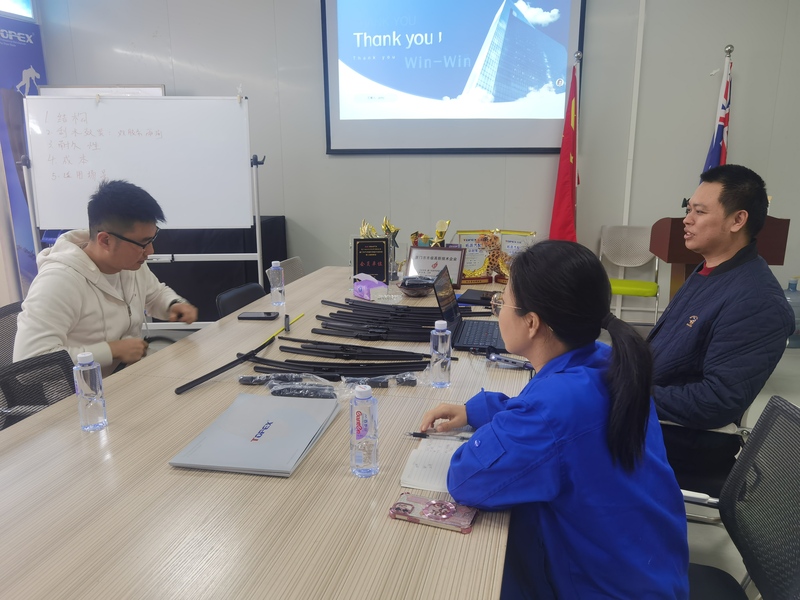
I am Jacky Huang, CEO of Xiamen TOPEX Auto Parts Co., Ltd. When buyers compare our quotations with other suppliers, I encourage them to compare equivalent specifications and shipping conditions. A lower product price does not always create a lower warehouse cost, and a lower landed cost does not always produce the strongest final profit.
Importers need two calculations: landed cost when the inventory reaches the warehouse and fully loaded commercial cost after quality failures, returns, and warranty claims are included.
Why the Lowest Wiper Blade Quote Can Produce the Weakest Profit Margin
A factory quotation usually shows the product price under a specific Incoterm. It does not automatically show every expense that will occur between production and warehouse delivery.
If two quotations use different Incoterms, packaging, quantities, or ports, the unit prices cannot be compared directly. The buyer must first convert both offers to the same cost boundary.
The lowest wiper blade quote can create the weakest margin when it excludes more logistics costs, uses inefficient packaging, produces higher defect rates, or requires excessive inventory. Importers should compare landed cost per sellable blade—not the supplier’s quoted unit price alone.
Incoterms Change Which Costs Are Included
Incoterms define delivery responsibilities, costs, and risk transfer between seller and buyer. They do not automatically determine product quality, payment terms, ownership transfer, or every local charge.
According to the International Chamber of Commerce’s Incoterms overview, EXW places relatively more transport responsibility on the buyer, FOB covers delivery aboard the nominated vessel at the named port, CIF includes specified ocean freight and insurance to the destination port, and DDP places broader import and duty responsibilities on the seller.
| Quotation term | Generally included by the seller | Costs the buyer should investigate |
|---|---|---|
| EXW | Goods made available at the named premises | Loading, export clearance, origin transport, freight, import costs, and delivery |
| FOB | Export clearance and delivery aboard the vessel at the named port | Freight, insurance, destination charges, import clearance, and inland delivery |
| CIF | Product, ocean freight, and specified insurance to the destination port | Destination handling, import clearance, duty, tax, and final delivery |
| DDP | Delivery to the named destination with import formalities and duties handled by the seller | Unloading and any stated exclusions; also confirm importer-of-record arrangements |
The exact named place is essential. “FOB China” is not sufficiently precise; the quotation should identify the port. A DDP quotation should state the delivery address, included taxes, customs responsibility, and importer-of-record arrangement.
Low Unit Price Can Increase Other Costs
A lower specification may generate higher costs after arrival. Possible consequences include:
- More fitment returns
- Higher warranty replacement volume
- Product sorting or rework
- Customer-service expense
- Marketplace penalties
- Damaged retail packaging
- Slower inventory turnover
- Greater safety stock
- Loss of repeat orders
The importer should distinguish between three levels of cost:
- Purchase cost: the supplier’s product and packaging price.
- Landed cost: the cost when sellable goods reach the warehouse.
- Fully loaded commercial cost: landed cost plus defects, returns, warranty, and other post-arrival losses.
This distinction prevents a low-quality product from appearing more profitable than it really is.
The Hidden Import Costs Buyers Commonly Leave Out
Importers usually remember the product price and international freight. Smaller charges are more easily overlooked, especially when the buyer relies on a preliminary shipping estimate rather than a formal door-to-door quotation.
Some costs are fixed for the shipment, while others depend on value, weight, volume, time, or the number of customs entries.
Frequently overlooked costs include origin handling, export documentation, cargo insurance, customs brokerage, destination-terminal fees, examination charges, inland delivery, currency losses, bank fees, inspection, repacking, storage, demurrage, and detention. These items should be listed before the order is approved.
Origin and International Logistics
Depending on the Incoterm, origin expenses may include:
- Factory loading
- Transport to the port or consolidation warehouse
- Export customs declaration
- Documentation
- Terminal handling
- Container or consolidation charges
- Security and port fees
- Palletization or additional shipping preparation
International freight may be charged by container, cubic meter, actual weight, or chargeable weight. Long wiper blades and retail blister packs can consume significant volume even when their physical weight is low.
Destination and Customs Charges
After arrival, the shipment may generate:
- Destination terminal handling
- Port or airport fees
- Customs brokerage
- Import declaration charges
- Customs examination
- Container unloading
- Document release
- Delivery appointment fees
- Inland trucking
- Warehouse receiving
- Storage
- Demurrage or detention
Importers should ask the forwarder which charges are included and which are estimates. A low ocean-freight quotation can be offset by high destination fees.
Financial and Quality-Related Expenses
Other costs can include:
- Currency conversion
- Exchange-rate movement
- Bank transfer charges
- Letter-of-credit fees
- Supplier audit
- Pre-shipment inspection
- Product testing
- Packaging modification
- Relabeling
- Barcode correction
- Damaged-goods allowance
These expenses may not apply to every shipment, but they should be included when they are reasonably expected.
| Cost category | Typical allocation basis |
|---|---|
| Product and packaging | Direct cost by SKU |
| Freight | Chargeable weight or cubic volume |
| Insurance | Insured product value |
| Customs duty | Customs value and tariff treatment |
| Brokerage | Entry line, SKU, value, or agreed method |
| Inspection | Quantity, value, or test scope |
| Inland delivery | Weight, volume, pallets, or cartons |
| Banking costs | Order value or transaction |
| Repacking | Direct cost for affected SKUs |
A consistent allocation method makes supplier and shipment comparisons more reliable.
How to Calculate Landed Cost per Wiper Blade Step by Step
The calculation begins before the purchase order is signed. Importers need a confirmed Incoterm, packing list, carton dimensions, gross weight, shipping method, tariff classification, country of origin, and destination-country rules.
To calculate landed cost per blade, add the product value, packaging, origin charges, freight, insurance, customs duty, import taxes where treated as cost, brokerage, destination handling, inspection, and delivery. Allocate each expense to the appropriate SKUs and divide the total by the number of sellable units received.
Step 1: Confirm the Product and Incoterm
Record the following information:
- Supplier
- Product code
- Blade type
- Length
- Adapter
- Quantity
- Unit price
- Packaging cost
- Named Incoterm
- Named port or delivery place
- Payment currency
- Payment terms
Do not compare an EXW quotation directly with a FOB or CIF quotation. First add the expenses needed to bring each offer to the same destination.
Step 2: Confirm Tariff Classification and Origin
Complete windscreen wipers are commonly associated with HS heading 8512.40, but national tariff schedules extend the HS code and can distinguish products or apply country-specific measures. Importers should verify the final classification with the destination country’s official tariff database or a qualified customs broker.
For example, US importers can consult the U.S. Harmonized Tariff Schedule, while EU importers should check the EU TARIC database. Origin can affect preferential rates, additional duties, trade-defense measures, and documentary requirements.
The supplier’s suggested code is useful supporting information, but it does not replace the importer’s classification responsibility.
Step 3: Establish the Customs Value
Customs valuation rules vary by jurisdiction. Depending on the destination and transaction, the customs value may include the goods and certain additions such as freight, insurance, assists, packing, royalties, or other dutiable elements.
The importer should confirm the correct basis with its broker instead of assuming that duty always applies only to the factory invoice.
Step 4: Add the Cost Components
A simplified formula is:
Landed Cost = Product Cost + Packaging + Origin Charges + Freight + Insurance + Duty + Nonrecoverable Import Taxes + Brokerage + Destination Charges + Inspection + Inland Delivery
Assume an illustrative shipment contains 10,000 blades:
| Cost component | Illustrative amount |
|---|---|
| Products and packaging | $30,000 |
| Origin charges | $900 |
| International freight | $3,600 |
| Insurance | $120 |
| Customs duty | $1,500 |
| Brokerage and destination handling | $1,050 |
| Inspection | $300 |
| Delivery to warehouse | $530 |
| Total landed cost | $38,000 |
If every blade consumed the same value and logistics resources, the average landed cost would be:
$38,000 ÷ 10,000 = $3.80 per blade
However, mixed orders rarely contain identical SKUs. Longer blades and larger retail packages may consume more freight space, while premium blades may carry more customs value.
Step 5: Allocate Costs to Each SKU
Different expenses may require different allocation methods:
- Allocate product cost directly.
- Allocate freight by cubic volume or chargeable weight.
- Allocate insurance by product value.
- Allocate duty according to customs value and applicable rate.
- Allocate direct inspection or relabeling costs to affected products.
- Allocate shared brokerage or delivery costs using a consistent method.
For example, if a 28-inch packaged blade consumes twice the carton volume of a compact 14-inch blade, allocating freight equally by quantity would understate the long blade’s cost and overstate the short blade’s cost.
Step 6: Divide by Sellable Units
If 10,000 units arrive but 100 are damaged or unusable, the cost should be divided by 9,900 sellable units when measuring available inventory.
$38,000 ÷ 9,900 = $3.84 per sellable blade
This adjustment shows why packaging damage and quality failures affect real unit economics.
Step 7: Separate Recoverable Taxes
Import VAT or GST may require cash at customs but may later be recoverable by an eligible business. The importer should track:
- Cash landed cost, including tax paid at import
- Accounting cost after recoverable tax is excluded
- Nonrecoverable taxes and duties
- Timing of tax recovery
Local tax rules determine the correct treatment. Importers should confirm this with their accountant or tax adviser.
How Product Design and Supplier Support Change the Final Cost
Landed cost is influenced by more than logistics rates. Product design, packaging dimensions, carton quantity, fitment coverage, documentation, and production consistency can change freight, inventory, clearance, and after-sales expenses.
Compact packaging, efficient carton loading, accurate documents, stable quality, and verified multi-fit coverage can reduce the importer’s total cost. Oversized packages, poor fitment data, inconsistent products, or incorrect documentation can erase a low factory-price advantage.
Packaging Efficiency Affects Freight
Retail packaging must protect the blade and communicate size, compatibility, and installation. However, unnecessary empty space increases cubic volume and freight cost.
Importers should request:
- Individual package dimensions
- Master-carton dimensions
- Units per carton
- Net and gross weight
- Carton volume
- Pallet configuration where relevant
- Container-loading estimate
The TOPEX flat wiper blade range includes different product and adapter configurations. When planning an order, buyers should compare not only the blade price but also the package and carton arrangement for the chosen model.
Fitment Coverage Influences Inventory Cost
Multi-fit products can reduce the number of SKUs needed to cover several arm types. This may reduce inventory and simplify replenishment, but coverage must be accurate.
An incorrect fitment claim creates costs through:
- Returns
- Replacement freight
- Customer-service time
- Negative reviews
- Unsellable opened packages
- Emergency supply of alternative products
The TOPEX hybrid wiper blade range gives buyers another structural option when building a market-specific product mix. Product type and adapter coverage should be selected according to local vehicles rather than theoretical global coverage alone.
Documentation Reduces Clearance Risk
Suppliers should prepare accurate commercial invoices, packing lists, product descriptions, carton quantities, weights, origin information, and other agreed documents.
Incorrect information can lead to customs questions, amendments, inspections, storage, and delivery delays. Importers should review document templates before shipment instead of waiting until the goods reach the destination port.
Quality Stability Changes Commercial Cost
At TOPEX, I recommend confirming representative samples, packaging, fitment data, and inspection requirements before mass production.
A stable supplier can help reduce:
- Defect sorting
- Warranty replacements
- Repacking
- Fitment complaints
- Emergency replenishment
- Lost retail orders
These savings may not appear in the traditional landed-cost calculation, but they influence the final profitability of the product.
A Pre-Order Cost Checklist for Protecting Your Target Margin
Freight rates, exchange rates, duties, and destination fees can change between quotation and shipment. Importers should therefore use scenarios rather than relying on one optimistic estimate.
Before approving an order, calculate base, best-case, and worst-case landed costs using current tariff information and formal logistics quotations. Confirm the selling price, channel fees, expected return rate, and target gross margin under each scenario.
Build Three Cost Scenarios
The three scenarios can reflect:
| Variable | Best case | Base case | Worst case |
|---|---|---|---|
| Exchange rate | Favorable movement | Current planning rate | Adverse movement |
| Freight | Lower confirmed range | Normal quotation | Peak or surcharge level |
| Duty | Verified expected treatment | Same verified rate | Additional measure if reasonably possible |
| Port charges | Normal clearance | Standard estimate | Examination or storage |
| Defects | Low approved level | Historical average | Higher trial-order allowance |
| Delivery | Planned rate | Normal market rate | Fuel or access surcharge |
The worst case should remain realistic. Its purpose is to test whether the margin survives foreseeable changes, not to invent an impossible disaster.
Complete the Pre-Order Checklist
Before signing the purchase order:
- Confirm product specifications and packaging.
- Record the named Incoterm and location.
- Obtain carton dimensions, quantities, and weights.
- Verify the tariff code with an official source or broker.
- Confirm country of origin and possible additional duties.
- Obtain a formal freight and destination-charge quotation.
- Estimate customs duty and import taxes.
- Separate recoverable from permanent taxes.
- Add brokerage, inspection, delivery, and banking costs.
- Allocate shared expenses to each SKU.
- Estimate sellable units after expected damage or defects.
- Calculate best, base, and worst-case landed costs.
- Add expected returns and warranty costs separately.
- Confirm selling price and channel fees.
- Test the target margin under all three scenarios.
- Approve the order only when the commercial result remains acceptable.
The importer should update the calculation after shipment and again after customs clearance. Estimated costs can then be replaced with actual invoices, improving the accuracy of future orders.
Conclusion
The true cost of imported wiper blades extends far beyond the supplier’s unit price. Importers must account for origin charges, international freight, insurance, duties, taxes, brokerage, port handling, inland delivery, inspection, currency exposure, and other order-specific expenses.
These costs should be allocated consistently across every SKU, especially when blade sizes and packaging volumes differ. Import VAT or GST should be separated according to whether it is recoverable, while quality failures and warranty claims should be tracked as part of the fully loaded commercial cost.
By confirming the Incoterm, tariff classification, origin, packing data, logistics quotation, and current duty rules before ordering, importers can compare suppliers accurately, set sustainable selling prices, and protect their target margins.
Frequently Asked Questions About Wiper Blade Landed Cost
What costs are included in the landed cost of imported wiper blades?
Landed cost normally includes the product, packaging, origin transportation, export charges, international freight, insurance, customs duty, nonrecoverable import taxes, brokerage, destination handling, inspection, and delivery to the importer’s warehouse. The exact boundary should be defined consistently for every supplier comparison.
How do EXW, FOB, CIF, and DDP quotations affect landed cost?
EXW leaves more transport and export responsibilities to the buyer. FOB generally covers delivery aboard the vessel at the named port. CIF includes specified freight and insurance to the destination port but not necessarily import clearance or final delivery. DDP places broader import and duty responsibilities on the seller. Each quotation must state its named location and exclusions.
Which HS code is commonly used for windshield wiper blades?
Complete windscreen wipers are commonly associated with HS heading 8512.40. However, importers must verify the complete national tariff code, product description, origin treatment, and current duty measures through the destination country’s official customs database or a qualified broker.
How should freight and import fees be allocated across different SKUs?
Product costs should be assigned directly. Freight is often best allocated by chargeable weight or cubic volume, insurance by value, and duty according to customs value and tariff treatment. Direct expenses should be assigned to the SKUs that caused them. The method should be documented and applied consistently.
Are import VAT or GST part of the true product cost?
They affect cash flow at import, but they may not be a permanent product cost when the business can recover them. Recoverable VAT or GST should be tracked separately from nonrecoverable customs duty, logistics, and brokerage expenses. Treatment depends on local tax rules.
How can importers reduce landed cost without sacrificing quality?
Importers can improve carton loading, reduce unnecessary packaging volume, consolidate shipments, select an appropriate Incoterm, improve forecasts, verify fitment data, and reduce defects. They should compare total cost rather than automatically choosing cheaper materials or untested suppliers.

--- END ---


