
Mixed-SKU Wiper Blade Container Orders: An Inventory Control Guide
Sep 03, 2026
A full container can reduce freight cost per wiper blade, but it also requires a substantial inventory commitment. If a distributor fills the container with only a few popular-looking sizes, one SKU may sell out quickly while another remains in the warehouse for months.
A mixed-SKU container offers a more balanced alternative. It can combine different lengths, connectors, blade structures, price tiers, and front or rear applications in one shipment. However, mixing products does not automatically create a healthy inventory. The quantities must reflect actual vehicle demand and sales velocity.
A successful mixed-SKU wiper blade container should allocate most capacity to proven core products, controlled quantities to developing SKUs, and only limited space to long-tail applications. The distributor must also consider per-SKU MOQs, packaging volume, production lead times, carton identification, quality inspection, and future replenishment.
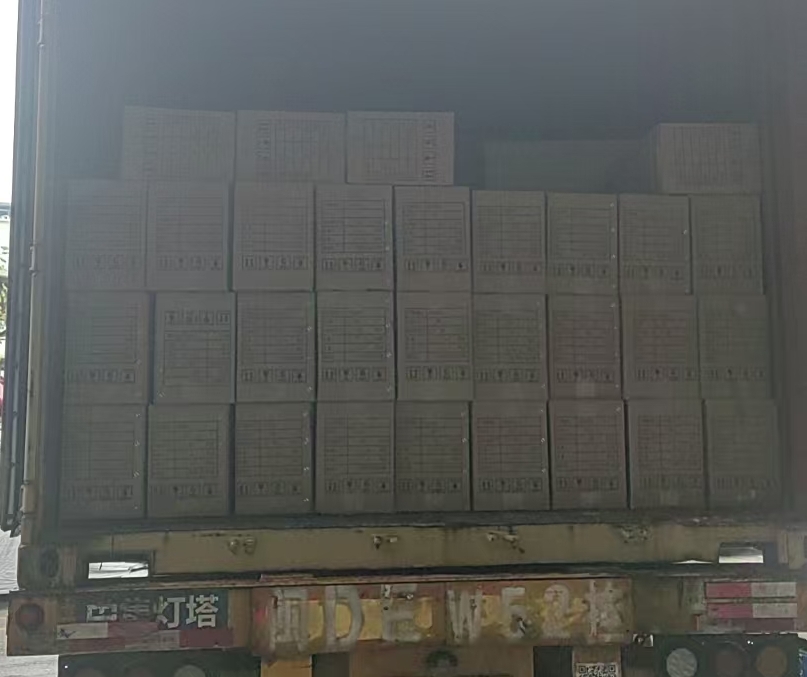
I am Jacky Huang, CEO of Xiamen TOPEX Auto Parts Co., Ltd. When a distributor asks us to prepare a mixed container, I do not recommend dividing the available quantity equally across every size. I first want to understand the target country, local vehicles, historical sales, sales channels, seasonal demand, and current inventory.
The strongest mixed-container plan is built from market data. Freight efficiency matters, but the container must also create inventory that can be sold and replenished efficiently.
Why Single-SKU Container Orders Create Unnecessary Inventory Risk
A single-SKU or limited-SKU container can offer simple production and attractive pricing. The supplier can manufacture longer runs, use fewer setups, and pack the shipment more efficiently.
However, the distributor concentrates its capital in a small number of products. If demand is weaker than expected, the business may hold months or years of excess inventory.
Single-SKU container orders create unnecessary risk because they concentrate cash, warehouse space, and market assumptions in a narrow product range. Wiper demand is distributed across different lengths, connectors, blade structures, and vehicle positions, so the lowest unit price may not produce the healthiest inventory.
Wiper Demand Is Naturally Fragmented
A complete vehicle market may require:
- Different driver- and passenger-side lengths
- U-hook and non-U-hook connectors
- Flat, hybrid, conventional, and OE-specific blades
- Front and rear applications
- Economy and premium price tiers
- Seasonal products
- Commercial-vehicle sizes
One high-volume size cannot satisfy all these applications. Even when a length is popular, customers may require different adapters or blade structures.
A distributor that buys only a few sizes may experience two problems at the same time:
- Overstock of the selected products
- Lost sales because other important applications are unavailable
Lower Unit Price Can Hide Higher Inventory Cost
Ordering a large quantity of one SKU may reduce its factory price, but the saving must be compared with inventory holding risk.
| Cost or risk | Possible effect |
|---|---|
| Capital concentration | Less cash available for other products |
| Storage | More warehouse space used by one SKU |
| Inventory aging | Higher risk of obsolete packaging or data |
| Discounting | Reduced margin when excess stock must be cleared |
| Stock imbalance | Overstock in one size and stockouts in another |
| Replenishment | Difficulty ordering missing SKUs before excess stock sells |
| Market change | Vehicle and channel demand may shift |
| Packaging updates | Old branded cartons may become unusable |
The relevant question is not only “What is the full-container price?” It is also “How many months will each SKU take to sell?”
A Mixed Container Can Improve Cash Allocation
A mixed order spreads the investment across several demand groups. It can provide broad availability while limiting exposure to individual products.
The distributor may accept a slightly higher manufacturing cost per unit in exchange for:
- Better vehicle coverage
- Lower stock concentration
- More balanced cash flow
- Fewer lost sales
- More useful trial data
- Easier product-tier testing
- Reduced need for emergency orders
The mixed approach is valuable when the assortment is disciplined. If every available product is added without demand analysis, diversification becomes another form of overstock.
The Mixed-Container Mistakes That Still Produce Dead Stock
A mixed container can fail when the buyer treats diversity as the objective. The purpose is not to include the largest number of SKUs. It is to allocate space according to the commercial role of each product.
The most common mistakes are dividing quantities equally, treating long-tail applications as core products, ignoring per-SKU and packaging MOQs, combining too many custom versions, and failing to calculate how carton dimensions affect container capacity.
Dividing Quantities Equally
Equal allocation is simple but rarely reflects real demand. A 16-inch conventional blade and a 26-inch OE-specific blade may have completely different sales frequencies.
Each SKU should receive a quantity based on:
- Historical sales
- Local vehicle population
- Customer inquiries
- Existing stock
- Reorder frequency
- Seasonal demand
- Retail price
- Product margin
- Fitment-return history
- Supplier lead time
Without this information, equal allocation creates a high probability that some products will sell out while others remain unsold.
Adding Too Many Long-Tail Applications
Long-tail products can help a distributor serve uncommon vehicles, but they should occupy only a limited part of the container. Their value comes from availability, not high inventory depth.
A better approach is to divide products into:
- Core SKUs: proven, high-frequency applications
- Growth SKUs: moderate demand or strong future potential
- Long-tail SKUs: irregular vehicle-specific demand
- Seasonal SKUs: products required during a defined weather period
- Trial SKUs: new products with limited market evidence
Long-tail and trial products should not receive the same quantities as core blades.
Ignoring Multiple MOQ Levels
A supplier may accept a mixed container but still require minimums for:
- Each blade platform
- Each length
- Each adapter set
- Each product color
- Each rubber specification
- Each package design
- Each printed size
- Each master carton
These minimums can restrict the final mix. Buyers should request a written MOQ matrix before creating the container plan.
The TOPEX guide to wiper blade MOQ, lead time, and packaging explains why product and packaging requirements should be reviewed separately.
Ignoring Packaging Volume
A container is limited by physical volume and weight, not only product quantity. Wiper blades are long products, and retail packaging can create considerable unused space.
Blister packs, display boxes, and additional adapter compartments may occupy more volume than compact sleeves or wholesale packaging.
Buyers should confirm:
- Individual package dimensions
- Units per carton
- Carton dimensions
- Gross and net weight
- Carton volume
- Cartons per cubic meter
- Estimated container quantity
- Pallet requirements
- Loading restrictions
A plan based only on unit quantities may not fit inside the intended container.
Failing to Synchronize Production
Different blade structures or packages may require different materials, production lines, molds, and lead times. If one SKU is delayed, the complete shipment may wait.
The buyer should confirm whether all products can be completed within the same shipping window and whether finished goods will require extended storage while other products are manufactured.
How to Build the Right SKU Mix for a Wiper Blade Container
The product mix should begin with local market information rather than the supplier’s complete catalogue. The distributor should identify common vehicles, current inventory, seasonal demand, and customer price levels before allocating quantities.
A reliable SKU mix uses ABC inventory classification, verified vehicle applications, historical sell-through, and replenishment requirements. Core products receive the largest allocation, developing SKUs receive controlled quantities, and long-tail products remain limited.
Use ABC Classification
ABC classification creates a practical starting point:
| SKU class | Commercial role | Suggested inventory approach |
|---|---|---|
| A | Fast-moving core applications | Deepest inventory and safety stock |
| B | Moderate demand or growth potential | Controlled inventory |
| C | Long-tail and irregular applications | Light stock or special order |
| Seasonal | Weather-related demand | Time-specific allocation |
| Trial | New product or market test | Small validation quantity |
There is no universal allocation percentage. The final mix should reflect the distributor’s data. A business with reliable monthly replenishment can hold less safety stock than one importing only a few times per year.
Analyze the Range Across Four Dimensions
The container should be reviewed by more than blade length.
Blade structure
The mix may include:
- Conventional framed blades
- Flat or beam blades
- Hybrid blades
- OE exact-fit blades
- Rear wiper blades
- Winter or specialty blades
Length
Quantities should reflect local vehicle applications rather than an equal distribution from the shortest to longest size.
Connector
U-hook products may provide broad coverage in some markets, while push-button, pinch-tab, side-pin, bayonet, and other connections may be essential elsewhere.
Vehicle position
Driver, passenger, and rear positions should be considered separately. Rear wiper blades are often highly vehicle-specific and require accurate application data.
Combine Multi-Fit and OE-Specific Products
Multi-fit blades can provide baseline coverage with fewer base products. They are valuable when their adapters and application data have been verified.
OE exact-fit products require more dedicated SKUs but may offer:
- Simpler installation
- Fewer loose adapters
- Familiar appearance
- Stronger customer confidence
- Clearer vehicle-specific listings
A practical container may use multi-fit products for broad coverage while reserving OE-specific inventory for popular local vehicles.
Set Safety Stock and Reorder Points
The distributor should calculate a reorder point for each core SKU.
A simple model is:
Reorder Point = Expected Sales During Replenishment Lead Time + Safety Stock
The replenishment lead time should include:
- Order confirmation
- Material preparation
- Production
- Inspection
- Packaging
- Export handling
- International transportation
- Customs clearance
- Warehouse receiving
Safety stock should reflect demand variation and supplier reliability. Applying the same safety-stock quantity to every SKU can create unnecessary inventory.
How TOPEX Supports Flexible Mixed-SKU Container Planning
At TOPEX, I begin mixed-container planning by reviewing the buyer’s target market, vehicle applications, sales channels, price levels, packaging, and quantity expectations.
The objective is to combine commercially relevant products while keeping the order practical for production, inspection, loading, and future replenishment.
TOPEX supports mixed-SKU planning through multiple product structures, vehicle and adapter information, quantity discussions, packaging options, carton data, sample verification, and order-level quality control.
Combining Different Product Structures
Depending on market demand, a container can include conventional, flat, hybrid, OE exact-fit, rear, or seasonal blades.
The TOPEX flat wiper blade range can support modern beam-style and multi-fit programs. Distributors requiring a covered frame and a different market position can also consider the TOPEX hybrid wiper blade range.
Before recommending quantities, we can discuss:
- Target country
- Important vehicles
- Common lengths
- Arm and adapter types
- Price tiers
- Current inventory
- Historical sales
- Seasonal deadlines
- Package format
- Target shipment size
Fitment and Packing Information
Useful planning data may include:
- Product code
- Blade length
- Adapter
- Vehicle applications
- Units per carton
- Carton dimensions
- Gross weight
- Carton volume
- Barcode
- Package version
This information allows the distributor to connect vehicle coverage with loading capacity.
Packaging and Production Coordination
A mixed order may combine wholesale packaging, private-label boxes, or display-ready packs. Each format affects MOQ and loading efficiency.
Where appropriate, buyers can reduce complexity by using:
- Shared packaging structures
- Standard product colors
- Common adapters
- Size labels or stickers
- Standard cartons
- Existing product platforms
Samples, artwork, barcodes, and carton markings should be approved before mass production.
A Practical Trial-to-Container Strategy for Wiper Distributors
New distributors should not move directly from product samples to a full mixed container. A controlled trial order provides the sales and return data needed to make the larger order more accurate.
The safest strategy is to test a focused range first, track each SKU’s sell-through and return performance, increase proven products, limit weak applications, and verify the final container’s products, packaging, documents, and quantities before shipment.
Stage 1: Place a Mixed Trial Order
The trial should contain representative:
- Blade structures
- Core lengths
- Important adapters
- Vehicle-specific products
- Front and rear applications
- Price tiers
Record the product code, quantity, landed cost, selling price, expected monthly sales, and reorder lead time for every SKU.
Stage 2: Track Commercial Performance
After launch, monitor:
| Metric | What it shows |
|---|---|
| Sell-through rate | Speed of sales by SKU |
| Inventory age | Products becoming slow-moving |
| Weeks of supply | Available stock relative to demand |
| Stockout frequency | Core products with insufficient inventory |
| Fitment returns | Application or adapter problems |
| Quality returns | Wiping or construction issues |
| Gross margin | Basic profitability |
| Return-adjusted margin | Profit after product failures |
| Reorder frequency | Actual replenishment demand |
| Seasonal movement | Weather-related demand changes |
The distributor should separate fitment returns from product-quality complaints. They require different corrective actions.
Stage 3: Convert the Data into a Container Plan
Use trial results to:
- Increase proven A products.
- Maintain controlled quantities of B products.
- Reduce or remove weak C products.
- Correct fitment or packaging problems.
- Add selected applications requested by customers.
- Adjust safety stock.
- Reserve seasonal capacity.
- calculate carton volume for the final mix.
The container should reflect evidence from the market rather than the original assumptions.
Stage 4: Complete Pre-Shipment Verification
Before loading, confirm:
- Final SKU quantities
- Product specifications
- Approved samples
- Adapters
- Package versions
- Barcodes
- Carton labels
- Carton quantities
- Packing list
- Shipping marks
- Inspection criteria
- Production batches
- Container-loading plan
Every carton should show enough information for warehouse teams to identify and receive it correctly. Mixed orders require stronger labeling because one misplaced carton can create an apparent stock shortage.
A pre-shipment inspection should sample different blade types, lengths, adapters, and packaging versions—not only the largest SKU.
Conclusion
Mixed-SKU container orders can help wiper distributors improve freight efficiency without concentrating too much capital in a few blade sizes. However, mixing products is valuable only when quantities reflect actual vehicle coverage, sales velocity, seasonality, and replenishment needs.
Core SKUs should receive deeper inventory, developing products should be ordered conservatively, and long-tail applications should occupy only a limited share of the container. Distributors must also confirm per-SKU MOQs, packaging volume, production synchronization, carton identification, and loading accuracy.
A trial order provides the market evidence needed to build a stronger full-container plan. When the final mix is supported by sell-through, return rates, inventory age, and vehicle data, the distributor can achieve a healthier balance between availability, freight cost, inventory turnover, and cash flow.
Frequently Asked Questions About Mixed-SKU Wiper Blade Containers
What is a mixed-SKU wiper blade container order?
It is a shipment in which one container carries multiple wiper blade product codes. The order may combine different lengths, connectors, blade structures, price tiers, and front or rear applications instead of filling the container with one product.
How does mixing SKUs reduce inventory risk for distributors?
It reduces concentration by spreading the purchase across several relevant applications. This can improve product availability and prevent excessive investment in one size. However, risk is reduced only when quantities follow actual demand rather than equal allocation.
How should quantities be allocated among different blade sizes?
Use historical sales, local vehicle data, existing inventory, seasonal demand, return rates, and replenishment time. Core sizes should receive deeper stock, growth products should receive controlled quantities, and long-tail sizes should remain limited.
Can different wiper blade types use the same private-label packaging?
Some products can share a packaging structure or visual design, but differences in blade shape, length, adapter sets, and installation instructions may require different package dimensions or labels. Physical prototypes should be checked before printing and loading calculations are finalized.
What MOQs still apply within a mixed-container order?
Suppliers may require minimum quantities per product platform, blade length, adapter set, color, rubber specification, or packaging version. Printing and custom components may have separate minimums. These requirements should be documented before the assortment is approved.
How should distributors verify a mixed container before shipment?
Check the final SKU quantities, products, adapters, packaging, barcodes, carton labels, packing list, shipping marks, and loading plan. Pre-shipment inspection should sample multiple sizes and product types, while loading verification should confirm that the correct cartons enter the container.

--- END ---


