
Wiper Blade Refill Buying Guide for B2B Distributors
Sep 13, 2026
At TOPEX, most conversations about wiper blade refills begin with a practical question: does a refill program make sense for the business?
For a distributor, that may come down to whether refills can earn their place on the shelf. A private label buyer may be more concerned about keeping the range simple and manageable. For fleet and service customers, the priority is often cost—without adding unnecessary fitment problems at the counter.
These are important questions because a refill is more than a low-cost wiper component. A successful refill program depends on what vehicles and blade types are already common in the market, how installers actually work, and how the product is packaged and sold.
TOPEX has been supplying wiper products since 2006, serving buyers in more than 80 countries and 130 markets. From that experience, one thing is clear: refills work best where the product range matches the local blade base and the way the channel operates.
That is why we look at the market first, then the refill.
Why B2B Buyers Still Ask for Refills
Refills still have a place in markets where serviceable wiper blade designs remain common, particularly conventional frame blades. In these markets, replacing the entire blade is not always necessary when only the wiping edge is worn. For many buyers, a refill offers a practical maintenance option alongside complete blade replacement.
Demand also comes from distributors and workshops that want to serve different price points. Full blades cover standard replacement needs, while refills give workshops and cost-conscious customers another option when the existing blade structure is still in good condition.
For buyers, the question is less about whether refills are an old or new product category and more about whether they fit the local vehicle base, service habits, and sales channel.
If your team needs a simple introduction to the product itself, our wiper blade rubber refill article explains the basics. This guide focuses on the commercial side: how to select, stock, and sell refills in a B2B market.
What a Wiper Blade Refill Actually Includes
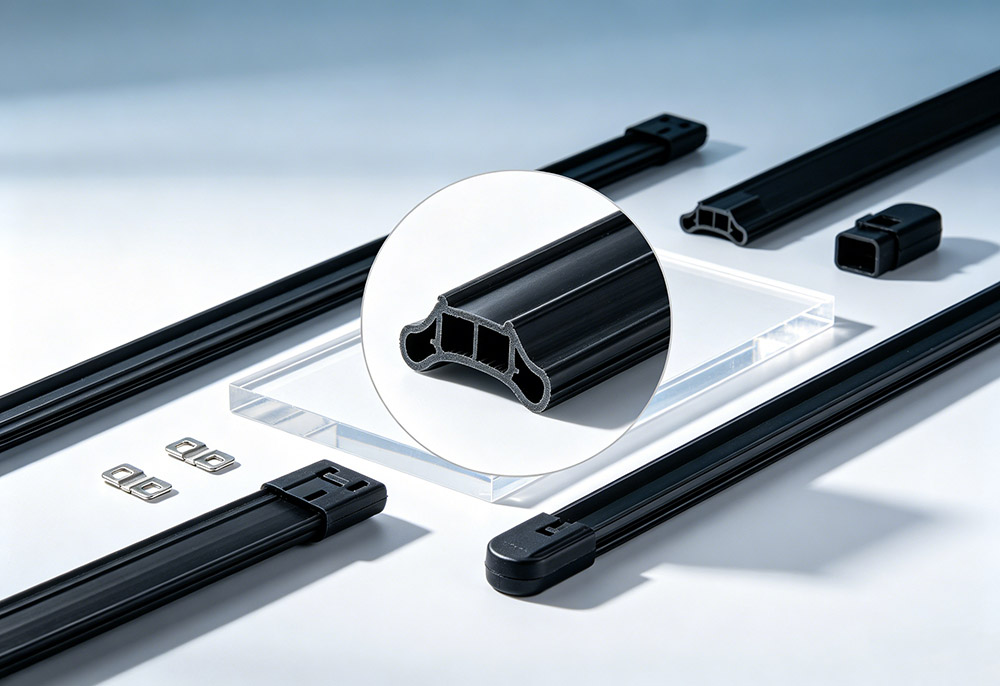
A wiper blade refill, also called a rubber refill, is the wiping part of the blade. It is made of rubber and steel strips, and it is the key part that contacts the glass. Structurally, it is a rectangular rubber piece installed inside the blade frame by sliding it into place. The frame then connects to the wiper arm, and the arm drives the back and forth motion across the windshield.
That definition matters in B2B conversations because a refill only updates the wiping element. It does not automatically refresh the rest of the blade structure around it. If the frame is tired or no longer pressing evenly, the refill alone does not solve every performance issue.
Structure Decides the Refill Conversation
The fastest way to make a refill program hard to manage is to ignore blade construction. Structure comes first.
Conventional metal frame blades
Traditional metal frame blades use a metal or steel frame plus the rubber wiping element. This is why conventional blades appear so often in refill discussions. Our T-500 metal frame wiper blade and T-650A conventional metal wiper blade represent this classic blade family. Both use 100% Malaysia natural rubber and have passed 500,000 durability tests. T-500 also uses a graphite coating on the refill edge and an equal pressure design.
Flat and beam blades
Flat and beam blades are one piece frameless structures. In our T-100 series, the blade uses a three section beam design with an aerodynamic spoiler and imported spring steel. That means the product story is not only about the wiping rubber. The integrated blade body matters too.
Hybrid blades
Hybrid blades combine a high strength polymer shell, a spring steel beam, and a strengthened metal frame. Buyers need to evaluate the whole blade concept carefully. In hybrid programs, structure affects how the product is sold, serviced, and compared with refill based offers.
How Material Choice Shapes Product Positioning
Material choice affects more than wiping performance. It also shapes how the product is positioned and which markets it is best suited for.
For conventional aftermarket programs, natural rubber is still a practical choice for broad, everyday coverage. In models such as the T-500 and T-650A, we use 100% Malaysian natural rubber. The T-500 also features a graphite-coated wiping edge to help reduce friction and maintain smooth, consistent contact with the glass.
For harsher climates or more specialized applications, silicone becomes a stronger option. Our heated models, T-HWB-01 and T-HWB-02, use Teflon-coated silicone refills, as does our silicone blade range. Compared with standard rubber blades, the silicone series is designed for a longer service life, typically around twice as long.
Snow blades require a different approach altogether. Here, durability depends on the entire blade construction, not just the wiping element. Our snow series combines a galvanized steel frame with a sealed rubber cover to help protect the internal structure, while the steel components are designed to perform in temperatures as low as -40°C.
For buyers, the key is to match the material and construction to the climate, price point, and expected service life of the product.
How We Review Compatibility Before We Quote
A refill order can fail even when the buyer knows the vehicle list. We begin with the blade, not the car.
Confirm the blade family first
We first confirm whether the target blade is a conventional metal frame, a flat or beam blade, or a hybrid blade. If the structure is misunderstood, the buyer may compare products that should not be treated as direct refill equivalents.
Check the refill profile and steel strip setup
Because a refill consists of rubber and steel strips, the profile and strip arrangement have to match the blade frame it slides into. We do not reduce compatibility to blade length alone. The refill has to fit the frame construction correctly, or the supply program becomes risky from the start.
Separate size from true fit
Size still matters, but size by itself is only a first screen. Buyers often start there because it is easy to sort. A refill program needs more discipline than that. The real fit check is the combination of structure, refill profile, and the way the steel strips sit in the blade. If a buyer needs a broader blade sizing reference for complete blades, our wiper blade size guide is a useful starting point.
Refill Only vs Full Blade Replacement
We compare refill programs and full blade programs in practical terms.
| Buying point | Refill only approach | Full blade replacement approach |
| Main part updated | Rubber and steel strip wiping element | Whole blade assembly |
| Best fit for buyers who want | A focused maintenance option on suitable blade structures | A complete product refresh in one item |
| Compatibility workload | Higher, because frame fit has to be checked carefully | Broader at the assembly level, based on the blade program selected |
| Shelf presentation | Depends on the blade already on the vehicle | New blade presentation comes with the replacement |
| Structure impact | Existing frame condition still matters | New structure is part of the sale |
| Training need | More important where workshops install refills | Simpler where customers already buy complete blades |
This is why many distributors carry both categories, but they do not push them in the same way. In broad passenger car coverage, a full blade line can be easier to scale. Our T-100 beam blade, for example, fits more than 96% of global passenger vehicles, including Toyota Camry, KIA, and Hyundai, supports U-Hook arms, and has a normal service life of 10 to 12 months.
How Distributors Should Stock the Category
A refill business works best when the assortment is honest and narrow enough to manage.
Start from the installed blade base
If the local market still carries a meaningful base of conventional frame blades, refill stock can have a clear role. If the market has shifted heavily toward beam and hybrid replacement sales, we usually keep the refill offer focused instead of forcing every request into the line.
Split retail, workshop, and fleet supply
A retail shelf does not need the same mix as a service counter. Workshop buyers may want a straightforward maintenance line. Fleet accounts may care more about repeat supply and fit control. The stocking logic should follow the selling environment, not a generic catalog list.
Keep training simple
Refill categories can create avoidable mistakes if the counter team treats them like full blade sales. We suggest clear internal rules about which blade families the team will support, which material tiers belong in the market, and where the program stops.
Packaging and Private Label Planning
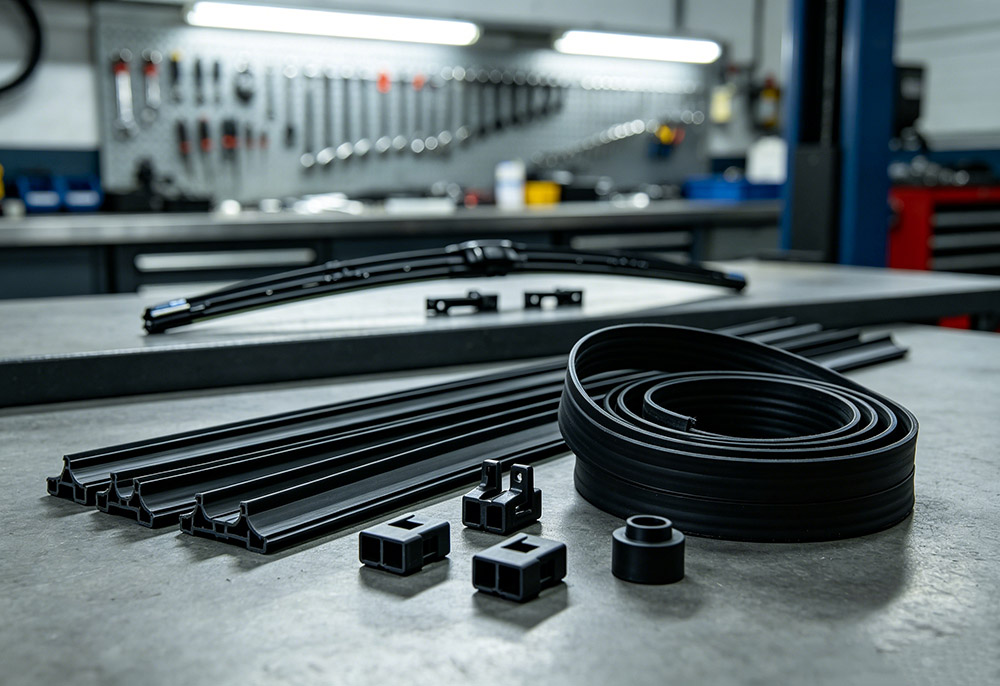
TOPEX can support branded boxes, plain packaging, and blister packs, as well as OEM production, private labeling, logo printing, and color customization. The right format depends on the channel. A workshop supply program usually needs something simple and practical, while a retail line may require stronger shelf visibility and clearer branding.
For private label projects, it also helps to define the role of the refill range early. It may be sold as a standalone maintenance item, included as part of a broader wiper assortment, or used as an entry point for a larger private label program.
If the project extends beyond refills, our OEM/ODM service can support the wider blade range, packaging, and branding requirements under one program. Making these decisions at the beginning usually keeps the assortment clearer and avoids unnecessary packaging changes later.
FAQ
Planning a refill range or comparing it with full blade supply? If you are building a private label wiper program, contact us and we will help you sort the right structure, material, and packaging direction for your market.

--- END ---


