
EU PPWR 2026: How Wiper Blade Brands Should Redesign Their Packaging
Sep 28, 2026
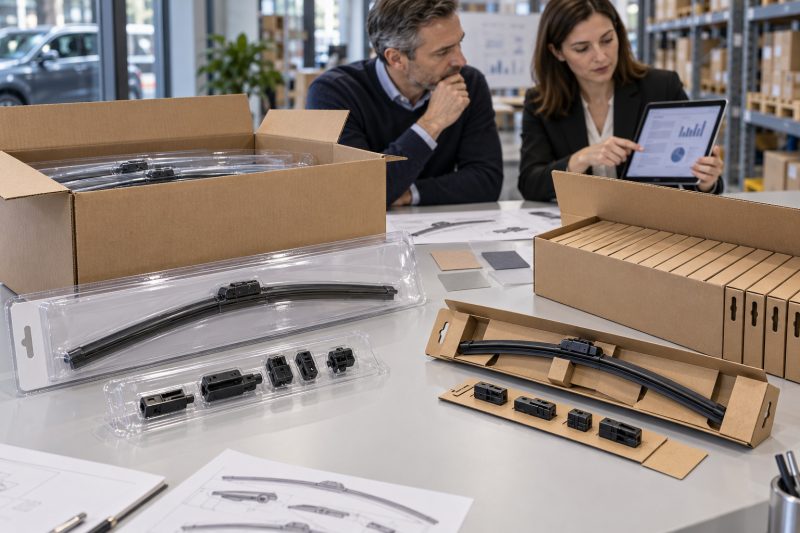
Wiper blade packaging must combine shelf visibility, hanging strength, and protection for a long, flexible product. This has encouraged oversized boxes, plastic blisters, windows, lamination, bags, ties, and large shipping cartons.
Regulation (EU) 2025/40 entered into force on 11 February 2025 and has applied since 12 August 2026. However, harmonised labelling, recyclability, recycled-content, empty-space, and minimisation measures follow different timelines.
Wiper blade brands should therefore treat PPWR as a phased packaging redesign program—not a one-time artwork change. The immediate task is to map every packaging component, identify avoidable weight and complexity, collect reliable material evidence, and prepare controlled revisions for future deadlines.
I am Jacky Huang, CEO of Xiamen TOPEX Auto Parts Co., Ltd. I recommend separating what applies now, what becomes mandatory later, and what can be improved without creating obsolete stock.
Why PPWR Changes the Packaging Rules for Wiper Blade Brands
The European Commission’s PPWR overview confirms that the Regulation covers packaging placed on the EU market regardless of material or origin. Packaging made outside the EU is therefore still covered when placed on that market.
A retail wiper package may include:
- Printed paperboard or corrugated board
- A PET, PVC, or other plastic window or blister
- Film lamination or protective coating
- Plastic hooks, clips, cable ties, or bags
- Paper or plastic labels with adhesive
- Ink, varnish, and hot-stamping layers
- Instructions, adapter bags, and promotional inserts
- Inner cartons, master cartons, tape, straps, and pallet wrap
- Separate packaging for e-commerce fulfilment
A “paper box” may still be a multi-component system. Its recyclability cannot be judged from the main material alone.
The Timeline Must Be Read in Stages
The Commission states that harmonised labelling applies from 2028, while major recyclability, recycled-content, empty-space, and reduction measures generally apply from 2030 or later. Brands need a requirement-by-date matrix.
| Timing | General PPWR development | Practical implication for wiper brands |
|---|---|---|
| 11 February 2025 | Regulation entered into force | Begin legal and packaging impact assessment |
| 12 August 2026 | Regulation began applying | Confirm obligations already applicable and economic-operator roles |
| From 2028 | Harmonised labelling system is expected to apply | Reserve artwork space and control label revisions |
| From 2030 | Major recyclability and reduction measures begin | Redesign high-risk packaging before large print commitments |
| Later phases | Some targets become stricter | Maintain specifications and update the compliance plan |
Not every wiper package had to be replaced in 2026, but packaging now needs a managed regulatory lifecycle.
The PPWR Compliance Mistakes That Could Make a Redesign Fail
Switching from a blister to paperboard does not solve every issue. Windows, lamination, coatings, adhesives, eyelets, or decorative layers may still complicate recycling.
Printing Future Labels Too Early
Brands should not guess future harmonised EU labels. Printing large quantities before technical specifications are confirmed can create obsolete stock.
A safer approach is to:
- Reserve adequate space in the artwork
- Keep editable source files and revision control
- Separate stable product information from regulatory label areas
- Use market-specific labels only after verification
- Obtain importer or compliance-adviser approval before mass printing
Using Unsupported Environmental Claims
Green graphics and terms such as “eco” or “100% recyclable” do not prove compliance. Claims should match evidence for the complete package, not one component.
Reviewing Only the Retail Package
Audit all packaging levels. A light retail sleeve can still enter an oversized inner or e-commerce carton.
| Redesign mistake | Why it creates risk | Better control |
|---|---|---|
| Calling every paper box compliant | Ignores windows, films, adhesives, and coatings | Record every component and material |
| Printing an assumed EU label | Future technical format may differ | Reserve space and await confirmed specifications |
| Removing protection without testing | Blade, connector, or package may be damaged | Complete transport and handling tests |
| Redesigning only consumer packaging | Secondary and transport materials remain unreviewed | Audit the complete packaging system |
| Using broad green claims | Claim may exceed available evidence | Use specific, documented statements |
| Applying one artwork across Europe | EPR and language needs can vary | Manage destination-market versions |
PPWR and national EPR are related but distinct. EU design rules do not automatically complete country-specific registration, reporting, or fees.
What Wiper Blade Brands Should Change in Their Packaging
Begin with a packaging bill of materials covering each component’s code, supplier, material, weight, dimensions, function, artwork, and evidence.
Reduce Material Without Losing Protection
Reduction must not allow bending, rubber-edge damage, lost adapters, or transport failure.
Potential actions include:
- Shorten or narrow boxes where product geometry allows.
- Remove unused internal space and oversized hanging areas.
- Replace full plastic blisters with tested paperboard structures.
- Reduce or remove transparent windows where visibility is nonessential.
- Replace plastic ties with paper-based or integrated retention features where workable.
- Review whether individual plastic bags are necessary.
- Reduce excessive lamination, varnish, foil, and decorative layers.
- Standardise cartons across compatible lengths without creating excessive void space.
- Improve units per carton and pallet utilisation.
- Right-size e-commerce packaging separately from retail packaging.
Improve Material Separability
When several materials remain necessary, they should be separable as intended. A permanently bonded window may be more problematic than a removable component.
| Packaging component | Redesign question | Evidence to retain |
|---|---|---|
| Paperboard body | Can weight or size be reduced? | Grade, weight, supplier specification |
| Plastic window or blister | Is it necessary and easily separable? | Polymer type, weight, attachment method |
| Lamination or coating | Does it affect recycling? | Material and process declaration |
| Adhesive | Is it suitable for the intended recycling stream? | Supplier technical information |
| Cable tie or clip | Can it be removed or replaced? | Material, weight, functional test |
| Adapter bag | Can components be retained another way? | Pack-out and loss-prevention test |
| Shipping carton | Is space utilisation efficient? | Dimensions, compression test, carton quantity |
| Pallet wrap and tape | Can usage be reduced? | Consumption by shipment unit |
After validation, approve a reference sample linked to drawings, weights, materials, artwork, labels, and packing method. Later material substitutions require review.
How PPWR-Ready Packaging Can Strengthen Distributor Relationships
European distributors may manage registrations, packaging reports, and documentation requests. A supplier providing only a finished box and a vague claim transfers risk to the buyer.
A better supplier package can include:
- Component-level packaging bill of materials
- Net packaging weight by material
- Supplier material declarations and specifications
- Package drawings and dimensions
- Product-to-package and carton packing quantities
- Artwork version and market applicability
- Evidence supporting recyclability-related statements
- Change-control and approval records
- Transport and package-integrity test results
- Data suitable for EPR reporting where requested
This information supports reporting, audits, packaging comparisons, and fewer last-minute corrections.
The TOPEX flat wiper blade range includes multi-fit formats requiring secure adapter retention and installation information. Reduction must not cause component loss.
The TOPEX OE exact-fit wiper blade range requires clear vehicle and position identification. Simplification must not weaken fitment, barcode, or warehouse control.
| Supplier capability | Distributor benefit |
|---|---|
| Reliable material and weight data | Faster compliance and EPR reporting |
| Controlled artwork versions | Fewer market-label errors |
| Smaller packaging and better carton utilisation | Lower storage and freight exposure |
| Documented package tests | Lower damage and return risk |
| Advance notice of material changes | Time to review compliance implications |
| Market-specific pack management | Less relabelling and delayed inventory |
PPWR readiness becomes an advantage when supported by controlled evidence, not general sustainability language.
A Practical PPWR Roadmap for Wiper Blade Packaging
Redesign in controlled stages, prioritising high-volume products and packages with the most material, plastic, or empty space.
Phase 1: Map the Current Packaging
Inventory retail, inner, transport, e-commerce, and pallet packaging. Weigh components and record which markets and SKUs use each version.
Phase 2: Identify High-Risk Features
Flag unnecessary windows, inseparable combinations, heavy lamination, oversized boxes, duplicate bags, unsupported claims, and missing declarations.
Phase 3: Develop and Test Alternatives
Test blade protection, connector retention, hanging strength, barcode readability, compression, vibration, drops, humidity, handling, and installation.
Phase 4: Approve Data and Artwork
Freeze materials, dimensions, weight, drawings, artwork, declarations, and packing method before high-volume printing.
Phase 5: Monitor Regulatory and Market Changes
The European Commission’s August 2026 update confirms the phased approach and continuing secondary legislation. Do not rely on an old checklist.
A practical control plan should include:
- A responsible packaging and compliance owner
- A requirement-by-date matrix
- One controlled packaging database
- Approved suppliers and material evidence
- Pilot quantities before mass conversion
- Market-specific EPR responsibility mapping
- Scheduled regulatory reviews
- Change approval before material substitution
- A plan for using or withdrawing old packaging stock
Starting early means collecting facts, reducing waste, testing alternatives, and retaining flexibility—not inventing future labels.
Conclusion
The PPWR should be treated as a phased packaging transformation rather than a one-time artwork update. Wiper blade brands selling into the EU should map every packaging component, reduce unnecessary weight and empty space, improve material separability, and obtain reliable composition data from their packaging suppliers.
They should also distinguish between requirements already applicable from August 2026 and measures that take effect later, including harmonised labelling and recyclability obligations. Before printing large packaging volumes, brands should confirm the latest EU implementing rules and destination-market EPR requirements with their importer or compliance adviser.
Starting with a packaging audit and controlled pilot redesign can reduce obsolete stock while preparing the product line for future deadlines.
Frequently Asked Questions About EU PPWR and Wiper Blade Packaging
When did the EU Packaging and Packaging Waste Regulation start to apply?
Regulation (EU) 2025/40 entered into force on 11 February 2025 and began applying on 12 August 2026. Its obligations are phased, so that application date should not be interpreted as the deadline for every labelling, recyclability, recycled-content, or minimisation requirement.
Does PPWR apply to wiper blades imported from outside the EU?
It applies to packaging placed on the EU market regardless of the packaging material or product origin. A non-EU supplier should clarify responsibilities with the EU importer or distributor and provide the packaging data needed for compliance and reporting.
Must wiper blade packaging be redesigned immediately in 2026?
Not every later-stage requirement demanded an immediate full redesign in August 2026. However, brands should already audit packaging, confirm current obligations, collect material evidence, and plan revisions for phased deadlines. Legal advice should be based on the specific package and market.
Are plastic blister packs still permitted under PPWR?
PPWR does not create a simple universal rule that every wiper blade blister became prohibited in 2026. The complete design must be assessed against applicable and future requirements, including minimisation, recyclability, material composition, and any relevant restrictions. Brands should evaluate lower-material and easier-to-recycle alternatives.
What packaging records should a wiper blade supplier provide?
Useful records include a component-level bill of materials, material types, individual weights, dimensions, supplier declarations, drawings, artwork versions, packing quantities, test results, change history, and evidence supporting environmental or recyclability claims.
How do PPWR requirements differ from national EPR obligations?
PPWR establishes EU-wide packaging rules, while EPR administration can still involve country-specific registration, reporting, fees, and responsible-party arrangements. A package designed for PPWR requirements may still require separate EPR actions in each destination market.

--- END ---


