
Global Wiper Blade Market Trends and Opportunities in 2026
Aug 24, 2026
The global wiper blade market may look like a mature replacement-parts category, but important changes are taking place beneath the surface. Vehicle manufacturers continue to introduce new wiper-arm connections, windshield designs are becoming more complex, online fitment tools are influencing purchasing decisions, and customers expect quieter operation, longer service life, easier installation, and more dependable performance in difficult weather.
For wholesalers, importers, automotive aftermarket distributors, fleet suppliers, retailers, and private-label brands, the opportunity in 2026 does not come from following one global growth forecast. It comes from understanding how vehicle coverage, product structure, climate, pricing, and distribution channels differ between markets.
The strongest wiper blade opportunities in 2026 are connected to accurate vehicle fitment, carefully segmented product ranges, multi-fit adapter systems, climate-specific products, e-commerce-ready data, fleet replacement programs, and flexible private-label support. Flat blades continue to gain attention, but hybrid and conventional blades remain commercially relevant. Buyers should build their ranges around real vehicle applications and customer needs instead of assuming that one blade type will dominate every market.
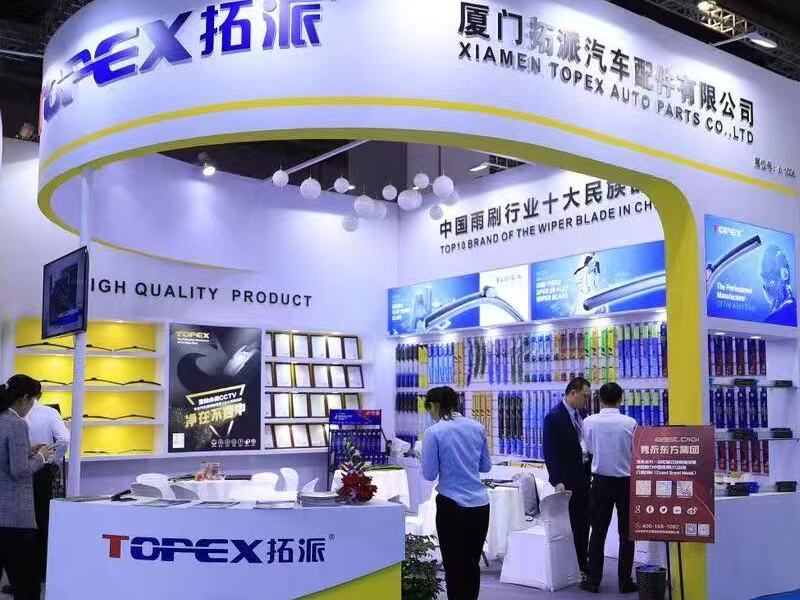
I am Jacky Huang, CEO of Xiamen TOPEX Auto Parts Co., Ltd. My work covers wiper blade production, product development, sourcing, export, and supply-chain support for international automotive aftermarket buyers. When I discuss new programs with importers, the first question is often about market growth. However, I believe a more useful question is: where can a buyer create sustainable sales without building an unmanageable inventory?
The answer depends on the target country, vehicle population, climate, price level, sales channel, and ability to provide accurate fitment information.
Why the Wiper Blade Market Is Changing Faster Than It Appears
Wiper blades are familiar replacement products, so the category can appear simple. A new buyer may assume that the main decisions are blade type, length, packaging, and price. In practice, each of these decisions now connects with a much larger set of commercial risks.
Vehicle manufacturers use U-hook, push-button, pinch-tab, bayonet, side-pin, top-lock, and other vehicle-specific arm connections. Different model years of the same vehicle can require different adapters. Driver-side and passenger-side blades may use different lengths, structures, or curvatures. Rear blades add another layer of application complexity.
At the same time, customers increasingly compare products through online listings and reviews. A blade may perform well, but it can still fail commercially if the vehicle information is wrong, the adapter instructions are unclear, or the package does not help the customer identify the correct application.
The wiper blade market is changing because success now depends on more than producing common blade lengths at a competitive price. Suppliers and buyers must manage connector diversity, windshield curvature, vehicle application data, performance expectations, packaging, online product information, and inventory efficiency. These factors directly influence installation success, return rates, customer reviews, and repeat orders.
Vehicle Fitment Has Become Part of the Product
For many years, a distributor could build a large part of its wiper range around common U-hook blades. U-hook applications remain commercially important, but newer vehicles have introduced more connector variations.
This development creates several possible problems:
- The correct blade length may be supplied with the wrong adapter.
- A listing may include an incompatible model year.
- A multi-fit adapter may fit the arm but hold the blade at an incorrect angle.
- The connector may look secure without being completely locked.
- A package diagram may show a different adapter from the one inside.
- An online application table may not match the printed catalogue.
- An installer may select the passenger-side blade for the driver’s side.
- A distributor may add too many slow-moving adapter combinations.
A well-manufactured blade can therefore receive a return for reasons unrelated to rubber quality. For e-commerce sellers, fitment accuracy may be just as important as the physical product because customers often select blades without assistance from a technician.
When I review a new program with a buyer, I ask for the target country and vehicle application list before recommending a complete range. Selecting products only by length can create unnecessary inventory while leaving important vehicles uncovered.
Windshield Curvature Changes Performance Requirements
A flat blade uses its internal spring-steel structure to distribute pressure along the rubber edge. A conventional blade uses articulated pressure points, while a hybrid design combines a frame-based structure with an external aerodynamic cover.
None of these structures performs equally well on every windshield. Curvature, blade length, arm pressure, connector position, and parked angle can influence the final result.
| Application variable | Possible performance problem | Commercial risk |
|---|---|---|
| Blade is too rigid | Ends do not follow the windshield | Missed wiping areas |
| Spring pressure is uneven | A fixed section remains streaked | Quality complaints |
| Adapter sits too high | Blade becomes unstable or noisy | Negative reviews |
| Incorrect length is selected | Blade contacts trim or another blade | Installation failure |
| Spoiler faces the wrong direction | Reduced aerodynamic stability | High-speed complaints |
| Connector is not fully locked | Blade moves or detaches | Warranty and safety risk |
| Arm pressure is weak | Incomplete glass contact | Unnecessary product returns |
This is why I do not recommend approving a blade based only on its appearance or materials. A successful evaluation must include installation and wet wiping on representative vehicles.
Customers Expect More Than Basic Water Removal
Modern customers do not judge a blade only by whether it moves water. They notice noise, streaking, vibration, high-speed lift, installation difficulty, product appearance, and the speed at which performance declines.
Night driving can make small wiping defects more obvious. A thin water film or repeated streak may scatter light from headlights and streetlights even when the windshield looks relatively clear during the day.
B2B buyers should therefore evaluate:
- Initial wet wiping quality
- Contact at both ends of the blade
- Noise, chatter, and skipping
- High-speed stability
- Rubber-edge finish
- Performance after repeated cycles
- Connector strength
- Resistance to heat, UV, ozone, and temperature changes
- Packaging protection during transport
- Consistency across different production batches
A premium label does not protect a distributor from complaints. Consistent finished-product performance does.
E-Commerce Is Changing Inventory and Product Data
In a physical shop, an employee may help a driver select and install the blade. On an e-commerce platform, the product page must perform much of that work.
The listing needs accurate information about:
- Vehicle make, model, and year
- Driver, passenger, or rear position
- Blade length
- Arm and adapter type
- Package contents
- Installation procedure
- Product structure
- Relevant performance benefits
- Warranty or support process
If any of these elements are wrong, returns can increase even when the blade itself is functional. Suppliers that can support application tables, product images, installation diagrams, packaging content, and catalogue updates therefore offer more value than suppliers focused only on unit price.
The Market Trends Buyers Should Not Follow Blindly
Market research can help buyers identify direction, but headline figures should not be treated as interchangeable facts. One report may measure replacement blades, while another includes wiper arms, motors, washer equipment, linkages, or complete OE systems.
Estimates may also use different base years, regions, vehicle categories, and sales channels. A large difference between two published market values does not necessarily mean that one report is wrong. The reports may simply be measuring different markets.
Buyers should not compare published market-size estimates without checking their scope. They should also avoid assuming that flat blades will immediately replace conventional blades, that the longest claimed lifespan always offers the best value, or that reducing SKUs automatically improves inventory performance. Market trends should guide investigation, but country-level vehicle data and product testing should guide purchasing.
Do Not Combine Market Reports with Different Definitions
Before using a published forecast, I recommend checking the following questions:
- Does the report measure wiper blades or complete wiping systems?
- Does it include both OEM and aftermarket demand?
- Are passenger cars and commercial vehicles included?
- Does it include front, rear, winter, and specialty blades?
- Which countries and regions are covered?
- What is the base year?
- Is revenue measured at manufacturing, wholesale, or retail level?
- How does the report define flat, hybrid, and conventional designs?
Market research from organizations such as Future Market Insights can help buyers understand broad segmentation. However, buyers should not place unrelated estimates in the same table without explaining the different scopes.
For sourcing decisions, vehicle registrations, replacement behavior, product mix, price bands, and channel structure are often more actionable than one global market value.
Flat Blades Will Not Replace Every Conventional Blade
Flat blades are gaining importance, particularly on newer passenger vehicles. Their low-profile construction supports aerodynamic styling, while an internal spring-steel spine can distribute pressure across the windshield.
However, conventional framed blades remain relevant because:
- Older vehicles still form a large part of the global vehicle parc.
- U-hook arms remain common.
- Economy channels require accessible price points.
- Drivers in some markets prefer familiar products.
- Certain commercial and specialty applications continue to use framed structures.
- Distributors cannot replace an established catalogue immediately.
- Demand differs considerably between countries.
Hybrid blades also serve a real market position. Their external cover creates a more modern appearance and can protect the internal frame while retaining multiple pressure points.
The correct question is not whether flat blades will defeat every other structure. The correct question is how much space each structure deserves in a specific market.
Longest Lifespan Does Not Automatically Mean Best Value
Durability is important, especially for fleets and premium retail programs. However, a long lifespan claim cannot compensate for poor fitment, noise, unstable movement, or incomplete windshield contact.
Material descriptions also require careful evaluation. Words such as silicone, graphite, nano coating, Teflon-related coating, natural rubber, or premium compound do not describe the complete finished product.
| Product claim | What a professional buyer should verify |
|---|---|
| Long service life | Test conditions, wiping cycles, and failure criteria |
| Universal fit | Confirmed arm coverage and connector security |
| All-weather performance | Relevant heat, cold, UV, ozone, and corrosion tests |
| Quiet operation | Chatter and noise under realistic wet conditions |
| High-speed stability | Contact and blade lift on representative vehicles |
| Premium rubber | Compound consistency and finished wiping quality |
| Water-repellent effect | Initial effect, durability, and glass compatibility |
| OE quality | Specific dimensions, tolerances, and performance standards |
When a supplier provides only a material description without explaining finished-blade testing, the buyer still lacks important information.
SKU Reduction Can Create Coverage Gaps
Multi-fit connectors can reduce inventory pressure by allowing one blade platform to serve several arm types. This can be valuable, but only when the coverage claims are accurate and the installation process is clear.
Excessive SKU reduction can create hidden problems:
- Common vehicles may remain uncovered.
- Packages may require too many loose adapters.
- Staff may select the wrong adapter.
- Instructions may become complicated.
- Connector height may affect performance.
- Online listings may overstate compatibility.
- One “universal” product may generate more returns than several focused products.
The objective should be efficient coverage, not simply the smallest possible number of SKUs.
I recommend measuring range efficiency through sales by SKU, inventory turnover, vehicle coverage, stockout frequency, installation complaints, and incorrect-fit returns. A smaller catalogue is useful only when it continues to cover the vehicles that generate demand.
Finished-Product Testing Matters More Than Material Promotion
Rubber quality is critical, but the blade also depends on spring pressure, frame geometry, connector alignment, spoiler design, assembly tolerance, and vehicle matching.
A supplier may use an attractive compound while producing an inconsistent finished product. For this reason, buyers should test complete blades rather than approving a product from a material description alone.
A practical sample review should include installation, connector security, wet wiping, noise, end contact, repeated cycles, package condition, and fitment data.
Which Wiper Blade Segments Offer the Strongest Opportunities in 2026
The strongest opportunities are not limited to one blade design. They appear where a product solves a specific vehicle, climate, channel, or inventory problem.
Flat blades can support modern passenger-vehicle programs. Conventional blades continue to serve price-sensitive and older-vehicle markets. Hybrid products offer an additional performance and styling position. Rear, winter, commercial-vehicle, multi-fit, fleet, e-commerce, and private-label ranges provide further opportunities.
Promising wiper blade segments in 2026 include flat blades for modern passenger vehicles, hybrid products for mid-range and performance positioning, conventional blades for value and legacy coverage, rear blades for SUVs and hatchbacks, climate-specific products, multi-fit platforms, fleet replacement programs, e-commerce-ready ranges, and private-label products. Buyers should select these segments according to local vehicle demand rather than global popularity alone.
Flat Blades for Modern Passenger Vehicles
Flat or beam blades are particularly relevant to newer passenger cars and aftermarket customers seeking an aerodynamic, OE-style appearance. Their structure can provide consistent windshield contact when the spring-steel profile is correctly designed for the intended application.
The TOPEX flat wiper blade range provides options for different adapter, application, and channel requirements. When selecting products from this category, I recommend focusing on vehicle coverage, adapter security, rubber consistency, and actual wet wiping rather than choosing products only by external design.
Flat-blade opportunities are strongest when the supplier can support:
- Accurate model-year applications
- Common modern arm types
- Secure and easy-to-understand adapters
- Stable spring-steel curvature
- Consistent rubber edges
- Clear installation guidance
- E-commerce product data
- Retail and private-label packaging
Hybrid Blades for Balanced Market Positioning
Hybrid blades can occupy the commercial space between conventional and flat products. Their covered frame provides a substantial appearance, while the aerodynamic shell can improve styling and protect internal components.
The TOPEX hybrid wiper blade range gives buyers another option for markets that need a mid-range or performance-oriented product.
Hybrid products may be suitable for:
- Mid-range retail programs
- Markets with mixed vehicle ages
- Private-label ranges requiring visible differentiation
- Customers who prefer a protected frame
- Vehicle-specific applications requiring hybrid construction
- Channels where a larger product profile supports premium positioning
The hybrid name alone does not guarantee better performance. Buyers should still inspect shell security, joint movement, rubber quality, pressure distribution, and high-speed stability.
Conventional Blades Remain Commercially Relevant
Millions of vehicles continue to use conventional framed blades. These products offer familiar installation, broad U-hook demand, and competitive pricing.
In markets with older vehicle populations, eliminating conventional blades could remove important applications or force customers into a higher price band. A more practical strategy may combine a reliable conventional core range with selected flat and hybrid upgrades.
| Product segment | Main market position | Suitable channels | Main sourcing risk |
|---|---|---|---|
| Flat or beam blade | Modern and aerodynamic | Premium retail, e-commerce, newer vehicles | Incorrect curvature or adapter |
| Hybrid blade | Mid-range and performance-oriented | Retail and private label | Shell or joint inconsistency |
| Conventional blade | Value and legacy coverage | Wholesale and economy retail | Severe price competition |
| OE exact-fit blade | Vehicle-specific convenience | Professional service and premium aftermarket | Slow-moving applications |
| Rear blade | Application-specific replacement | Retail, workshops, and e-commerce | Fragmented connector coverage |
| Winter blade | Climate-specific protection | Seasonal and cold-weather markets | Inventory timing |
| Silicone-positioned blade | Premium durability | Fleets and premium retail | Unsupported lifespan claims |
| Heavy-duty blade | Commercial vehicle use | Truck, bus, and fleet supply | Incorrect arm matching |
Rear Blades Offer Additional Basket Value
Rear wipers receive less attention than front blades, but SUVs, crossovers, hatchbacks, and estate cars create recurring replacement demand. Rear connectors are often vehicle-specific, which makes accurate fitment data especially valuable.
A focused rear-blade range can increase average order value and help retailers provide more complete vehicle coverage. It can also face less direct price comparison when customers need a specific connection.
The challenge is application fragmentation. Buyers should begin with high-volume rear applications instead of attempting to stock every available connector.
Climate-Specific Products Create Regional Demand
Climate affects rubber deterioration, corrosion, contamination, and customer expectations. Buyers serving different environments should not rely on one product message for every market.
Common regional requirements include:
- Heat- and UV-resistant materials for hot climates
- Winter or covered-frame products for snow and ice
- Corrosion-resistant components for coastal regions
- Strong cleaning performance in dusty environments
- Stable high-speed contact for motorway driving
- Durable structures for high-mileage fleets
- Suitable packaging for seasonal retail promotions
A winter market may prioritize low-temperature flexibility and resistance to ice buildup. A tropical market may focus on heavy rainfall and repeated wiping cycles. A desert market may need resistance to heat, UV exposure, and abrasive dust.
Fleet Programs Reward Predictable Performance
Fleet buyers often care more about consistent quality, installation time, application coverage, supply continuity, and cost per vehicle than decorative retail packaging.
A fleet program can measure:
- Replacement frequency
- Installation labor
- Vehicle downtime
- Complaints by vehicle
- Seasonal failure patterns
- Cost per service cycle
- Adapter-related errors
- Repeat-order performance
These measurements create an opportunity for suppliers that can maintain stable specifications across production orders. A supplier should not provide an excellent sample and then change the rubber, adapter, spring pressure, or assembly standard during mass production.
E-Commerce and Private Label Create Service Opportunities
Private-label buyers need more than a logo printed on a package. They may require product positioning, fitment tables, packaging design, barcodes, installation content, digital images, carton labels, and catalogue support.
An effective e-commerce listing must help the customer answer three questions:
- Does this blade fit my vehicle?
- Which length and position do I need?
- How do I install the included adapter?
A supplier that helps answer these questions can reduce returns and strengthen the buyer’s brand, even when competing products use similar physical structures.
What Global Buyers Should Expect from a Competitive Wiper Supplier
Price remains important, but the lowest quotation does not always produce the lowest business cost. Fitment errors, unstable wiping, weak packaging, inconsistent production, and delayed deliveries can quickly eliminate the apparent saving.
A competitive supplier should help the buyer reduce those risks. This requires technical, production, data, and private-label capabilities—not only a long product catalogue.
Global buyers should expect a competitive wiper supplier to provide verified fitment support, stable rubber and spring-steel quality, finished-product testing, secure connectors, flexible packaging, reasonable trial-order options, responsive development, and regularly updated application information. Repeat-order consistency should be evaluated as carefully as initial sample quality.
Accurate Application Support
A supplier should be able to discuss blade position, length, arm type, adapter, model-year differences, and regional vehicle variations. It should also have a process for correcting catalogue errors.
Vehicle data is not static. New models enter the market, arm systems change, and application mistakes are sometimes discovered after launch. A responsible supplier should record buyer feedback and update relevant files rather than continuing to distribute incorrect information.
Stable Materials and Production Specifications
The buyer should confirm which product details will remain consistent after sample approval.
Important specifications include:
- Rubber or silicone-related compound
- Rubber-edge profile and finish
- Surface coating
- Spring-steel material and curvature
- Frame and spoiler materials
- Adapter resin
- Connector locking structure
- Rivets, clips, joints, and end caps
- Assembly tolerances
- Packaging materials
- Finished-product appearance
The approved sample, quotation, product specification, packaging file, and purchase order should describe the same product. If the supplier proposes a material or construction change, the buyer should approve it before production.
Testing Should Reflect Real Customer Complaints
Testing is most useful when it addresses the problems customers actually report.
| Evaluation area | Practical question |
|---|---|
| Wet wiping | Does the blade leave repeated streaks or missed sections? |
| Noise | Does it chatter, squeak, or skip? |
| Pressure distribution | Do the center and both ends contact the glass? |
| Connector security | Does the adapter lock firmly? |
| Temperature resistance | Is it suitable for the target climate? |
| UV and ozone resistance | Can the rubber tolerate outdoor exposure? |
| Corrosion resistance | Are metal parts suitable for moisture and road salt? |
| High-speed stability | Does the blade remain stable on relevant vehicles? |
| Cycle durability | What conditions and failure standards are used? |
| Packaging strength | Does the blade arrive straight and undamaged? |
At TOPEX, I discuss product selection with buyers according to their target country, vehicle range, quality level, price position, packaging, order volume, and sales channel. My objective is to help buyers build a practical range instead of simply recommending the largest possible catalogue.
Packaging Must Match the Sales Channel
A retail chain may need attractive hangable packaging, clear size information, and local-language instructions. An e-commerce seller may prioritize compact packaging, barcode accuracy, parcel protection, and simple installation content. A fleet buyer may prefer efficient bulk packaging.
Before printing or mass production, buyers should approve:
- Brand and product name
- Blade type and length
- Vehicle or adapter information
- Installation instructions
- Performance claims
- Barcode and SKU
- Country-of-origin information
- Recycling or legal markings
- Carton quantity
- Shipping marks
- Package color and materials
Packaging mistakes can delay a product launch or create costly rework even when the blade has already passed performance testing.
Reasonable MOQs Support Controlled Market Testing
A reasonable MOQ can help a buyer enter a new segment without creating excessive inventory. However, a small order should still contain a planned mix of lengths, adapters, and product types.
Development speed also matters, especially for private-label packaging and new adapters. Speed should not come at the expense of application verification, sample testing, or artwork approval.
A strong supplier combines responsive development with a controlled approval process.
How to Turn 2026 Market Trends into a Smarter Sourcing Strategy
Market information becomes valuable only when it changes a purchasing decision. Buyers should translate global trends into a plan for their own vehicle population, climate, pricing, channels, and customers.
I recommend beginning with target-market data and expanding only after the first range produces measurable results.
A smarter 2026 sourcing strategy should follow seven stages: analyze the target vehicle market, define channels and price levels, build a core SKU range, test products in relevant climates, verify blades and fitment data together, run a controlled trial order, and expand according to return rates, repeat sales, inventory turnover, and verified vehicle coverage.
Step 1: Analyze the Target Country and Vehicle Parc
Start with the market—not the supplier’s catalogue. Identify the brands, models, model years, body types, arm connections, and blade lengths that generate local replacement demand.
Useful information may come from:
- Vehicle-registration data
- Historical customer orders
- Workshop service records
- Existing fitment databases
- Competitor catalogues
- E-commerce marketplace searches
- Fleet application lists
- Retailer return records
- Local vehicle-age statistics
The analysis should distinguish between newer vehicles requiring flat or OE-style blades and older vehicles that continue to create demand for conventional products.
Step 2: Define the Channel and Price Structure
Wholesale, retail, e-commerce, workshop, and fleet channels do not need identical products.
A planned range may include:
- Entry-level conventional blades
- Mid-range hybrid blades
- Universal or multi-fit flat blades
- Premium flat or silicone-positioned blades
- OE exact-fit applications
- Rear blades
- Winter products
- Commercial-vehicle blades
Each product tier should have a clear purpose. Adding multiple blades with similar construction and unclear differences can confuse customers while increasing inventory.
Step 3: Build the Core SKU Range
Rank applications by expected demand. Start with the lengths and connectors that cover important vehicles, but verify the coverage instead of relying on broad universal claims.
| Purchasing input | Decision it supports | Recommended result |
|---|---|---|
| Target vehicle parc | Important applications | Priority model list |
| Sales channel | How customers select blades | Suitable product and packaging |
| Price bands | Market positioning | Good-better-best structure |
| Local climate | Material and construction | Regional test requirements |
| Connector mix | Adapter selection | Core connector platform |
| Historical sales | Quantity planning | Volume by SKU |
| Return information | Fitment correction | Revised data and instructions |
| Seasonal demand | Delivery planning | Production calendar |
A core range should be broad enough to support customer demand but focused enough to maintain stock availability and healthy turnover.
Step 4: Test Products on Representative Vehicles
Samples should be installed and tested on actual vehicles whenever possible. Buyers should inspect:
- Connector locking
- Correct blade position
- Windshield contact
- End pressure
- Wet wiping
- Noise and chatter
- Multiple operating speeds
- Adapter height
- Spoiler direction
- Package contents
- Installation instructions
Testing should reflect the target climate. A northern European buyer may prioritize low-temperature flexibility and corrosion resistance. A Middle Eastern buyer may focus on heat, UV exposure, and dust. A tropical-market buyer may emphasize heavy rainfall, road film, and frequent operation.
Results should be recorded by vehicle and SKU. “The driver-side end leaves a repeated 50 mm missed area” gives the supplier more useful information than “the blade quality is poor.”
Step 5: Verify the Product, Package, and Data Together
Before mass production, confirm that the physical blade, packaging, application table, and online listing all agree.
The final review should include:
- Product code
- Blade length
- Blade position
- Adapter set
- Vehicle applications
- Package contents
- Installation guidance
- Barcode
- Carton quantity
- Product claims
- Photographs and diagrams
- Shipping marks
A correct blade placed in an incorrectly labeled package can produce the same customer return as an incompatible blade.
Step 6: Run a Controlled Trial Order
A smaller initial order can reduce inventory risk, but the buyer should define how the trial will be measured.
Track the following information:
- Sales by SKU
- Time required to sell the first batch
- Gross margin
- Customer questions
- Incorrect-fit returns
- Wiping-performance complaints
- Package damage
- Installation problems
- Marketplace ratings
- Repeat purchases
- Stockouts
- Slow-moving applications
The supplier should receive structured feedback. If a connector creates repeated confusion, the solution may involve revised instructions, better photographs, application-data corrections, or a physical adapter improvement.
Step 7: Expand According to Evidence
After the trial, add products that improve important vehicle coverage and reduce lost sales. Reduce or remove SKUs that remain slow without supporting a strategic application.
Expansion should be based on:
- Verified vehicle coverage
- Inventory turnover
- Return rate
- Repeat-order consistency
- Customer feedback
- Supplier lead time
- Price-tier performance
- Seasonal demand
- Gross margin
- E-commerce conversion and reviews
This approach allows a distributor to benefit from market trends without committing excessive capital to uncertain applications. It also creates a repeatable system for improving the range over time.
Conclusion
The global wiper blade market in 2026 is defined less by dramatic category growth than by changes in product mix, vehicle fitment, distribution, and buyer expectations. Flat blades continue to gain attention for their aerodynamic profile and consistent windshield contact, while conventional and hybrid products remain relevant in price-sensitive markets and vehicle-specific applications.
Aftermarket demand is supported by the large global vehicle parc and the recurring need to replace worn blades. However, suppliers and buyers still face intense price competition, counterfeit or inconsistent products, expanding connector diversity, and higher expectations for fitment accuracy.
Importers and distributors should therefore evaluate opportunities at the country, vehicle, climate, price, and channel level rather than relying on one global forecast. Suppliers that combine reliable finished-product performance, broad but verified application coverage, accurate data, consistent production, and flexible private-label support will be better positioned for sustainable growth.
Frequently Asked Questions About Global Wiper Blade Market Trends
How large is the global wiper blade market in 2026?
Published estimates vary because research companies do not always measure the same products. Some reports cover replacement blades, while others include OEM components, arms, motors, washer equipment, or complete automotive wiping systems. Geography, base year, vehicle category, and sales-channel definitions also differ. Buyers should check the report’s scope and methodology before quoting or comparing market values.
Which type of wiper blade is gaining the most market share?
Flat or beam-style blades are gaining importance, particularly for newer passenger vehicles and premium aftermarket programs. Their aerodynamic profile and spring-steel structure support modern appearance and pressure distribution. However, conventional blades remain important for older vehicles and value channels, while hybrid blades provide a separate mid-range or performance-oriented option.
Why does the aftermarket remain important for wiper blade sales?
Wiper blades deteriorate through mechanical use, UV exposure, heat, cold, ice, dust, road film, and chemical contamination. They require replacement throughout the operating life of a vehicle, creating recurring aftermarket demand. Large and aging vehicle populations can support replacement sales even when new-vehicle production grows slowly.
Which regions offer the strongest wiper blade growth opportunities?
Opportunity depends on more than regional growth rate. Asia-Pacific combines vehicle production, expanding ownership, and developing aftermarket distribution. North America has a large vehicle parc with established retail and e-commerce channels. Europe offers mature replacement demand, broad vehicle diversity, and premium product opportunities. Buyers must also evaluate local climate, vehicle age, connector types, customer expectations, and channel structure.
Are flat wiper blades replacing conventional framed blades?
Flat blades are replacing framed products in some newer-vehicle applications, but conventional blades will remain commercially relevant. The global vehicle parc contains many older vehicles designed for framed products, while price-sensitive channels continue to require economical options. Most distributors need a planned combination of flat, hybrid, conventional, rear, and vehicle-specific blades.
What should importers evaluate when choosing a wiper blade supplier?
Importers should evaluate fitment accuracy, rubber and spring-steel consistency, connector security, finished wiping performance, weather resistance, packaging quality, application data, MOQ, lead time, private-label capability, and repeat-order control. Representative samples should be tested on actual vehicles, and the buyer should confirm that the approved product, production specification, packaging, and online information remain consistent.

--- END ---


