
How a Dirty Windshield Can Affect ADAS Performance
Aug 17, 2026
A windshield can look like a simple piece of glass, but many modern vehicles use it as part of an advanced driver assistance system. Dirt, insects, water films, or wiper streaks near a forward-facing camera can reduce the quality of its view. A structured inspection helps drivers protect visibility without assuming that every ADAS problem comes from dirty glass.
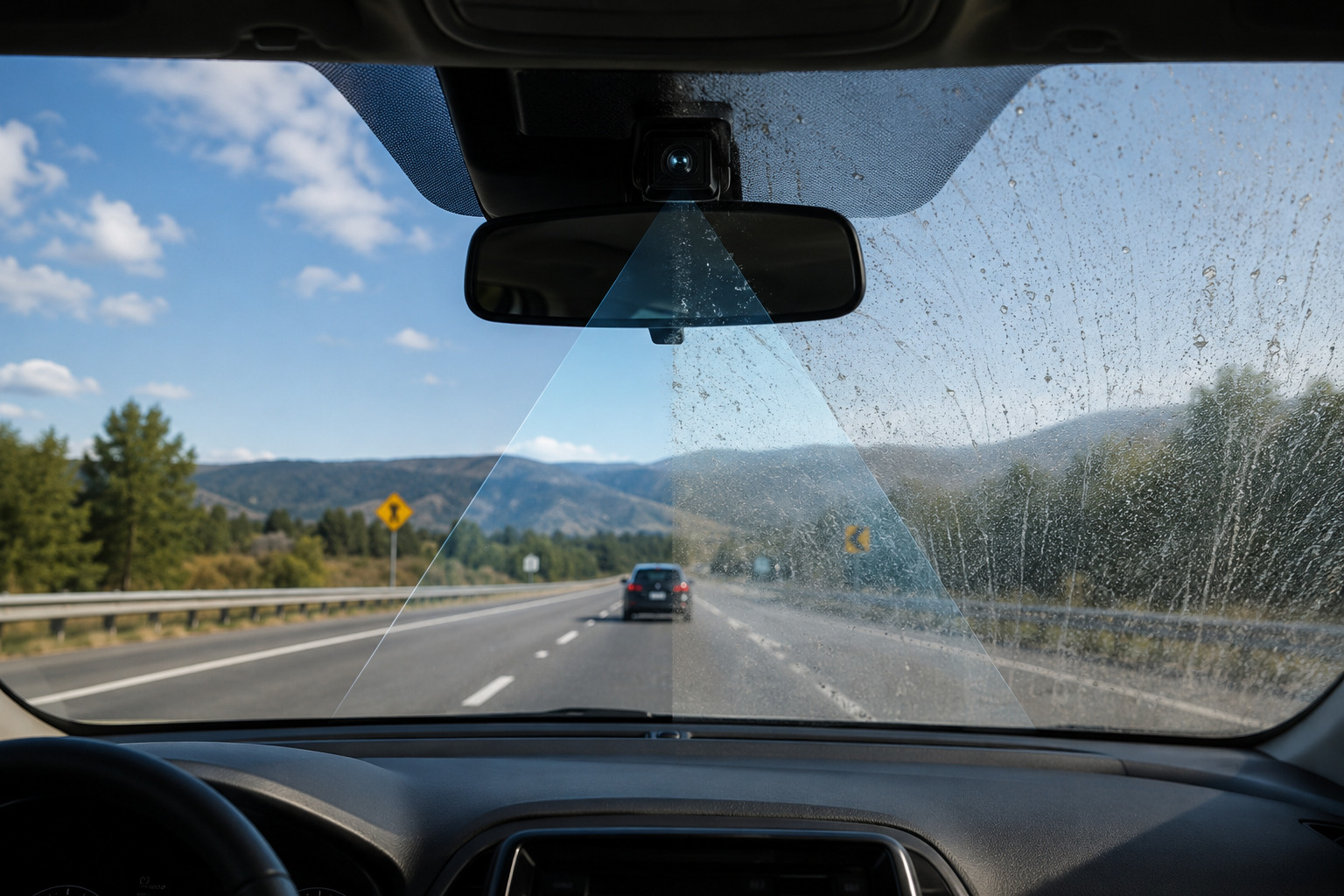
A dirty windshield can affect ADAS performance when contamination overlaps the viewing area of a camera mounted behind the glass. Dirt, residue, snow, water, or streaks may reduce contrast or distort the camera image. However, not every ADAS feature uses a windshield camera, and contamination does not automatically cause every system to fail.
As the CEO of Xiamen TOPEX Auto Parts Co., Ltd., I have spent many years working with wiper blades, vehicle fitment, product development, sourcing, export, and B2B supply programs. I have seen the windshield change from a passive viewing surface into part of a larger sensing environment. This change makes blade quality, wiping coverage, washer performance, glass condition, and accessory placement more important for modern vehicle maintenance.
Why a Clear Windshield Matters to More Than the Driver
Drivers have always needed a clear windshield to see vehicles, pedestrians, signs, and road hazards. However, many modern vehicles also position a forward-facing camera near the rearview mirror. This camera looks through a defined area of the glass. Contamination in that area can affect the camera’s view at the same time that it affects the driver’s view.
A clear windshield matters to both the driver and any forward-facing ADAS camera that looks through it. When dirt, insects, road film, snow, condensation, or wiper streaks cover the camera’s viewing area, the image available to the system may lose clarity or contrast. I recommend treating that part of the windshield as an important sensing window.
Forward Cameras Need an Unobstructed View
A forward camera collects visual information from the road. Depending on the vehicle, that information may support functions such as lane-departure warning, lane-keeping assistance, traffic-sign recognition, forward-collision warning, or some forms of automatic emergency braking. The exact feature set and sensor arrangement vary by make, model, year, and equipment level.
The camera does not understand contamination in the same way that a person does. A driver may recognize that a dark mark is insect residue on the glass. A camera system receives an altered image and must process the available contrast, edges, shapes, and movement. The vehicle may display a blocked-camera message, reduce a feature’s availability, or behave differently according to its design and operating conditions.
I advise drivers to consult the owner’s manual whenever an ADAS warning or unavailable message appears. The manual should identify the relevant camera or sensor areas and explain basic cleaning or operating requirements. Drivers should not remove camera covers, touch optical components behind the glass, or attempt calibration without the correct service information.
Windshield Contamination Creates Two Related Risks
A dirty area near the camera can affect both human and machine visibility. The driver may struggle to see through glare or road film, while the camera may receive a lower-quality image. Rain, darkness, low contrast, and strong reflections can increase the difficulty for both.
This combined risk is why wiper performance remains important on vehicles with advanced assistance features. ADAS does not remove the need for a clear driver view. It also does not turn a worn blade into a less important component. The driver remains responsible for observing the road and controlling the vehicle.
| Windshield condition | Possible effect on the driver | Possible effect on a camera | Recommended response |
|---|---|---|---|
| Mud or road dirt | Blocks part of the road view | Reduces visible detail in the camera zone | Clean the glass and test the washer system |
| Insect residue | Creates a fixed visual obstruction | Covers or distorts part of the camera image | Remove residue with a suitable cleaner |
| Wiper streaks | Increase glare and reduce contrast | Create repeated lines or water films | Inspect the blades, glass, and washer fluid |
| Snow or ice | Blocks a large viewing area | May make camera features unavailable | Clear the glass safely before driving |
| Interior condensation | Blurs the driver’s view | Can obscure the inner camera viewing path | Use climate controls and remove condensation |
| Glass damage | Creates fixed distortion or glare | May affect the image or calibration relationship | Request professional assessment |
ADAS Is an Aid, Not a Substitute for Attention
Drivers should never assume that the vehicle will always detect a lane, vehicle, pedestrian, or obstacle. Feature capability changes with vehicle design and environmental conditions. A system may become limited by rain, snow, glare, low light, worn lane markings, contamination, or another factor.
AAA’s controlled ADAS testing in simulated rain and windshield contamination found that moderate-to-heavy simulated rain affected the tested automatic emergency braking and lane-keeping systems. Its simulated dirty-windshield condition created only minor differences and did not negatively affect performance in that specific test. I consider this an important reminder not to exaggerate every dirty mark, while still keeping the camera area clean and unobstructed.
Drivers should respond to actual road and weather conditions rather than relying on an assistance feature to compensate for poor visibility. Safe speed, sufficient following distance, correct lighting, clear glass, and active driver attention remain essential even when no ADAS warning appears.
The Windshield Obstructions Drivers Often Overlook
Most drivers recognize heavy mud or snow as a windshield obstruction. Smaller or more transparent problems receive less attention. A thin water film, wax residue, oily cleaner, clear sticker, or badly positioned accessory can overlap the camera’s view without looking like ordinary dirt. Wiper blades can also move contamination repeatedly through the same sensing area.
Drivers often overlook insects, road film, wax, cleaner residue, condensation, ice, transparent stickers, tint, toll tags, dashcams, phone mounts, and wiper streaks. These obstructions differ in appearance, but each can block, reflect, scatter, or distort light near a windshield-mounted camera. I recommend keeping the manufacturer-defined camera zone free from both contamination and accessories.
Water Films and Wiper Streaks Can Be Difficult to See
A worn blade may leave a thin film after every wiping pass. The glass can appear almost clear during daylight, but the film may become visible under headlights, streetlights, or low-angle sunlight. The same pattern can pass directly across the camera’s viewing area.
Streaking does not always mean that the rubber is permanently damaged. Dirt on the blade edge, road film on the windshield, unsuitable cleaning residue, incorrect blade fitment, or weak wiper-arm pressure can create similar symptoms. I recommend cleaning and inspecting the system before deciding which part requires replacement.
If cleaning does not restore clear wiping, the driver should check blade length, connector type, installation, rubber condition, windshield contact, and arm pressure. Replacing a camera cannot correct a mechanical wiping defect that repeatedly spreads water across the glass.
Accessories Can Obstruct a Clean Windshield
A windshield can be perfectly clean while an accessory blocks the camera. Stickers, toll tags, dashcams, decorative films, and phone mounts may be placed near the rearview mirror because that location seems convenient. However, it is also where many forward cameras and related components are installed.
Drivers should not guess the camera’s complete field of view from the size of the visible housing. The optical path may cover a wider section of glass than expected. Vehicle manufacturer instructions should guide the placement of accessories, tint, stickers, and electronic devices.
B2B retailers and installation businesses can reduce these problems by providing clear placement guidance. A dashcam installer, tint provider, or glass business should understand that an accessory can affect a vehicle system even when it does not block the driver’s central line of sight.
Cleaner Residue and Surface Treatments Need Attention
Some glass products leave a visible or invisible film. A product may improve water beading but also change how water moves across the camera and wiping areas. This does not mean that every coating is unsuitable, but drivers should use products that are appropriate for their vehicle and follow the manufacturer’s guidance around camera zones.
Oily materials can also transfer from cleaning cloths, dashboards, or hands. Reusing a cloth that contains wax or interior dressing may spread residue across the windshield. I recommend using clean materials intended for automotive glass and checking the result from both inside and outside.
A practical obstruction check should include the following items:
- Dirt, mud, dust, pollen, and road film
- Insect residue and bird droppings
- Water films and mineral deposits
- Wax, polish, and oily cleaner residue
- Snow, ice, frost, and slush
- Interior condensation or haze
- Wiper streaks and consistently missed areas
- Stickers, inspection labels, and toll tags
- Dashcams and their mounting brackets
- Phone holders and navigation accessories
- Decorative or aftermarket windshield films
- Tint that overlaps a camera viewing area
- Chips, cracks, scratches, and glass pitting
- Objects placed on the dashboard that reflect in the glass
Poor Washer Performance Can Spread Contamination
A washer system needs enough suitable fluid and a useful spray pattern. Blocked nozzles, a weak pump, an empty reservoir, or frozen fluid can leave part of the windshield dry. The blades may then spread contamination instead of removing it.
The spray pattern should reach the required wiping area before the blades pass. If fluid only reaches one side, the camera zone may remain dirty even while another section looks clean. A complete inspection should therefore include the reservoir, pump, fluid lines, nozzles, blade edges, and final wet wiping result.
| Overlooked obstruction | Why it may be missed | Possible symptom | First action |
|---|---|---|---|
| Thin water film | Nearly transparent in normal light | Glare, haze, or repeated camera warning | Clean and wet-test the blades |
| Clear sticker or film | Does not look like a solid blockage | Fixed warning or reduced feature availability | Check manufacturer placement guidance |
| Interior condensation | May develop after the trip begins | Blurred view near the mirror area | Use climate controls and clear the glass |
| Oily cleaner residue | Glass looks shiny rather than dirty | Smearing and reflected light | Clean with a suitable glass product |
| Weak washer spray | Some fluid still reaches the windshield | One dry or dirty section remains | Check the pump, nozzles, and lines |
| Fine scratches | Difficult to see during daylight | Fixed glare or optical distortion | Request professional glass assessment |
Which ADAS Features Can Be Affected—and Which Sensors Work Differently
ADAS is a broad term that covers many assistance functions and sensing methods. Some features depend heavily on a camera behind the windshield. Others use radar, ultrasonic sensors, external cameras, or combinations of several devices. Windshield contamination therefore does not affect every function in the same way or to the same degree.
Windshield contamination is most relevant to ADAS functions that use a forward-facing camera behind the glass. Lane assistance, traffic-sign recognition, forward-collision functions, and some automatic emergency braking systems may use that view. Radar and ultrasonic sensors are usually located elsewhere, so a dirty windshield does not directly obstruct those sensors, although their own surfaces can still become blocked.
Camera-Based Lane and Sign Functions
Lane-departure warning and lane-keeping assistance often use a forward camera to identify lane markings and road position. Faded lines, rain, glare, snow, shadows, construction zones, and windshield contamination can all make the visual task more difficult. The system may reduce assistance or provide an unavailable message when operating requirements are not met.
Traffic-sign recognition also depends on a clear enough view of sign shapes and markings. A fixed insect mark or streak does not necessarily block every sign, but it can reduce image quality in part of the field. The effect depends on the obstruction’s location, size, optical character, and the vehicle system.
These functions should not be tested by intentionally blocking the camera during normal driving. Drivers should follow the owner’s manual and seek professional diagnosis when warnings continue after basic cleaning and inspection.
Forward-Collision and Automatic-Braking Functions
Some forward-collision warning and automatic emergency braking systems use a windshield camera. Others combine a camera with forward radar, and system architecture varies across vehicles. The presence of radar does not guarantee that the complete feature will remain unaffected when the camera view becomes poor.
A combined system may use different sensors for different parts of object detection, classification, distance measurement, or confirmation. Drivers cannot determine the complete sensing logic by looking at the windshield or bumper. Service information and diagnostic data are required for an accurate vehicle-specific conclusion.
Radar and Ultrasonic Sensors Work Elsewhere
Forward radar is often positioned behind a grille, emblem, bumper, or another exterior panel. Parking assistance commonly uses ultrasonic sensors in the bumpers. A dirty windshield does not directly cover these devices, but mud, ice, snow, damage, paint, or accessories near their own locations may affect them.
External cameras used for parking or surround-view functions are also positioned outside the windshield. They require their own cleaning and inspection. A useful ADAS check should identify each sensor location instead of treating the windshield as the only sensing surface.
| ADAS feature | Possible sensing method | Windshield contamination relevance | Other areas to inspect |
|---|---|---|---|
| Lane-departure warning | Forward camera | Often relevant when the camera looks through the glass | Lane markings and camera warnings |
| Lane-keeping assistance | Forward camera or sensor combination | Often relevant | Steering-system and diagnostic messages |
| Traffic-sign recognition | Forward camera | Often relevant | Lighting and sign visibility |
| Forward-collision warning | Camera, radar, or combined system | Vehicle-dependent | Radar area and system messages |
| Automatic emergency braking | Camera, radar, or sensor fusion | Vehicle-dependent | Front sensor surfaces and diagnostics |
| Adaptive cruise control | Often radar, sometimes camera-supported | Vehicle-dependent | Radar area, camera area, and weather |
| Parking assistance | Ultrasonic sensors and external cameras | Usually not directly affected by windshield dirt | Bumpers and parking-camera lenses |
| Blind-spot monitoring | Radar or other side/rear sensors | Usually not directly affected | Rear bumper or body sensor areas |
Weather Can Matter More Than Ordinary Dirt
A dirty windshield should be cleaned, but buyers and drivers should avoid claiming that every small mark will cause a system failure. In AAA’s controlled test, simulated rain produced more serious performance changes than its simulated dirty-windshield condition. The test does not prove that all dirt is harmless. It shows that the effect depends on contamination, conditions, vehicle design, and the specific system being tested.
Rain also creates several challenges at once. Water moves across the glass, the wipers repeatedly cross the camera’s view, road contrast can decrease, reflections increase, and lane markings may become harder to distinguish. A well-maintained wiping system can help keep the viewing area clearer, but it cannot guarantee ADAS performance in every storm.
Wiper Selection Supports the Camera Viewing Area
The blade must match the vehicle’s make, model, year, length, and connector. It should maintain stable contact across the windshield and clear the camera viewing zone without persistent streaks or missed sections. A product labeled as premium cannot solve incorrect fitment.
The TOPEX flat wiper blade range gives B2B buyers several options for different application, adapter, and channel requirements. When I work with customers, I recommend selecting samples according to actual vehicle coverage and evaluating complete wet wiping performance on representative applications.
Dirty Glass, Windshield Damage or Calibration Error: How to Tell
A warning that disappears after cleaning points toward a surface obstruction, but it does not prove that dirt was the only possible cause. A fixed visual distortion can come from scratches, pitting, chips, cracks, or glass quality. A problem that begins after windshield replacement raises different questions about glass selection, camera mounting, installation, and calibration.
Cleaning, glass repair, and ADAS calibration solve different problems. If suitable cleaning restores normal visibility and system availability, surface contamination was likely involved. If distortion remains in a fixed location, the glass may need professional assessment. If the concern begins after windshield replacement, I recommend checking the glass, camera bracket, mounting position, connections, and manufacturer-required calibration process.
Surface Contamination Usually Changes After Cleaning
Dirt and residue sit on the glass surface, so suitable cleaning should change or remove them. Drivers should clean the outer windshield and the inner camera viewing area that is safely accessible without disturbing the camera housing. They should also clean the blade edges and test the washer system.
The vehicle should then be operated according to the owner’s manual under safe conditions. Some warnings may need defined conditions before they clear, so drivers should not assume immediate failure if a message remains briefly. Persistent warnings need qualified diagnosis.
If a smear returns after each wiping cycle, the blade or glass may still carry contamination. Repeated cleaning without inspecting the rubber, fluid, and washer nozzles can move the same material around the windshield instead of removing the source.
Glass Damage Creates Fixed Optical Problems
A scratch, chip, crack, pit, or distorted section remains in the same place after cleaning. The driver may notice fixed glare or a blurred area. Damage near the camera zone deserves professional assessment because the optical path through the glass is part of the camera’s operating environment.
Drivers should not apply an ordinary repair method without considering the vehicle’s ADAS equipment. The appropriate response depends on the damage location, glass design, manufacturer procedure, and local repair standards. A glass professional should identify whether repair or replacement is suitable.
Windshield Replacement Can Change Camera Alignment
Replacing the windshield can disturb the physical relationship between the camera and the glass. The camera may be removed and reinstalled, its bracket may be positioned incorrectly, or unsuitable replacement glass may be used. The vehicle may also require a camera learn or calibration procedure.
A 2026 General Motors technical bulletin published through NHTSA identifies dirt, snow, ice, condensation, incorrect glass, windshield alterations, camera seating, bracket installation, software, and calibration as possible areas to check before replacing certain forward-camera modules. The bulletin applies to specified GM vehicles, but its diagnostic logic illustrates why technicians should identify the root cause before replacing a camera.
Calibration requirements are vehicle-specific. Some vehicles require static calibration with targets in a controlled workshop. Others may require dynamic calibration during a defined drive, and some use a combination of procedures. The correct method must come from current manufacturer service information.
| Symptom or history | More likely area | Useful first check | When professional service is needed |
|---|---|---|---|
| Warning appears with visible dirt | Surface contamination | Clean the camera viewing area | Warning remains after proper cleaning |
| Smear returns after every wipe | Blade, fluid, or road film | Clean the glass and inspect the blade | Correct blades still leave the defect |
| Fixed blur or glare remains | Scratch, chip, pitting, or distortion | Inspect the glass from inside and outside | Damage overlaps the driver or camera view |
| Problem begins after glass replacement | Mounting, glass, connection, or calibration | Review the repair record | Vehicle-specific verification is required |
| Manual visibility is clear but warning remains | Sensor, mounting, software, or another fault | Check the owner’s manual and messages | Diagnostic codes or calibration may be needed |
| Several ADAS features become unavailable | Shared camera or network concern | Record every warning and condition | Qualified system diagnosis is required |
Do Not Replace the Camera Based on One Message
An unavailable or blocked-camera message does not automatically mean that the camera has failed. Weather, contamination, glass condition, mounting, low voltage, network communication, software, and other vehicle systems can produce related symptoms.
I recommend recording the exact warning, weather, speed, lighting, and recent repair history. A photo taken while the vehicle is safely parked can help. This information gives the technician a better chance of reproducing the concern and prevents unnecessary part replacement.
B2B Product Quality Reduces Mechanical Variables
A wiper supplier cannot diagnose or calibrate the vehicle’s ADAS camera. However, it can support the system environment by providing correctly fitted blades, stable connectors, suitable wiping structures, accurate application data, and clear packaging instructions.
At TOPEX, I help wholesalers, retailers, e-commerce sellers, and service groups select products for their target market. The commercial goal is not to claim that a blade guarantees ADAS operation. The practical goal is to reduce streaking, missed coverage, installation mistakes, and fitment complaints that can affect windshield clarity.
A B2B sample evaluation should include these points:
- Confirm the vehicle make, model, year, and blade position.
- Verify the required driver-side and passenger-side lengths.
- Identify the exact arm and adapter type.
- Check that the connector locks securely.
- Test the blade on a properly wet windshield.
- Observe the area in front of the ADAS camera.
- Check for repeated streaks, films, or missed sections.
- Inspect the blade at more than one operating speed.
- Review packaging and installation instructions.
- Compare product, carton, and online application information.
- Document any recurring defect by SKU or vehicle.
- Avoid making unsupported claims about ADAS compatibility.
The TOPEX hybrid wiper blade range provides another structural option for aftermarket programs. I recommend comparing flat, hybrid, conventional, rear, and seasonal products according to vehicle applications, climate, customer expectations, and inventory needs.
A Practical Windshield and ADAS Check Before You Drive
Drivers do not need to calibrate cameras or interpret complex diagnostic data before every journey. They need a simple routine that protects the driver’s view, keeps known sensor areas unobstructed, and identifies warnings that require professional attention. The check becomes especially important before rain, snow, nighttime travel, or a long-distance trip.
Before driving, I recommend cleaning the camera viewing area, removing snow and loose obstructions, checking the wiper blades and washer system, and confirming that no accessory blocks the windshield sensors. Drivers should observe ADAS warnings and follow the owner’s manual. After glass repair or replacement, they should confirm that all required camera installation and calibration procedures were completed.
Clean the Windshield Without Disturbing the Camera
The outer surface should be cleaned with a suitable automotive glass product and clean material. Dirt, insects, road film, wax, and washer residue should be removed from the complete wiping area, especially near the camera. Drivers should also clean accessible interior glass without removing covers or touching camera components.
Snow and ice should be cleared with the correct vehicle preparation methods. The wipers should not be used as ice scrapers because frozen movement can damage the rubber, arms, linkage, or motor. The windshield should be defrosted and the blades freed before operation.
Test the Wipers and Washer System
The reservoir should contain fluid suited to local conditions. The pump and nozzles should wet the necessary glass area before the blades pass. A blocked nozzle can leave the camera zone dirty even when another part of the windshield looks clean.
The blades should then be tested on a wet windshield. They should move smoothly and clear water without persistent streaks, smears, skipping, chatter, or missed areas. A fixed defect through the camera area deserves correction before poor weather.
A practical pre-drive routine can follow this order:
- Walk around the vehicle and identify visible camera and sensor areas.
- Remove snow, ice, mud, insects, and loose contamination.
- Clean the outer windshield, especially near the forward camera.
- Remove interior haze from safely accessible glass.
- Confirm that stickers and accessories do not block sensor zones.
- Check the washer-fluid level and climate suitability.
- Test the pump and inspect the nozzle spray pattern.
- Inspect the wiper rubber, blade structure, adapters, and arms.
- Wet-test the blades and observe the complete wiping area.
- Check the dashboard for ADAS warnings or unavailable messages.
- Review recent windshield, camera, collision, or electrical work.
- Seek qualified diagnosis when warnings remain after basic checks.
Respond Correctly to ADAS Messages
Drivers should read the message rather than assuming its meaning. “Camera blocked,” “feature unavailable,” and a general warning light can point toward different conditions. The owner’s manual should explain what action is appropriate and whether the feature may return after the obstruction or weather condition clears.
The driver should not continue at an unsafe speed simply because no warning appears. System performance can change without a clear alert in every situation. The safest response is to maintain direct observation, increase following distance when conditions require it, and slow down appropriately.
Confirm Calibration After Windshield Work
After repair or replacement, the customer should ask what glass was installed, whether the camera was removed, and whether the manufacturer requires calibration or a learn procedure. The service record should identify what was completed.
If warnings or unusual feature behavior begin after the work, the vehicle should return to a qualified glass or service provider. The technician may need to inspect the glass, bracket, camera position, connection, diagnostic codes, and calibration status.
Prepare Accurate Information for B2B Wiper Purchasing
Wholesalers and retailers should prepare the target market, vehicle application list, blade structures, expected order volume, packaging format, and delivery schedule. Modern vehicle coverage also makes accurate model-year and connector information increasingly important.
E-commerce sellers should connect each listing with clear size, adapter, installation, and vehicle information. Service chains should use a repeatable wet-test procedure. National retailers should align product labels, electronic catalogs, staff guidance, and launch inventory.
| Purchasing information | Why it matters | Risk when it is missing |
|---|---|---|
| Target country and channel | Vehicle mix and buyer behavior differ | Irrelevant or excessive SKU coverage |
| Vehicle application list | Lengths and connectors must match | Installation errors and returns |
| Blade structure | Flat, hybrid, and conventional products serve different needs | Weak product positioning |
| Quantity by SKU | Demand is not equal across sizes | Overstock and stockouts |
| Packaging format | Retail and e-commerce handling differ | Launch or fulfillment problems |
| Product content | Customers need accurate selection guidance | Poor fitment confidence |
| Sample test process | Finished wiping must be verified | Production disputes |
| Seasonal delivery plan | Demand changes before rain and winter | Missed sales or late stock |
I recommend approving representative samples before a large order. Buyers should evaluate wiping performance, connector security, package strength, instructions, labels, barcodes, and application content. Clear approval standards support stable repeat purchasing without turning a wiper blade into an unsupported promise about ADAS performance.
Conclusion
A dirty windshield does not automatically cause every ADAS feature to fail, but contamination in front of a windshield-mounted camera can reduce the quality of the information available to the system. Dirt, insects, streaks, water films, snow, stickers, and poorly positioned accessories may make road details harder to identify, especially in rain, glare, or low light. I recommend keeping the camera viewing area clean, maintaining the blades and washer system, and responding correctly to warning messages. If a problem continues after cleaning or begins after windshield work, the glass, camera mounting, connections, and vehicle-specific calibration requirements should be professionally checked. ADAS remains an assistance system, not a substitute for an attentive driver.
Frequently Asked Questions About Dirty Windshields and ADAS Performance
Can a dirty windshield completely stop ADAS features from working correctly?
A dirty windshield can limit some camera-based features when contamination overlaps the camera’s field of view, but the result varies by vehicle, feature, and condition. The system may display a warning, reduce availability, or continue operating with limited information. I recommend cleaning the camera zone and following the owner’s manual instead of assuming that every dirty mark causes complete failure.
Which ADAS systems commonly use a camera mounted behind the windshield?
Lane-departure warning, lane-keeping assistance, traffic-sign recognition, forward-collision warning, and some automatic emergency braking systems may use a windshield-mounted camera. However, the design varies by vehicle. I recommend checking manufacturer information because some functions combine cameras with radar, while parking assistance and blind-spot monitoring often use sensors located away from the windshield.
What types of windshield contamination can obstruct a forward ADAS camera?
Dirt, mud, insects, road film, oily residue, wax, snow, ice, frost, condensation, water films, and wiper streaks can affect the viewing area. Some contamination blocks the image, while transparent residue may reduce contrast or scatter light. I recommend inspecting the area under different lighting because a film that is difficult to see during daylight may become obvious in glare.
Can windshield stickers, tint, or a dashcam interfere with ADAS performance?
They can interfere when their position overlaps the camera’s field of view or creates reflection near the sensing area. A clean windshield is not truly unobstructed if a toll tag, sticker, mount, cable, or film sits in the wrong location. I advise drivers and installers to follow vehicle manufacturer guidance instead of estimating the camera’s viewing area from the visible housing.
How can I distinguish dirt from glass damage or an ADAS calibration problem?
Surface contamination should change or disappear after suitable cleaning. A scratch, chip, pit, crack, or distorted glass area remains fixed. A concern that begins after windshield replacement may involve glass selection, camera mounting, connection, or calibration. I recommend documenting the symptom and repair history, then requesting professional diagnosis when cleaning does not restore normal visibility or system availability.
Does every ADAS camera require recalibration after a windshield replacement?
The requirement depends on the vehicle, camera, glass, and repair procedure. Some vehicles require static calibration, dynamic calibration, a camera learn process, or a combination of methods after windshield replacement. I recommend following current manufacturer service information. Drivers should ask the repair provider what procedure was completed and keep the calibration or service record with the vehicle documentation.

--- END ---


