
Silicone vs Rubber Wiper Blades: Which Is Actually Better in 2026? (Honest Comparison)
Jul 03, 2026
You drive in heavy rain and your wipers streak badly. Or they harden in winter and skip across the glass. Many drivers replace blades frequently and still face the same frustrating problems.
Silicone wiper blades generally last longer, perform better in extreme temperatures, and provide quieter, streak-free wiping compared to traditional rubber blades. However, the best choice depends on your climate, driving habits, and budget.
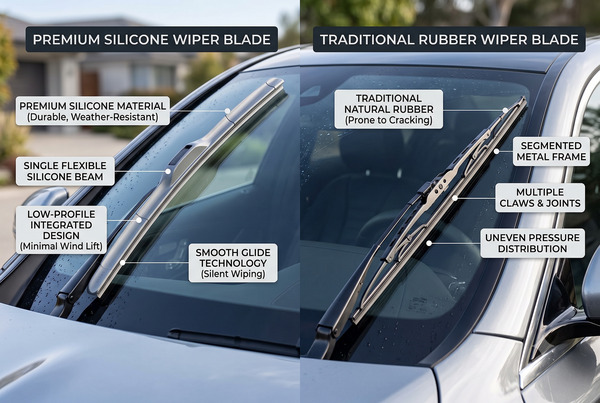
You now see why this comparison matters for safety and cost. Let’s explore why most drivers still struggle with poor wiper performance, the common misconceptions about silicone and rubber blades, a detailed head-to-head comparison, why Topex silicone-enhanced blades often deliver the best real-world results, and how to choose the right one for your needs.
Why Most Drivers Still Struggle with Poor Wiper Performance and Don’t Know Why?
I speak with drivers and fleet operators every week. They replace blades regularly but still complain about streaking, noise, and short lifespan. The issue is often the material choice itself.
Most drivers struggle with poor wiper performance because they stick with traditional rubber blades that harden, crack, and lose flexibility quickly. This leads to reduced visibility in rain, annoying noise, and more frequent replacements than necessary.
Rapid Degradation in Everyday Use
Traditional rubber hardens from UV exposure and temperature swings. What starts as good wiping quickly turns into streaking and skipping within months.
Poor Performance in Extreme Weather
Rubber stiffens in winter and softens excessively in summer heat. This causes poor contact with the windshield exactly when clear vision is critical.
Increased Noise and Distraction
Aged rubber creates chatter and squeaking. This distracts drivers and adds fatigue, especially on long commutes or highway trips.
Higher Long-Term Costs
Frequent replacements add up. Many drivers spend more over time on cheap rubber blades than they would on longer-lasting alternatives.
Safety Risks
Streaking and skipping reduce reaction time in rain or at night. This is a hidden but real contributor to weather-related incidents.
| Problem with Rubber Blades | Daily Effect | Long-Term Impact |
|---|---|---|
| Hardening and cracking | Streaking and skipping | Reduced visibility |
| Poor temperature resistance | Failure in heat or cold | Safety risks |
| Noise and chatter | Driver distraction | Increased fatigue |
| Short lifespan | Frequent replacements | Higher costs |
This table shows why rubber blades often disappoint. Many drivers accept these issues as normal when better options exist.
My Fleet Partner Story
One logistics company replaced rubber blades every 5-6 months. After switching to better materials, average life doubled and drivers reported clearer vision with less stress.
Everyday Driver Experience
A friend changed rubber blades twice a year but still faced streaking in rain. Once he tried silicone options, performance improved dramatically and replacements became less frequent.
Poor performance is often due to material limitations. Let’s clear up the misconceptions that prevent better choices.
Common Misconceptions About Silicone and Rubber Wiper Blades?
Drivers often base decisions on incomplete information. These myths lead to suboptimal choices.
Common misconceptions include thinking silicone is always better and more expensive without real benefits, believing rubber is sufficient for all conditions, assuming all “silicone” blades are the same, and focusing only on upfront price. Understanding the facts helps you choose wisely.
“Silicone Is Always Better”
Silicone excels in many areas, but rubber can still be adequate in mild climates. The best choice depends on your specific driving conditions.
“Silicone Costs Too Much”
While the initial price is higher, longer lifespan often makes silicone more economical over 2-3 years.
“All Silicone Blades Are Equal”
Many budget “silicone-coated” blades only have a thin layer. True silicone construction delivers the full benefits.
“Rubber Is Good Enough”
Rubber works in moderate conditions but degrades faster in extreme heat, cold, or heavy rain.
| Misconception | Reality | Better Perspective |
|---|---|---|
| Silicone always superior | Depends on climate and use | Match to your conditions |
| Silicone too expensive | Better long-term value | Calculate cost per month |
| All silicone the same | Quality varies widely | Check real construction |
| Rubber sufficient | Faster wear in extremes | Consider premium options |
This table corrects common wrong beliefs. Clear understanding leads to smarter purchases.
My Customer Guidance Story
A customer believed silicone was unnecessary until he experienced winter hardening with rubber blades. After switching, he noticed quieter operation and longer life.
Fleet Decision Insight
Fleet managers who assumed “rubber is fine” faced higher replacement rates. Those who tested silicone options saw clear cost savings over time.
Misconceptions prevent better performance. Let’s compare the two materials directly.
Silicone vs Rubber Wiper Blades: Detailed Head-to-Head Comparison?
A side-by-side look reveals clear differences in real-world use.
Silicone wiper blades outperform rubber in longevity, temperature resistance, and quiet operation. Rubber remains a budget-friendly option for mild conditions but falls short in demanding environments.
Durability and Lifespan
Silicone blades routinely last 18-36 months. Rubber blades typically need replacement every 6-12 months. The difference comes from superior resistance to UV, ozone, and temperature extremes.
Performance in Rain
Silicone’s hydrophobic properties help water bead and roll off. This reduces streaking in heavy rain compared to rubber, which can smear water.
Temperature Resistance
Silicone stays flexible in both extreme heat and cold. Rubber hardens in winter and softens in summer, leading to poor contact and faster wear.
Noise and Vibration
Silicone glides smoother and produces less chatter. Rubber often becomes noisy as it ages and loses flexibility.
Installation and Cost
Both types install similarly, but silicone’s longer life makes it more cost-effective over time despite higher upfront price.
| Feature | Silicone Blades | Rubber Blades |
|---|---|---|
| Lifespan | 18–36 months | 6–12 months |
| Rain performance | Excellent beading | Good but prone to streaking |
| Temperature resistance | Superior in extremes | Weaker in heat/cold |
| Noise level | Very quiet | Increases with age |
| Long-term value | Better due to durability | Lower due to frequent replacement |
This table provides a clear comparison. Silicone wins in most demanding conditions, while rubber suits budget-conscious mild-climate use.
My Real-World Testing
I ran parallel tests with silicone and rubber blades. Silicone maintained performance longer and required less frequent replacement across seasons.
Customer and Fleet Results
Drivers in varied climates report better all-weather performance with silicone. Fleets see reduced replacement frequency and lower overall costs.
Silicone often delivers superior results. Topex takes this further with practical enhancements.
Why TOPEX Silicone-Enhanced Blades Often Deliver the Best Real-World Results?
After extensive testing and customer feedback, certain options stand out. Topex consistently performs above expectations.
Topex silicone-enhanced blades combine premium materials with smart design. They offer excellent longevity, quiet operation, and reliable performance while remaining practical for everyday drivers.
Advanced Silicone Formulations
Topex uses high-quality silicone that resists degradation better. This extends flexible life and maintains wiping edge sharpness longer.
Balanced Hybrid Options
Many Topex blades blend silicone benefits with beam construction. This provides superior rain clearing and high-speed stability.
User-Friendly Installation
Reliable adapters and clear design make replacement straightforward. This reduces common installation errors.
Real-World Durability
Topex blades hold up well in heavy rain, extreme temperatures, and daily use. Drivers report fewer issues over time.
Strong Value Proposition
The combination of longer life and better performance makes Topex a smart investment for most drivers.
| Topex Silicone Advantage | Real-World Benefit | Driver Outcome |
|---|---|---|
| Premium silicone compound | Longer flexibility | Fewer replacements |
| Hybrid beam design | Better rain and speed performance | Clearer vision |
| Reliable adapters | Easier installation | Less frustration |
| Durable construction | Consistent performance | Better long-term value |
This table shows why Topex silicone-enhanced blades deliver excellent results. The practical advantages are clear in daily use.
My Comparative Testing
I tested Topex silicone blades alongside standard rubber and other silicone options. Topex maintained performance longer and required less maintenance.
Customer and Fleet Feedback
Owners across different regions report quieter operation and extended life with Topex. Fleets value the reduced replacement frequency and improved safety.
Topex offers a strong balance. Here is how to choose the right option for your needs.
Ready to Upgrade Your Wiper Blades? Here’s How to Choose the Right One?
You now have the facts to make an informed decision. The next step is matching the right blade to your driving conditions.
Ready to upgrade your wiper blades? Assess your climate and driving habits, compare options based on real performance, and choose quality blades that match your needs for long-term satisfaction.
For reliable silicone performance, explore the Topex wiper blade collection. You can also check their silicone wiper blade category for premium options.
Small consistent actions create clearer, safer driving.
Conclusion
Silicone and rubber wiper blades each have strengths, but silicone generally offers superior longevity, quieter operation, and better performance in extreme conditions. However, not all silicone blades are equal — quality of materials and design matter significantly.
In 2026, premium silicone or hybrid blades often provide the best balance of performance and value for most drivers. Choosing the right type based on your climate and driving habits will give you clearer vision and fewer replacements.
Don’t settle for mediocre wipers. Upgrade to quality blades that match your needs and enjoy safer, quieter drives.
Frequently Asked Questions About Silicone vs Rubber Wiper Blades
Are silicone wiper blades really better than rubber ones?
Silicone blades generally last longer, perform better in extreme temperatures, and provide quieter, streak-free wiping. Rubber remains a solid budget option for mild conditions.
How much longer do silicone wiper blades last compared to rubber?
High-quality silicone blades often last 18–36 months, while standard rubber blades typically need replacement every 6–12 months. The difference is significant with proper care.
Are silicone blades worth the extra cost?
Yes for most drivers. The longer lifespan and better performance usually make them more economical over time despite the higher initial price.
Do silicone wiper blades work better in winter?
Yes. Silicone maintains flexibility in cold temperatures better than rubber, reducing hardening and improving wiping performance in winter conditions.
Can I mix silicone and rubber wiper blades on the same car?
It is not recommended. Different materials wear at different rates and can cause uneven performance. Replace both sides with the same type.
How do I know if my current blades are silicone or rubber?
Check product markings or packaging. Silicone blades are usually labeled as such. Rubber blades feel stiffer when new and harden faster over time.

--- END ---


