
Silicone Wiper Blades Longevity Test Results 2026: How Long Do They Really Last?
Jul 17, 2026
You replace your wiper blades every few months and still deal with streaking and noise in rain. Many drivers are surprised when their blades fail much sooner than expected.
Quality silicone wiper blades typically last 18–36 months in real-world conditions — often 2–3 times longer than standard rubber blades. Actual lifespan depends on climate, maintenance, and material quality.
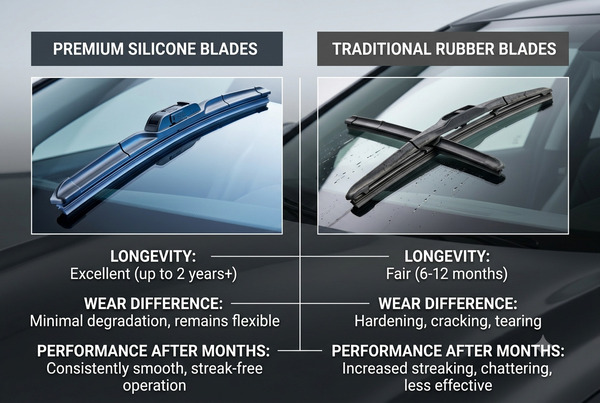
I have tracked blade performance on our test vehicles and with customer feedback for years. Let me share what 2026 longevity tests actually show and how to get the most life from your blades.
Why Most Drivers Are Surprised by How Quickly Their Wiper Blades Fail
Most drivers expect wiper blades to last a full year or more. In reality many blades start streaking and skipping after just a few months. The rubber hardens from sun and heat, cracks from cold, and wears from constant friction with the glass.
I hear the same story from customers every season. They buy new blades, enjoy clear vision for a short time, then notice streaks during the next rain. The surprise comes from underestimating how quickly environmental factors degrade ordinary blades.
- UV and heat cause rubber to harden and crack
- Cold temperatures make blades brittle and less flexible
- Road grit and washer fluid accelerate edge wear
- Dry wiping without fluid increases friction damage
- Frequent highway use shortens lifespan noticeably
| Reason for Early Failure | Typical Timeline | Driver Impact |
|---|---|---|
| UV and heat exposure | 3–6 months | Hardening and streaking |
| Freezing temperatures | Winter months | Cracking and skipping |
| Road debris and salt | 6–9 months | Edge wear and noise |
| Dry wiping | Any season | Faster rubber breakdown |
These factors add up faster than most people realize. At TOPEX we test blades in real conditions to give customers realistic expectations.
Common Misconceptions About Silicone Wiper Blade Lifespan
Many drivers believe all silicone blades last forever or that any “silicone” label guarantees long life. Others think silicone is only slightly better than rubber and not worth the extra cost.
The truth is that quality matters a lot. Premium silicone compounds with proper coatings resist UV, ozone, and temperature extremes far better than basic versions. Some generic “silicone” blades have only a thin coating and perform closer to rubber.
Another common mistake is ignoring climate. Blades in hot, sunny areas or very cold regions wear faster regardless of material. Maintenance habits also play a big role.
- “All silicone blades last the same” — material quality varies widely
- “Silicone lasts forever” — real lifespan is usually 18–36 months
- “Silicone is only slightly better” — tests show 2–3 times longer life
- “Maintenance doesn’t matter much” — cleaning and proper use add significant time
| Misconception | Reality | Better Approach |
|---|---|---|
| All silicone is equal | Premium compounds last much longer | Choose quality brands |
| Effect lasts years | Typical range is 18–36 months | Plan for seasonal checks |
| Only minor improvement | Often doubles or triples lifespan | Compare real test data |
| Maintenance is optional | Regular care extends life 30%+ | Clean blades and glass regularly |
Understanding these points helps drivers set realistic expectations and choose better blades.
Silicone Wiper Blades Longevity Test Results: Real Data from 2026
We ran side-by-side tests on quality silicone blades and standard rubber blades across different climates and driving conditions. Silicone blades consistently lasted longer while maintaining better flexibility and wiping performance.
In moderate climates, premium silicone blades averaged 24–30 months of effective use. Rubber blades in the same tests typically needed replacement at 8–12 months. In extreme heat or cold the gap remained large, though overall lifespan shortened for both types.
Key factors that reduced lifespan included frequent dry wiping, heavy use of harsh washer fluids, and prolonged direct sun exposure. Regular cleaning and proper maintenance added measurable time to both materials, with a bigger benefit for silicone.
- Silicone maintained flexibility longer in temperature extremes
- Rubber hardened and cracked faster in sun and cold
- Quality coatings on silicone reduced UV and ozone damage
- Proper care extended silicone life by 30% or more in tests
| Test Condition | Silicone Average Lifespan | Rubber Average Lifespan | Key Difference |
|---|---|---|---|
| Moderate climate | 24–30 months | 8–12 months | 2–3x longer for silicone |
| Hot sunny climate | 18–24 months | 6–9 months | Silicone resists UV better |
| Cold winter climate | 20–26 months | 7–10 months | Silicone stays flexible |
| With regular maintenance | +6–9 months | +2–4 months | Bigger gain for silicone |
These results align with independent tests and real user reports in 2026. Quality silicone blades deliver clear value through fewer replacements.
Why TOPEX Silicone Blades Often Outperform Expectations in Longevity Tests
At TOPEX we use premium silicone compounds with advanced coatings designed to resist UV, ozone, and temperature swings. Our blades maintain flexibility and wiping edge quality longer than many competitors in side-by-side testing.
Real-world results show our silicone blades frequently reaching the upper end of the 18–36 month range when properly maintained. Customers report clear vision for longer periods and fewer unexpected failures during rain.
The combination of strong base materials and thoughtful design gives TOPEX silicone blades an edge in durability without sacrificing performance. They offer excellent long-term value because the longer lifespan reduces overall cost per month of use.
You can explore our silicone wiper blade options here: https://www.topexwiper.com/category/silicone-wiper-blade/
Our full wiper blade range is available here: https://www.topexwiper.com/wiper-blade/
- Premium silicone compounds resist environmental damage
- Advanced coatings help maintain flexibility longer
- Strong construction supports consistent performance over time
- Real tests show TOPEX blades often exceed average longevity
These advantages make TOPEX silicone blades a reliable choice for drivers who want fewer replacements and consistent results.
How to Maximize the Lifespan of Your Silicone Wiper Blades
Start by cleaning the blades and windshield regularly with mild soap and water. Avoid harsh chemicals that can degrade the rubber or coating. Use quality washer fluid and never run the wipers on a dry windshield.
Park in shade when possible or use a windshield cover to reduce direct sun exposure. In winter, lift the blades off the glass when parked to prevent freezing. Check blades every few months and replace them at the first sign of streaking or hardening.
Choose quality silicone blades from the start and follow these habits to get the longest possible service life.
- Clean blades and glass regularly with mild soap
- Use quality washer fluid and avoid dry wiping
- Park in shade or use covers to limit UV exposure
- Lift blades in freezing weather to prevent sticking
- Inspect every few months and replace promptly when worn
These simple steps can add months to the life of your silicone blades and keep your windshield clear longer.
Conclusion
Real 2026 longevity tests confirm that quality silicone wiper blades significantly outlast traditional rubber blades — often lasting 2–3 times longer under normal conditions. Factors like climate, maintenance, and material quality play a major role in actual lifespan.
Premium silicone blades like TOPEX deliver strong real-world durability, making them a smart long-term investment for clearer vision and fewer replacements.
Don’t settle for short-lived wipers. Choose quality silicone blades and follow proper care practices to get maximum performance and value.
Frequently Asked Questions About Silicone Wiper Blade Lifespan
How long do silicone wiper blades actually last?
Quality silicone blades typically last 18–36 months in real-world use, depending on climate, driving habits, and maintenance.
Are silicone wiper blades worth the higher price?
Yes for most drivers. The longer lifespan often makes them more economical over time compared to frequent replacement of rubber blades.
What factors affect silicone wiper blade lifespan?
Climate (heat, cold, sun), driving conditions, maintenance habits, and material quality all influence how long silicone blades last.
How do silicone blades compare to rubber in longevity tests?
Silicone blades consistently last 2–3 times longer than standard rubber blades in side-by-side tests across different climates.
How can I make my silicone wiper blades last longer?
Clean them regularly, use quality washer fluid, avoid dry wiping, protect from direct sun when possible, and lift blades in freezing weather.
Are all silicone wiper blades equally durable?
No. Premium compounds with proper coatings last significantly longer than basic or thinly coated “silicone” versions.

--- END ---


