Windshield Wiper Symbols Explained: Controls & Meanings
Oct 24, 2026
Windshield wiper symbols can be confusing, especially when you’re driving an unfamiliar car. Most vehicles use similar controls for adjusting wiper speed, intermittent wiping, and washer fluid, though the symbols and settings may vary by manufacturer.
Understanding these markings makes it easier to use your wipers in different weather conditions. This guide explains the most common wiper symbols, what they mean, and how to use the controls on your car.
Start with the two windshield symbols
The front wiper icon usually shows a curved windshield with a blade sweeping across it. The washer symbol looks similar, but adds a spray of water. You may see that spray symbol on the stalk and again on the washer-fluid reservoir cap under the hood. If you’re topping up the fluid, it’s the spray symbol you want—not the cap for coolant or another fluid.
A rear-wiper symbol usually uses a more rectangular window shape with a blade across it. It’s often printed on a ring at the end of the stalk. The artwork varies, so treat these as visual clues rather than an exact drawing that every manufacturer follows.
MIST, INT, AUTO, LO and HI: what they do
Once you know the abbreviations, the control is much easier to read. The catch is that the direction you move the stalk—and sometimes the order of its positions—depends on the vehicle.
For example, Kia and Hyundai manuals commonly show MIST, OFF, AUTO, LO, and HI, while some Mazda stalks use INT where an auto-equipped version uses AUTO. SEAT models may show numbered positions instead of the familiar abbreviations. The labels are a useful starting point, but your owner’s manual is the final word for your model and year.
Why INT and AUTO can feel so different
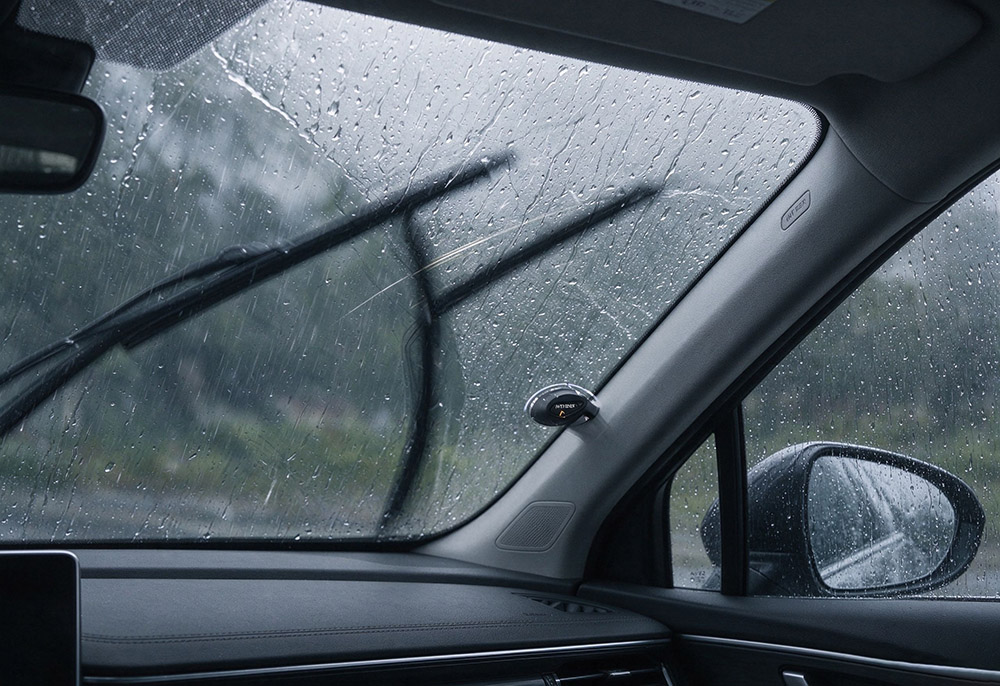
With INT selected, you choose the delay between wipes. If the rain gets heavier, you’ll usually need to change the setting yourself. AUTO is different: a sensor near the windshield reads moisture on the glass and adjusts operation accordingly. Depending on the car, turning the same ring that controls intermittent timing may instead make automatic wiping more or less sensitive.
This also explains why automatic wipers sometimes move when the weather looks dry. Water, dirt, ice, or residue around the sensor can affect what it detects. Windshield coatings may also change sensor behavior on some vehicles. Before assuming something has failed, clean the area around the sensor and check the AUTO setting.
How the controls vary by brand
It’s worth checking a new car’s controls before the first storm. On some Chevrolet models, the stalk has an intermittent or Rainsense position followed by low and high speed, with a rotating band for adjustment. Mazda uses a ring for intermittent timing on many models. Hyundai and Kia frequently include a momentary MIST setting. On certain SEAT models, numbered stalk positions serve the same functions.
Even the single-wipe action can change: one vehicle may use a quick downward tap, while another expects you to hold the stalk briefly. Some Peugeot systems also reduce wiper speed at very low road speeds and return to the selected speed when the car moves faster. That change can be normal operation, not a fault.
The exact layout depends on model, equipment, and model year, so avoid relying on a diagram for a different vehicle—even if the stalk looks familiar.
Finding the rear wiper and washer
If your vehicle has a rear wiper, look for a separate ring or switch marked with the rear-window icon. Many systems offer a rear-wipe setting and a further movement for washer fluid, but the sequence is not universal. Rear blades also tend to be overlooked: if the rear glass stays streaky after washing, inspect the blade edge rather than assuming the washer is the problem.
Two easy precautions
Switch off automatic wiping before entering a car wash. A sensor-triggered sweep while brushes are moving around the windshield can put unnecessary strain on the wiper arms. In freezing conditions, clear ice from the glass and around the blades before operating them. Never try to make the blades scrape through a layer of bonded ice.
If the wipers behave strangely after you’ve checked the settings, look at the basics first: a dirty sensor area, a worn blade, or an obstruction on the windshield. Electrical troubleshooting can come later if the simple checks don’t help.
Common questions
Why do my wipers start when it isn’t raining?
Check whether AUTO is selected. Moisture or contamination near the rain sensor can trigger a wipe. Clean the glass around the sensor and consult your manual if it continues.
Is INT the same as AUTO?
No. INT usually runs on a delay you set; AUTO responds to a rain sensor. Some manufacturers use the same stalk location for either function, depending on equipment.
What does the washer-fluid symbol look like?
Look for a windshield-shaped icon with spray lines or droplets. You’ll commonly find it on the washer-fluid reservoir cap and sometimes next to the washer control.
Why do the wipers slow down when I stop?
Some cars automatically reduce wiping speed in slow traffic. If the behavior is consistent and described in the manual, it may be an intended feature.
Conclusion
A correctly selected wiper setting won’t make a worn blade clear the glass. If you still see streaks, skipping, or missed patches, check the rubber and make sure the replacement matches your vehicle’s blade lengths and arm connector. TOPEX offers flat, hybrid, and conventional metal-frame blades; choose by fitment first, then by the driving conditions you see most often, or contact TOPEX if you need fitment assistance.

--- END ---
Prev: How Much Does It Cost to Replace Windshield Wiper Blades?
Already the latest article