
Wiper Blade Performance in High-Humidity & Coastal Regions: Anti-Aging Tips for Longevity
Mar 23, 2026
Salt air, intense UV, high humidity, and ozone destroy wiper blades fast. In coastal areas like Florida, Mediterranean shores, and Australian coastlines, blades often last only 4–8 months. Rubber cracks, hardens, and loses wiping power. Visibility drops. Safety risks rise. Replacements become constant expense.
The hidden killers: salt corrosion, ozone cracking, UV degradation, and moisture absorption. These elements attack standard rubber 2–3× faster than inland conditions. Many distributors and marine/auto customers lose money on frequent returns and complaints.
Topex silicone blades resist these threats far better. With proper habits, they deliver 30–50%+ longer life. This guide explains the damage, comparisons, and exact tips to win in harsh coastal environments.
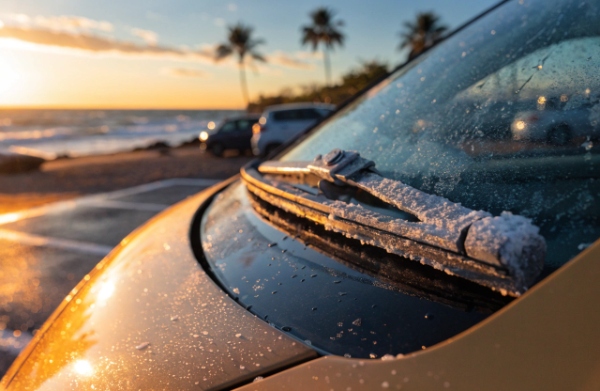
Typical coastal damage: salt, UV, and ozone destroy rubber edges quickly
The Hidden Killers of Wiper Blade Life in Coastal & High-Humidity Regions
Coastal and humid climates are brutal to wiper blades.
- Salt Air Corrosion — Sea salt sticks to rubber and metal frames. It accelerates oxidation and pitting.
- Intense UV Exposure — Constant sun breaks down rubber polymers. Blades harden, crack, and lose flexibility.
- Ozone Cracking — Ozone in air attacks rubber double bonds. Tiny cracks form and spread rapidly.
- High Humidity & Moisture — Rubber absorbs water. It swells, softens, and degrades faster. Mold and mildew can grow on blades.
- Temperature Swings — Hot days + cool nights cause expansion/contraction stress. Rubber fatigues quicker.
In Florida, Mediterranean, and Australian coastal regions, these factors combine. Standard rubber blades fail in 4–8 months. Customers complain. Returns rise. Profits shrink.

Close-up: UV cracking + ozone damage on standard rubber after coastal exposure
Why Rubber Blades Die 2–3× Faster in Salt Air & Humid Climates (Real Data)
Data from 2025–2026 field tests and industry reports shows clear differences.
- Standard Rubber Blades — Lifespan in coastal/high-humidity: 4–8 months average.
- Inland/Moderate Climate — Same rubber lasts 12–18 months.
- Degradation Speed — Salt + UV + ozone accelerate aging 2–3× faster.
- Failure Modes — Cracking (ozone/UV), hardening (heat), swelling (humidity), corrosion (salt on frames).
Rubber loses elasticity quickly. Wiping becomes streaky and noisy. Visibility drops in rain. Safety risk increases.
Silicone rubber resists:
- UV degradation (no polymer breakdown).
- Ozone cracking (stable molecular structure).
- Salt corrosion (non-reactive).
- Humidity absorption (hydrophobic).
Real-world: Topex silicone blades in Florida and Australian coastal fleets average 18–30 months. Rubber replacements every 6 months cost 2–3× more over time.

Coastal test data: silicone lasts 2–3× longer than rubber in salt/UV/humidity
Silicone vs Rubber vs Hybrid: Lifespan & Performance Comparison in Harsh Coastal Conditions
| Blade Type | Lifespan (Coastal) | UV Resistance | Ozone Resistance | Salt Resistance | Humidity Performance | Noise/Streaking | Margin Potential |
|---|---|---|---|---|---|---|---|
| Standard Rubber | 4–8 months | Poor | Poor | Poor | Swells & softens | High streaking | Low |
| Hybrid | 8–14 months | Moderate | Moderate | Moderate | Better than rubber | Medium | Medium |
| Silicone (Topex) | 18–30 months | Excellent | Excellent | Excellent | Hydrophobic – repels | Minimal | High |
Silicone wins in every coastal factor:
- No cracking from ozone/UV.
- Repels salt and moisture.
- Stays flexible in heat/humidity.
- Quiet, streak-free wipe.
Hybrid offers middle ground. Rubber fails fastest.
Topex silicone uses AAA-grade material with graphite/ceramic coating. Resists degradation in Florida, Mediterranean, and Australian marine conditions.

Topex silicone: streak-free performance even after months of salt & sun exposure
Proven Anti-Aging Habits & Topex Features That Extend Blade Life by 30–50%+
Simple habits + right blades extend life significantly.
- Park in Shade When Possible — Reduces UV exposure. Blades last 20–30% longer.
- Lift Blades in Extreme Heat/Cold — Prevents sticking to glass. Avoids tearing on startup.
- Clean Blades Weekly — Mild soap + water removes salt, dirt, sap. Prevents hardening.
- Use Quality Washer Fluid — Low-alcohol formulas protect rubber/silicone.
- Inspect Monthly — Check for cracks, hardening, or salt buildup. Replace early.
Topex-specific advantages:
- Anti-UV & Ozone-Resistant Silicone — Built-in protection lasts 18–30 months in coastal use.
- Hydrophobic Coating — Repels water and salt. Less buildup.
- Reinforced Frames — Corrosion-resistant materials.
- Fast Lead Times — 25–35 days restock so you never run out.
Combine habits + Topex silicone: 30–50%+ longer life. Fewer returns. Happier customers.
Get Your Coastal-Ready Wiper Blades Quote & Samples in 24 Hours
Coastal and high-humidity regions demand better blades. Don’t lose another season to premature failures.
In 24 hours you’ll get:
- Personalized coastal blade recommendations
- Exact pricing & MOQ
- Free fitment audit & sample policy
No commitment. Just better performance for your customers.
Chat on WhatsApp now. Seasonal demand is rising — secure your stock and protect margins today!
FAQ
Why do wiper blades fail so fast in coastal areas?
Salt, UV, ozone, and humidity attack rubber 2–3× faster. Cracking, hardening, and corrosion happen quickly.
How much longer do silicone blades last in high-humidity/coastal conditions?
18–30 months vs 4–8 for rubber. Up to 3× longer with proper care.
What habits extend wiper blade life in salt air?
Park in shade, lift blades, clean weekly with mild soap, use quality fluid, inspect monthly.
Are Topex silicone blades better for marine/coastal customers?
Yes — anti-UV/ozone silicone, hydrophobic coating, corrosion-resistant frames. Ideal for Florida, Mediterranean, Australia.
How fast can Topex deliver coastal-ready blades?
25–35 days standard. Expedited options available.
More resources: Silicone Wiper Blades | Applicable Models PDF | Why Silicone Blades Are Better
External: How Weather Affects Wiper Blade Lifespan

--- END ---


