
Replacing Rear Wiper Blades: Complete Guide for SUVs, Hatchbacks & More (2026)
Jun 29, 2026
You reverse your SUV in the rain. The rear window is blurry. You cannot see clearly behind you. Many drivers ignore the rear wiper until it fails at the worst moment.
Replacing your rear wiper blade is quick and inexpensive, yet it dramatically improves rear visibility for safe reversing and driving in rain. Most owners overlook it until streaks or skipping create dangerous blind spots.
You now understand why the rear wiper deserves attention. Let’s explore why most drivers wait too long, the common mistakes during replacement, a clear step-by-step DIY guide, why quality Topex rear blades make the job easier and last longer, and what to do next for reliable rear visibility.
Why Most Drivers Ignore Their Rear Wiper Blade Until It’s Too Late?
I talk with SUV, crossover, and hatchback owners regularly. The rear wiper is often the last thing on their mind. They focus on front blades and forget the back until problems appear.
Most drivers ignore the rear wiper blade until streaks appear or it stops working completely. This creates safety risks when reversing in rain, reduces visibility during storms, and can lead to scratches on the rear glass.
Hidden Safety Risks When Reversing
Poor rear visibility makes parking and backing out dangerous. In rain or at night, you may miss obstacles or other vehicles. Many minor accidents happen because of this overlooked issue.
Increased Stress in Bad Weather
Heavy rain on the rear window without effective wiping forces you to rely on mirrors alone. This adds stress, especially when maneuvering in tight spaces or crowded lots.
Premature Glass Damage
Worn rear blades with hardened edges scratch the rear windshield over time. These scratches are expensive to repair and create permanent haze that affects visibility.
Higher Overall Maintenance Costs
Waiting until complete failure often leads to rushed replacements or professional service. Early attention saves money and prevents bigger problems.
Impact on Modern Vehicles
Many SUVs and crossovers use rear cameras and sensors. Streaking or skipping blades reduce the effectiveness of these safety features.
| Risk of Ignoring Rear Blade | Daily Impact | Long-Term Consequence |
|---|---|---|
| Blurry rear window | Poor reversing visibility | Higher accident risk |
| Streaks in rain | Reduced confidence when backing | Stress and hesitation |
| Hardened rubber | Scratches on rear glass | Expensive repairs |
| Sensor interference | Less reliable backup camera | Compromised safety tech |
This table shows why the rear wiper matters as much as the front. Regular checks prevent these issues.
My SUV Owner Story
A customer with a popular SUV complained about poor rear visibility during rain. The blade was completely worn. After replacement, she said reversing felt safe again. She wished she had checked it sooner.
Fleet Experience with SUVs
A rental fleet noticed higher rear glass repair claims on SUVs. After adding rear wiper checks to their inspection process, claims dropped significantly.
Ignoring the rear blade is common but costly. Let’s look at the mistakes that make replacement harder than it should be.
Common Mistakes Drivers Make When Replacing Rear Wiper Blades?
Rear wiper replacement seems simple, but many drivers make errors that cause poor performance or damage.
Common mistakes include using the wrong size, installing the blade backwards, forcing the connection, forgetting to clean the arm, and replacing only the rubber refill when the whole blade needs changing. These lead to streaking, noise, and short lifespan.
Choosing the Wrong Size
Rear blades are shorter than front ones. Using a front blade size or guessing leads to poor coverage or interference with the glass.
Installing Backwards or Upside Down
The blade must face the correct direction. Wrong orientation causes skipping and uneven wiping immediately.
Forcing the Connection
Many push too hard instead of aligning the specific rear arm connector. This damages the new blade or the arm.
Skipping Arm and Glass Cleaning
Dirt on the arm or glass transfers to the new blade and causes instant streaking.
Replacing Only the Refill
Some vehicles allow refill replacement, but many rear arms need the full blade assembly for proper function and balance.
| Mistake | Typical Result | Easy Prevention |
|---|---|---|
| Wrong size | Poor coverage or hitting trim | Check exact model size |
| Wrong orientation | Immediate skipping | Match arrow or shape |
| Forcing connection | Damaged blade or arm | Align and click gently |
| No cleaning | Streaking right after install | Clean arm and glass first |
This table covers the most frequent errors. Avoiding them ensures a smooth replacement.
My Customer Replacement Story
A hatchback owner replaced the rear blade but used the wrong size. It skipped badly. After getting the correct Topex rear blade, it worked perfectly and lasted much longer.
Repair Shop Observation
Technicians often fix rear wiper issues caused by wrong size or poor installation. Proper guidance saves customers time and money.
These mistakes are avoidable. Here is the correct way to replace your rear wiper blade.
How to Replace Rear Wiper Blades Step-by-Step: Easy DIY Guide?
Replacing a rear wiper blade is usually simpler than the front. Most people complete it in under five minutes.
Follow this step-by-step guide to replace rear wiper blades: prepare tools, lift the arm safely, remove the old blade, install the new one securely, and test thoroughly. This works for most SUVs, hatchbacks, and crossovers.
Tools You Need
- New rear wiper blade in correct size
- Clean towel or cloth
- Microfiber cloth for cleaning
- Mild soap and water (optional but recommended)
Step 1: Prepare and Lift the Arm
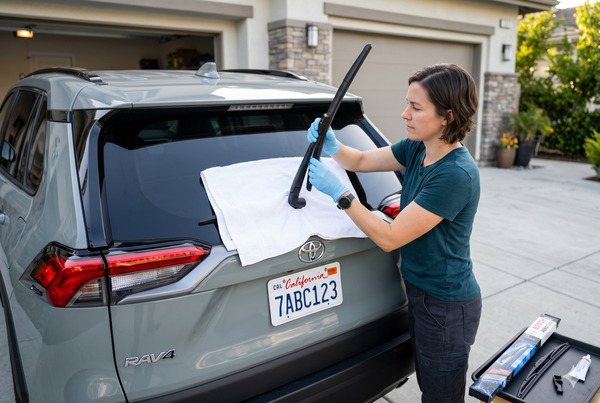
Park safely. Lift the rear wiper arm gently away from the glass. Place a towel underneath for protection.
Step 2: Clean the Arm and Glass
Wipe the arm and rear window to remove dirt and old residue. This prevents streaking after installation.
Step 3: Remove the Old Blade
Locate the release tab or screw on the rear arm. Press or unscrew and slide the old blade off carefully.
Step 4: Install the New Blade
Align the new blade with the arm connector. Slide or snap it into place until it clicks securely. Tug gently to confirm.
Step 5: Test and Adjust
Lower the arm. Spray washer fluid and operate the rear wiper. Check for full coverage, smooth movement, and no noise.
- Always use the exact size for your vehicle model.
- Clean before installing for best results.
- Test at different speeds if possible.
- Replace the blade, not just the refill, on most modern vehicles.
These steps make rear replacement straightforward. Practice once and it becomes very easy.
My Rear Blade Replacement Routine
I replace rear blades on our family SUV every 8-12 months. The process is quick and always results in clear rear visibility.
Hatchback Owner Tip
Many hatchback owners find rear replacement even simpler than front. Following the steps carefully prevents common alignment issues.
Correct installation gives great results. Quality blades like Topex make it even better.
Why Choosing Quality TOPEX Rear Wiper Blades Makes Replacement Easier and Lasts Longer?
I have installed many rear blades over the years. Quality makes a noticeable difference in ease and longevity.
Topex rear wiper blades are designed specifically for SUVs, hatchbacks, and crossovers. They feature reliable connectors, durable rubber, and excellent fit that make installation simple and provide longer, streak-free performance.
Model-Specific Design
Topex rear blades match common arm types used on popular SUVs and hatchbacks. This reduces fitment issues during replacement.
Premium Rubber and Construction
High-quality materials resist hardening and wear better in rear positions, where exposure to elements is high.
Easy Click-In Connectors
The adapters are engineered for quick, secure installation. This minimizes forcing and damage during DIY replacement.
Superior All-Weather Performance
Topex rear blades clear water effectively and resist ice buildup. They maintain performance longer than standard rear blades.
Long-Term Value
With proper care, Topex rear blades last significantly longer. This reduces replacement frequency and overall costs.
| Topex Rear Blade Advantage | Benefit During Replacement | Long-Term Result |
|---|---|---|
| Reliable connectors | Quick and secure click | Fewer installation errors |
| Durable rubber | Resists wear in rear position | Longer service life |
| Precise fit | Full coverage without gaps | Clear rear visibility |
| Quality materials | Better resistance to elements | Reduced streaking |
This table shows why Topex rear blades are a smart choice. They simplify replacement and deliver better results.
My SUV Testing Results
I installed Topex rear blades on our family vehicles. They installed easily and have provided clear rear vision through multiple seasons.
Customer Feedback
SUV and hatchback owners report easier installation and longer life with Topex rear blades. They appreciate the reliable performance in rain and snow.
Topex makes rear maintenance easier. Take the next step today.
Ready to Improve Your Rear Visibility? Here’s Your Next Step?
You now have the complete guide for replacing rear wiper blades. The next step is simple and rewarding.
Ready to improve your rear visibility? Check your current rear blade, gather the right size, and replace it using the steps above. Quality options make the difference.
Small actions today restore clear rear vision and safer driving.
Conclusion
Replacing your rear wiper blade is quick, inexpensive, and often overlooked — until heavy rain or a parking maneuver reminds you why it matters. Good rear visibility is just as important for safety as the front, especially in SUVs, crossovers, and hatchbacks.
With the right size, proper installation technique, and quality blades, you can restore clear rear vision in minutes. TOPEX rear wiper blades are designed specifically for these vehicles, offering reliable performance and easy replacement.
Don’t wait for poor visibility to become a safety issue. Check and replace your rear wiper blade today.
Frequently Asked Questions About Replacing Rear Wiper Blades
How often should I replace my rear wiper blade?
Replace your rear wiper blade every 6 to 12 months, or sooner if you notice streaking, skipping, or noise. Rear blades often wear faster due to constant exposure on the rear window.
Are rear wiper blades different from front ones?
Yes. Rear blades are usually shorter and use different attachment systems designed for the rear arm. Using front blades on the rear rarely works well.
How do I know the correct size for my rear wiper blade?
Check your vehicle owner’s manual, look for size markings on the current blade, or use an online fitment tool with your exact make, model, and year.
Is it difficult to replace a rear wiper blade myself?
No. Rear replacement is usually simpler than the front. Most involve lifting the arm, releasing a tab or screw, and snapping the new blade in place.
Can a worn rear wiper blade damage my rear windshield?
Yes. Hardened or cracked rear blades can scratch the glass over time. These scratches are expensive to repair and create permanent haze.
Why do rear wiper blades wear out faster in some vehicles?
Rear blades face constant sun exposure, rain, and snow without the protection of the hood. Vehicles with frequent reversing or hatch use also see faster wear.

--- END ---


