
Beam Wiper Blades vs Conventional: Which Is Better in 2026? Honest Comparison
Jul 02, 2026
You replace your wiper blades hoping for better rain clearing. Yet streaks appear, noise starts, and performance drops quickly. Many drivers face this cycle because they do not understand the real differences between blade types.
Beam wiper blades generally outperform conventional framed blades in rain clearing, high-speed stability, and longevity due to their aerodynamic design and even pressure distribution. The best choice depends on your climate, vehicle, and budget.
You now see why this comparison is important for safety and value. Let’s explore why the choice still confuses most drivers, the common misconceptions, a detailed side-by-side comparison, why Topex beam blades often outperform traditional conventional ones, and how to choose the right type for your needs.
Why Choosing Between Beam and Conventional Wiper Blades Still Confuses Most Drivers?
I talk with drivers and fleet operators regularly. They ask the same question: beam or conventional? The confusion leads to wrong purchases and disappointing performance in rain.
Choosing between beam and conventional wiper blades confuses most drivers because of conflicting marketing claims, price differences, and lack of clear real-world guidance. This often results in poor visibility, frequent replacements, and unnecessary frustration.
Marketing Overload
Advertisements highlight different benefits without clear context. Drivers struggle to translate claims into actual performance on their specific vehicle.
Price vs Performance Uncertainty
Budget conventional blades seem affordable, while beam styles cost more. Many wonder if the extra money delivers real improvements in rain and daily use.
Lack of Vehicle-Specific Advice
Not all cars benefit equally from beam blades. Older vehicles with flat glass may do fine with conventional, while modern curved windshields favor beam designs.
Mixed Real-World Experiences
Some friends praise beam blades, others say conventional worked fine. Without standardized testing, drivers cannot easily decide.
Fear of Wrong Choice
The worry of wasting money or ending up with worse performance leads to decision paralysis or sticking with old habits.
| Source of Confusion | Why It Misleads Drivers | Real Impact |
|---|---|---|
| Marketing claims | Overpromises without context | Unrealistic expectations |
| Price differences | Assumes higher cost = better | Wrong value judgment |
| Vehicle variations | One-size-fits-all advice | Poor fit for specific cars |
| Mixed user stories | Anecdotal instead of data-driven | Decision paralysis |
This table shows why the choice feels overwhelming. Clear information cuts through the noise.
My Customer Guidance Story
A driver with a modern SUV was confused after reading conflicting reviews. After explaining the differences based on his driving conditions, he chose beam blades and reported much better rain performance.
Fleet Decision Challenge
Fleet managers often test both types across vehicles. The data helps them standardize choices and reduce overall replacement costs.
Confusion is common but solvable with facts. Let’s clear up the misconceptions first.
Common Misconceptions About Beam vs Conventional Wiper Blades?
Drivers often hold beliefs that do not match real performance data. These misconceptions lead to suboptimal choices.
Common misconceptions include thinking beam blades are always better and more expensive without real benefits, believing conventional blades are sufficient for all conditions, assuming all beam blades are the same, and focusing only on upfront price. Understanding the facts leads to smarter decisions.
“Beam Blades Are Always Better”
Beam blades excel in many scenarios, but conventional framed blades can still be adequate for light use or flat windshields. The best type depends on your vehicle and climate.
“Beam Blades Cost Too Much”
While the initial price is higher, longer lifespan and better performance often make beam blades more economical over time.
“All Beam Blades Perform the Same”
Quality varies widely. Premium beam blades with good rubber and construction outperform basic ones significantly.
“Conventional Blades Are Good Enough”
They work in mild conditions but struggle with wind lift and uneven pressure on curved modern windshields.
| Misconception | Reality | Better Perspective |
|---|---|---|
| Beam always superior | Depends on vehicle and use | Match to specific needs |
| Beam too expensive | Better long-term value | Calculate cost per month |
| All beam the same | Quality varies widely | Check materials and design |
| Conventional sufficient | Weaker in demanding conditions | Consider beam for rain/highway |
This table corrects common wrong beliefs. Clear facts help you choose effectively.
My Buyer Consultation Story
A customer believed beam blades were unnecessary until he experienced lift on the highway. After switching, he noticed immediate improvement in rain clearing and stability.
Fleet Manager Insight
Fleets that assumed “conventional is fine” faced higher replacement rates in rainy regions. Testing beam options showed clear advantages in real conditions.
Misconceptions prevent optimal performance. Let’s compare the two types directly.
Beam Wiper Blades vs Conventional: Detailed Side-by-Side Comparison?
A clear comparison helps you see the practical differences in everyday use.
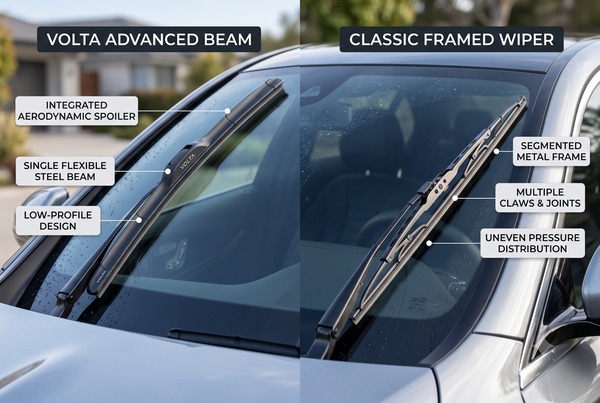
Beam wiper blades generally outperform conventional framed blades in aerodynamics, rain clearing, and durability. Conventional blades remain a solid budget choice for light use but fall short in demanding conditions.
Structure and Design
Beam blades are frameless with a flexible spine. Conventional blades use a metal frame with rubber inserts. The frameless design adapts better to curved windshields.
Rain Performance
Beam blades provide more even pressure and better water clearing. Conventional blades can leave streaks in heavy rain due to less uniform contact.
High-Speed Stability
Beam blades resist wind lift better thanks to aerodynamic profiles. Conventional blades often lift at highway speeds, reducing effectiveness.
Durability and Lifespan
Premium beam blades last longer due to fewer parts that can corrode. Conventional blades may need more frequent replacement in harsh conditions.
Installation and Noise
Beam blades are often easier to install and quieter. Conventional blades can be bulkier and produce more noise as they age.
| Feature | Beam Blades | Conventional Blades |
|---|---|---|
| Design | Frameless, flexible spine | Metal frame with inserts |
| Rain clearing | Excellent even pressure | Good but prone to streaks |
| High-speed stability | Superior wind resistance | More lift at speed |
| Durability | Longer lifespan | Shorter in harsh conditions |
| Noise level | Quieter operation | Increases with age |
This table provides a clear overview. Beam blades win in most modern driving scenarios.
My Real-World Comparison
I tested both types on the same vehicle across seasons. Beam blades required less maintenance and performed better in rain and at speed.
Customer and Fleet Results
Drivers report clearer vision and fewer replacements with beam blades. Fleets value the reduced downtime and better safety records.
Beam blades often deliver superior results. Topex takes this further with practical advantages.
Why TOPEX Beam Wiper Blades Often Outperform Traditional Conventional Blades?
After extensive testing, certain beam blades stand out. Topex consistently delivers strong real-world performance.
Topex beam wiper blades combine advanced aerodynamic design, premium rubber, and durable construction. They outperform traditional conventional blades in rain clearing, high-speed stability, and longevity.
Advanced Aerodynamic Profile
Topex beam blades use spoilers and curved spines that resist wind lift. This maintains contact at highway speeds where conventional blades often fail.
Premium Rubber Compounds
High-quality materials resist UV, ozone, and temperature extremes. This keeps the wiping edge sharp longer than standard rubber.
Even Pressure Distribution
The flexible beam adapts perfectly to windshield curves. This ensures full coverage without the gaps common in framed designs.
Durable Construction
Reinforced components withstand daily use and seasonal changes. This reduces the need for frequent replacements.
Quiet and Reliable Operation
Better design minimizes vibration and noise. Drivers enjoy smoother, more comfortable wiping in all conditions.
| Topex Beam Advantage | How It Outperforms Conventional | Driver Benefit |
|---|---|---|
| Aerodynamic design | Better wind resistance | Stable high-speed wiping |
| Premium rubber | Longer edge life | Fewer streaks |
| Even pressure | Full coverage | Clearer vision |
| Durable build | Withstands wear | Extended service life |
This table highlights Topex strengths. The differences become clear in daily driving.
My Testing Insights
In side-by-side comparisons, Topex beam blades maintained performance longer and required less attention than conventional options.
Customer and Fleet Feedback
Users in varied climates report better rain performance and longer life with Topex beam blades. Fleets value the reduced maintenance needs.
Topex beam blades provide clear advantages. Here is how to choose the right type for your needs.
Ready to Upgrade Your Wiper Blades? Here’s How to Choose the Right Type?
You now have the facts to make an informed decision. The next step is matching the blade to your driving conditions.
Ready to upgrade your wiper blades? Assess your climate and vehicle, compare options based on real performance, and choose quality blades that match your needs for long-term satisfaction.
For reliable beam performance, explore the Topex wiper blade collection. You can also check their flat wiper blade category for premium beam options.
Small consistent actions create clearer, safer driving.
Conclusion
Beam and conventional wiper blades each have their place, but in 2026 beam-style blades generally deliver superior performance for most drivers. Their aerodynamic design, even pressure distribution, and better resistance to wind lift make them especially effective in rain and at highway speeds.
While conventional blades remain a budget-friendly option for light use, premium beam blades like TOPEX offer better long-term value through longer life and clearer visibility.
Choose based on your driving conditions — the right wiper blade makes every trip safer and more comfortable.
Frequently Asked Questions About Beam vs Conventional Wiper Blades
What is the main difference between beam and conventional wiper blades?
Beam blades are frameless with a flexible spine that adapts to the windshield curve. Conventional blades use a metal frame with rubber inserts. Beam designs provide better aerodynamics and even pressure.
Are beam wiper blades worth the extra cost?
Yes for most drivers. Beam blades last longer, perform better in rain and at speed, and require less maintenance. The total cost over time is often lower.
Which type is better for heavy rain and highway driving?
Beam-style blades are generally better. They resist wind lift and maintain consistent contact, clearing water more effectively than conventional framed blades.
Do beam blades last longer than conventional ones?
Yes. Premium beam blades typically last 12–24 months or more due to fewer parts that can corrode and better resistance to wear.
Can I mix beam and conventional blades on the same car?
It is not recommended. Different designs wear at different rates and can cause uneven performance. Replace both sides with the same type.
Are conventional blades still good for any vehicles in 2026?
Yes. Conventional blades remain a solid, affordable choice for light use, older vehicles with flat glass, or budget-conscious drivers in mild climates.

--- END ---
Prev: Beam Wiper Blades vs Conventional: Which Is Better in 2026? Honest Comparison
Already the latest article


