
12 Warning Signs Your Wiper Blade Supplier May Become a Supply Risk
Sep 29, 2026
A supplier can pass the first sample review and still become a problem later. Quality starts to drift. Lead times slip. Fitment complaints rise. Packaging errors appear as volume grows. By the time the damage is obvious, a full season or a key account may already be affected.
A wiper blade supplier rarely becomes a serious supply risk overnight. Early warning signs usually appear first: batch variation, rising complaints, weak traceability, unapproved changes, unstable lead times, or corrective actions that never reach the root cause. Buyers who monitor these signals early can act before larger shipments and brand reputation are hurt.
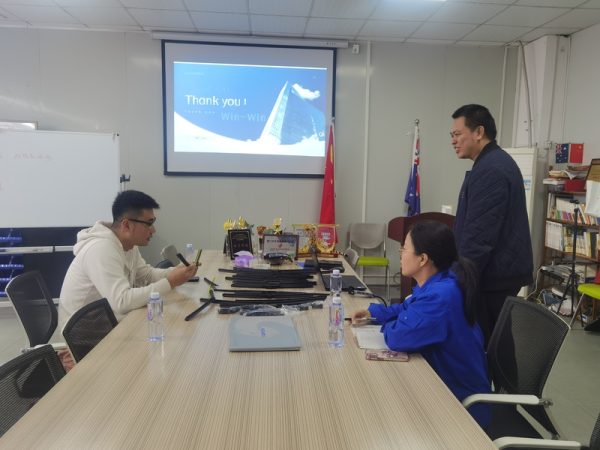
You now see that supplier risk is often gradual. Let’s examine why even a seemingly reliable supplier can become a risk, the 12 warning signs buyers should not ignore, how to verify whether problems are temporary or systemic, what to do before replacing a supplier, and how to build a more resilient supply base.
Why a Reliable Wiper Blade Supplier Can Still Become a Supply Risk
I review supplier performance with importers and distributors every year. Many assume that a good sample means long-term safety. That assumption is expensive.
A reliable-looking wiper blade supplier can still become a supply risk because sample quality does not guarantee stable mass production. Risk often appears as gradual quality variation, fitment errors, packaging mistakes, delayed shipments, and rising after-sales complaints rather than sudden factory failure.
Samples Only Prove a Narrow Capability
A sample shows that a factory can make a small number of acceptable pieces under controlled attention. It does not prove that every later batch will match the same rubber, curvature, adapter tolerance, and assembly standard.
Commercial Pressure Changes Behavior
When order volume rises, weak material control, limited inspection capacity, or unstable planning starts to show. The first shipments may still look fine. Later shipments carry the real risk.
Aftermarket Quality Is Broader Than Rubber Alone
A blade can wipe acceptably in a lab and still create commercial problems if connectors loosen, fitment data is wrong, packaging is incorrect, or lot traceability is missing. Supplier risk includes all of these points.
Problems Compound Across the Chain
One unstable batch can create retailer returns, customer complaints, claim handling cost, and lost confidence. The supplier issue becomes a channel issue very quickly.
| Risk Stage | What Buyers Often See | Why It Matters |
|---|---|---|
| Early sample stage | Good appearance and fit | Creates false confidence |
| Early mass production | Small variation begins | Easy to dismiss as isolated |
| Scaling stage | Complaints and delays increase | Affects season and key accounts |
| Late discovery | Sorting, claims, and lost trust | Cost is already high |
This table shows why waiting for a complete failure is the wrong monitoring strategy. Early signals are more useful than late damage reports.
My Procurement Observation
The suppliers that caused the largest commercial losses were rarely the ones that failed on day one. They were the ones whose small inconsistencies were ignored until the problem was already in the distribution network.
Practical Conclusion for Buyers
Supplier evaluation must continue after approval. The goal is to detect whether performance is stable, drifting, or breaking down.
Early awareness is useful only if the warning signs are concrete.
12 Warning Signs You Should Not Ignore
These signs are observable in normal B2B operations. They do not require advanced laboratory tools to notice.
Buyers should watch for twelve practical warning signs: changing bulk quality after good samples, rubber variation between batches, rising streaking or noise complaints, loose adapters, increasing fitment errors, unapproved specification changes, weak inspection records, poor lot traceability, shallow corrective actions, unstable lead times, packaging errors at higher volume, and resistance to audits or trial verification.
| # | Warning Sign | What It May Mean |
|---|---|---|
| 1 | Samples are good, but bulk quality keeps changing | Production consistency is weak |
| 2 | Rubber performance varies between batches | Material control may be unstable |
| 3 | More customers report streaking, noise, or chattering | Product consistency needs investigation |
| 4 | Adapters become loose or difficult to install | Connector tolerance may be drifting |
| 5 | Fitment errors are becoming more frequent | Application data may not be maintained |
| 6 | Specifications change without approval | Change control is weak |
| 7 | Inspection records are incomplete or unavailable | QC may not be systematic |
| 8 | Lot numbers cannot be traced back to production | Traceability is inadequate |
| 9 | Corrective actions stop at “we will improve” | Root-cause analysis may be weak |
| 10 | Lead times become increasingly unpredictable | Capacity or planning may be under pressure |
| 11 | Packaging errors increase as order volume grows | OEM/private-label control may not scale |
| 12 | The supplier resists audits, testing, or trial orders | Verification becomes difficult |
How to Read the Signs
One isolated issue is not automatic proof that a supplier must be replaced. A pattern across shipments, SKUs, or complaint types is more serious. Rising streaking, noise, or chatter should trigger investigation of the affected batches. It should not be treated as automatic proof of one single root cause, because installation, glass condition, and arm condition can also influence field performance.
Why These Signs Matter Commercially
Each sign points to a control gap that can grow with volume. Weak connector tolerance becomes more expensive when thousands of units are already packed. Missing lot numbers become critical only after complaints arrive and no one can isolate the affected stock.
Priority Focus for Busy Teams
If resources are limited, watch these first: bulk-versus-sample gaps, rising field complaints, unapproved changes, missing traceability, and repeated “we will improve” responses with no verified action.
The list identifies risk. The next step is verification.
How to Verify Whether These Problems Are Temporary or Systemic
Not every warning sign means the supplier relationship should end. The buyer needs evidence.
Buyers should verify problems with retained samples, batch records, incoming material data, QC reports, fitment checks, complaint trends, and formal corrective-action evidence. The goal is to determine whether the issue is isolated, recurring, or systemic before making a replacement decision.
| Warning Signal | What the Buyer Should Request |
|---|---|
| Rubber inconsistency | Material batch records |
| Fitment complaints | Application and adapter verification |
| Loose adapters | Dimensional and tolerance inspection |
| Wiping complaints | Retained sample comparison and wipe tests |
| Packaging mistakes | Approved artwork and packaging samples |
| Delivery delays | Updated production and shipping schedule |
| Repeat complaints | CAPA and root-cause report |
Compare Against the Approved Standard
Pull the golden sample and the written specification. Compare the complained batch against both. Subjective memory is not enough when margins and customer trust are involved.
Demand Batch-Level Evidence
Ask which lot was affected, when it was produced, which materials were used, and which inspection records apply. A supplier that cannot answer these questions is already showing a control weakness.
Separate Field Noise from True Defect Trends
One complaint may come from installation error or a damaged arm. A cluster of similar complaints on the same SKU and production period is a stronger signal of process or material instability.
Evaluate the Corrective-Action Quality
A useful response identifies the affected batch, states the likely root cause, defines corrective action, and shows how later lots will be verified. A vague promise to “pay more attention next time” is not a control system.
- Request retained samples for side-by-side comparison.
- Review lot records and material traceability.
- Re-check adapters and fitment data for the affected applications.
- Track complaint trends by SKU and period.
- Accept only corrective actions that can be verified on later shipments.
My Verification Rule
I treat the supplier’s response quality as part of the evidence. A factory that can isolate a batch and prove correction is different from a factory that only apologizes and repeats the same problem.
Verification creates clarity. Action should follow the risk level.
What Buyers Should Do Before Replacing a Wiper Blade Supplier
Replacing a supplier too early creates disruption. Waiting too long creates larger losses. A staged response is more professional.
Before replacing a wiper blade supplier, classify issues into Monitor, Correct, or Escalate. Use formal CAPA, retesting, and tighter outgoing inspection for recurring problems. Escalate to backup planning when traceability is missing, unapproved changes continue, major defects repeat, or the supplier blocks verification.
Monitor
Use this level for isolated issues with clear records, a credible explanation, and verified improvement on the next lot. Keep normal business flowing, but record the event.
Correct
Use this level when the same problem repeats. Require a formal corrective-action plan, retained-sample comparison, targeted retesting, and stronger pre-shipment inspection until stability returns.
Escalate
Use this level when the supplier cannot trace lots, changes materials or specifications without approval, repeats major quality failures, or refuses audits, testing, or controlled trial verification. Begin backup-supplier activation and restrict new volume exposure.
| Risk Level | Typical Situation | Buyer Action |
|---|---|---|
| Monitor | One-off issue with clear correction | Record and continue observation |
| Correct | Recurring defect with incomplete control | Demand CAPA, retest, tighter inspection |
| Escalate | No traceability, unapproved change, major repeated failure | Reduce exposure and activate backup |
Do Not Make Decisions on Emotion Alone
A single delayed container is not the same as repeated uncontrolled quality drift. The decision should follow evidence, commercial exposure, and the supplier’s ability to correct the process.
Protect the Current Season While You Decide
If escalation is needed, secure coverage for the highest-velocity SKUs first. A disorderly exit can create stockouts that cost more than the original supplier problem.
Keep Documentation
Save complaint logs, photos, lot numbers, emails, inspection reports, and CAPA replies. These records support claim handling and make the next supplier approval more disciplined.
Action on one supplier is necessary. Long-term resilience requires a stronger system.
How to Build a More Resilient Wiper Blade Supply Base
The strongest protection is not a perfect promise. It is a supply system that remains stable when pressure rises.
A resilient wiper blade supply base is built on approved golden samples, written specifications, batch traceability, fitment verification, incoming material control, pre-shipment inspection, formal change approval, a real CAPA process, backup planning, and controlled trial orders before large volume commitments.
Lock the Standard Before Volume
Approve a golden sample and a written specification covering length, rubber characteristics, spring behavior, adapter dimensions, locking force, packaging, and wiping performance limits. Without this baseline, later disputes become subjective.
Require Traceability on Every Shipment
Lot numbers should link finished goods back to production and material records. Traceability is most valuable after something goes wrong, when the buyer needs to isolate affected stock quickly.
Treat Fitment as a Quality Item
Correct length, connector, adapter, and vehicle application are part of supplier quality. A blade that cannot be installed correctly is still a commercial defect.
Use Controlled Trial Orders
A trial order tests mass-production consistency, packaging execution, labeling accuracy, QC documentation, schedule performance, and supplier response when correction is needed. It reveals more than a quotation or a few hand samples.
Keep Backup Capacity for Critical SKUs
For the highest-volume sizes, maintain a qualified alternative path or buffer strategy. Resilience means one disruption does not stop the whole program.
- Approve golden samples and written specs first.
- Require batch traceability on all shipments.
- Verify fitment data before scaling.
- Inspect materials and finished lots systematically.
- Demand written approval for critical changes.
- Use CAPA with verified follow-up.
- Qualify backup coverage for core SKUs.
- Expand volume only after controlled trials succeed.
My Supply-Base Recommendation
I prefer suppliers who welcome verification. Resistance to audits, testing, or trial orders is itself a warning sign. Transparency is part of operational strength.
For buyers building controlled flat and hybrid programs with clearer specification and repeat-order discipline, explore the Topex flat wiper blade category and the Topex hybrid wiper blade category. You can also review platforms such as the Topex T-PRO-F one-piece spoiler when preparing a verified trial before larger seasonal commitments.
Conclusion
A wiper blade supplier rarely becomes a serious supply risk overnight. In many cases, the warning signs appear earlier: increasing batch variation, recurring fitment complaints, incomplete inspection records, unexplained specification changes, repeated delivery delays, or corrective actions that never address the root cause. The purpose of supplier monitoring is not to eliminate a supplier after the first problem. It is to identify whether the problem is isolated, recurring, or systemic—and take action before it affects a larger shipment, an important selling season, or your brand reputation. For importers and distributors, clear specifications, approved samples, traceability, fitment verification, and documented corrective actions provide a much stronger foundation than relying on price and promises alone.
Before approving a new wiper blade supplier, start with verification rather than volume. A controlled trial order can reveal much more about product consistency, fitment control, packaging execution, and supplier response than a quotation alone.
Frequently Asked Questions About Wiper Blade Supplier Risk
What are the biggest warning signs of an unreliable wiper blade supplier?
The most important signs include bulk quality that drifts away from approved samples, rising streaking or noise complaints, loose adapters, increasing fitment errors, unapproved specification changes, weak inspection records, poor lot traceability, shallow corrective actions, unstable lead times, packaging errors at higher volume, and resistance to audits or trial orders.
How can importers check wiper blade quality consistency between batches?
Compare new lots with the golden sample and written specification. Review material batch records, dimensional checks, adapter tolerance, wiping performance, and complaint trends by SKU and production period. Consistency is proven by repeated matching results, not by one acceptable shipment.
What documents should a wiper blade supplier provide for quality control?
Useful documents include the approved specification, golden-sample references, incoming material records, in-process and final inspection reports, lot or batch numbers, packaging approval files, and corrective-action reports when problems occur.
How should buyers handle repeated wiper blade quality complaints?
Group complaints by SKU, lot, period, and failure symptom. Ask the supplier for batch isolation, root-cause analysis, and verified corrective action. Increase pre-shipment inspection until later lots prove the issue is controlled.
When should an importer consider changing wiper blade suppliers?
Consider replacement when problems are systemic rather than isolated: missing traceability, repeated major defects, unapproved material or specification changes, failed corrective actions, or refusal to support verification. One complaint alone is usually not enough; a pattern of uncontrolled risk is.
How can buyers reduce supply risk before placing a large wiper blade order?
Lock specifications and golden samples, verify fitment, require traceability and inspection discipline, run a controlled trial order, and confirm the supplier’s change-control and CAPA process. Expand volume only after the trial shows stable execution.

--- END ---


