
How Low-MOQ Custom Color Wiper Blades Help Wholesalers Quickly Enter Differentiated Markets in 2026
Jul 27, 2026
You sell the same black blades as everyone else. Prices keep falling. Margins shrink every quarter. Customers treat your product like a pure commodity and jump to the lowest bidder.
Low-MOQ custom color wiper blades let wholesalers escape pure price competition. Flexible order quantities, unique colors, and branded packaging create visible differentiation, support higher margins, and allow fast market testing with limited risk.
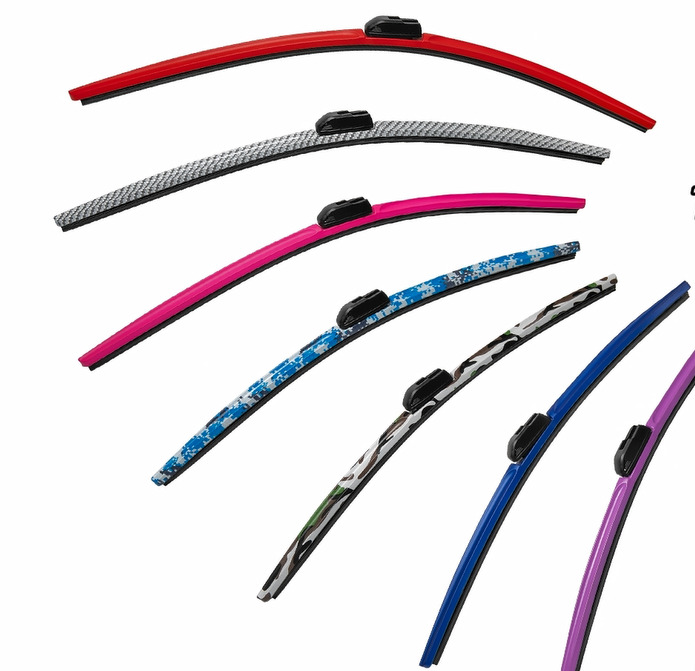
You now see a practical path out of the commodity trap. Let’s examine why most wholesalers stay stuck in price wars, the common mistakes when trying to differentiate, how low-MOQ custom color blades actually create market separation, why Topex solutions give real advantages, and your clear next step to launch a differentiated line.
Why Most Wholesalers Stay Stuck in the Commodity Price War
I speak with distributors and importers every month. Many started with solid margins years ago. Today they fight for every cent because their products look identical to the next supplier’s.
Most wholesalers stay stuck in the commodity price war because their blades look the same, carry no unique identity, and invite pure price comparison. This compresses margins, weakens customer loyalty, and makes long-term growth difficult.
Severe Product Homogeneity
Almost every supplier offers standard black beam or hybrid blades. When the product looks identical, buyers compare only on price and lead time. Differentiation disappears.
Continuous Price Pressure
Online platforms and new entrants keep pushing prices down. Wholesalers who cannot offer something different are forced to match or lose the order.
Margin Erosion Over Time
What used to be healthy profit has turned into thin spreads. Fixed costs stay the same while selling prices fall, leaving less room for marketing, service, or growth.
Weak Customer Loyalty
Buyers have little reason to stay loyal when the next quote is cheaper. Relationships become transactional and easy to break.
Limited Brand Building Opportunity
Without unique colors, packaging, or private labeling, wholesalers remain pure resellers. They never build an asset they own and control.
| Commodity Problem | Immediate Effect | Long-Term Result |
|---|---|---|
| Identical appearance | Pure price comparison | Race to the bottom |
| Falling selling prices | Shrinking margins | Less reinvestment capacity |
| Easy supplier switching | Low loyalty | Unstable order volume |
| No owned brand | Pure distribution role | Limited business value |
This table shows how the commodity cycle traps many wholesalers. Breaking out requires visible differentiation that buyers notice and value.
My Distributor Conversation Pattern
A mid-sized importer told me his average margin had dropped more than 15 points in three years. He sold good quality blades, yet customers still treated them as interchangeable. The lack of unique identity kept him locked in price talks.
Market Reality in 2026
The global aftermarket continues to grow, but the standard black blade segment is the most competitive. Wholesalers who remain there face constant pressure, while those who add color, packaging, and branding capture better returns.
Staying in the commodity lane is costly. Most attempts to leave it fail because of avoidable mistakes.
Common Mistakes When Trying to Launch a Differentiated Wiper Blade Line
Many wholesalers want to move beyond plain black blades. They often stop after the first barriers appear.
Common mistakes include accepting high MOQs that create inventory risk, underestimating the power of color and packaging, choosing suppliers who cannot support small tests, and launching without a clear test plan. These errors turn promising ideas into expensive failures.
Getting Locked by High Minimum Order Quantities
Traditional factories often demand thousands of pieces per color or SKU. Small and mid-sized wholesalers cannot absorb that inventory risk, so the project dies before it starts.
Treating Color and Packaging as Secondary
Some focus only on the blade itself and ignore how color and outer packaging change perceived value. Without those elements the product still looks like a commodity.
Selecting the Wrong Manufacturing Partner
Not every factory offers true low MOQ, fast sampling, or reliable multi-adapter systems. Choosing a partner that cannot deliver flexibility wastes time and money.
Over-Investing Before Validation
Launching a full range without small test runs leads to excess stock if the market response is weak. Smart operators validate first.
Ignoring Lead Time and Communication
Custom programs need clear timelines for sampling, production, and packaging. Poor communication creates delays that kill momentum.
| Mistake | Typical Consequence | Better Approach |
|---|---|---|
| High MOQ acceptance | Heavy inventory risk | Seek flexible low MOQ |
| Ignoring visual branding | Product still feels generic | Prioritize color + packaging |
| Wrong supplier | Delays and quality issues | Test sampling capability |
| Full launch without test | Excess stock risk | Start with limited runs |
This table highlights the most frequent traps. Avoiding them keeps the path to differentiation open and low-risk.
My Observed Failure Pattern
Several potential partners approached us after failing with high-MOQ factories. They had spent months and significant deposits only to discover they could not move the volume. Low-MOQ options would have allowed safer testing.
Practical Lesson from the Field
Wholesalers who succeed usually start with one or two colors, simple branded packaging, and a few hundred units. They learn what the market wants before scaling.
Mistakes are costly but preventable. The right approach turns custom color into a real competitive tool.
How Low-MOQ Custom Color Blades Actually Create Market Differentiation
Color and packaging are not just cosmetic. When combined with flexible order quantities they become powerful commercial tools.
Low-MOQ custom color blades create differentiation by making the product visually unique, supporting private-label branding, lowering test risk, and allowing wholesalers to target specific customer segments with higher perceived value.
Visual Differentiation Stops Pure Price Comparison
A blue, red, or custom-colored blade stands out on the shelf and in online photos. Buyers cannot easily compare it to every standard black option, which reduces pure price pressure.
Private Label and Branded Packaging Build Ownership
Adding your logo, brand name, and designed packaging turns a generic part into your product. Customers begin to associate the performance with your brand rather than an anonymous factory.
Low MOQ Lowers the Cost of Testing
Flexible minimums (often starting around a few hundred units) let you try new colors or packaging without large capital commitment. You can validate demand quickly and adjust.
Faster Market Entry and Iteration
Small runs and reasonable lead times allow you to respond to regional preferences or seasonal opportunities. You learn what works and scale only the winners.
Multi-Adapter Coverage Strengthens the Offer
Combining custom color with multi-fit adapters lets you cover more vehicles under one branded line. This builds a “complete solution” image instead of a single commodity SKU.
- Start with one or two popular colors that match your target market.
- Pair the blades with simple but professional branded packaging.
- Use low MOQ to test sell-through before larger commitments.
- Collect customer feedback on appearance and performance.
- Expand successful combinations into a broader private-label range.
These steps turn a standard product into a differentiated offering that supports better margins and stronger relationships.
Real Margin Impact
Distributors who move from plain white-label to custom color and branded packaging commonly report meaningful margin improvement. The visual difference and brand ownership make it easier to defend price.
Speed Advantage
Wholesalers using low-MOQ partners can move from concept to first delivery in weeks rather than months. That speed matters when market windows are short.
Differentiation works when the partner can actually deliver it. That is where the right supplier becomes critical.
Why TOPEX Low-MOQ Custom Color Solutions Give Wholesalers a Real Advantage
I have worked with wholesalers who needed flexibility without sacrificing quality or reliability. Topex was built to solve exactly that problem.
Topex low-MOQ custom color solutions give wholesalers flexible order quantities, multiple color options, branded packaging support, multi-adapter systems, and reliable production. This combination lowers risk while enabling true market differentiation.
Practical Low Minimums
We support smaller starting quantities that allow real testing. Wholesalers can try new colors or packaging without over-committing inventory.
Color and Appearance Options
Custom colors on one-piece spoiler and hybrid designs create immediate visual distinction. The product looks different on the shelf and in marketing photos.
Packaging and Branding Support
We work with private-label packaging so the blades carry your brand identity. This shifts the conversation from price to your product.
Multi-Adapter and Vehicle Coverage
Our systems cover a wide range of arm types. You can offer broader fitment under one branded line and reduce SKU complexity.
Sampling, Lead Time, and Stability
Clear sampling processes and consistent production help you move from idea to delivery with predictable timelines. Quality remains stable even on smaller runs.
| Topex Advantage | Benefit for Wholesalers | Commercial Result |
|---|---|---|
| Low MOQ flexibility | Lower inventory risk | Safer market testing |
| Custom color options | Visual differentiation | Reduced price comparison |
| Private-label packaging | Brand ownership | Higher perceived value |
| Multi-adapter systems | Wider vehicle coverage | Stronger product line |
This table summarizes the practical edges. The combination of flexibility and capability turns differentiation from an idea into an executable plan.
My Partnership Experience
Wholesalers who start with limited custom color runs often expand after seeing sell-through and margin results. The ability to test small and scale only what works has proven more effective than large initial commitments.
Customer Feedback Pattern
Partners value the combination of low entry barriers and consistent quality. They report faster time to market and better control over their product presentation.
Topex removes the usual barriers. The final step is taking action.
Ready to Launch Your Differentiated Wiper Line? Here’s the Next Step
You understand the commodity pressure, the common mistakes, how low-MOQ custom color works, and why the right partner matters. The path forward is concrete.
Ready to launch your differentiated wiper line? Define your target market and preferred colors, request samples of low-MOQ custom options, and plan a small test run to validate demand before scaling.
Explore the available custom color possibilities on the Topex custom color one-piece spoiler category. You can also review specific models such as the T-PRO-SC custom wiper blade and the T-PRO-HC custom hybrid to see practical options for private-label programs.
Small, controlled tests create the fastest route to higher margins and stronger market position.
Conclusion
In 2026, the wiper blade market continues to reward differentiation over pure price competition. Low-MOQ custom color blades give wholesalers a practical way to escape commodity pressure, test new brands with limited risk, and capture higher margins through perceived value.
By combining flexible order quantities, color customization, and branded packaging, distributors can quickly enter niche segments and build stronger customer loyalty. The key is choosing a partner that supports small test runs without sacrificing quality or lead time.
Don’t stay trapped in the price race. Start testing low-MOQ custom color blades and turn ordinary wipers into a branded, higher-margin product line.
Frequently Asked Questions About Low-MOQ Custom Color Wiper Blades
What is a realistic MOQ for custom color private label wiper blades in 2026?
Realistic low MOQs often start around a few hundred units per color or SKU depending on the design and packaging requirements. This level allows meaningful testing without excessive inventory risk for most mid-sized wholesalers.
How much higher can margins be with custom color and branded packaging?
Distributors who move from standard white-label to custom color and branded packaging commonly see meaningful margin improvement, often in the range of 30% or more, because the product becomes harder to compare on price alone.
Can small wholesalers successfully launch a private label line with low MOQ?
Yes. Low MOQ removes the biggest barrier that previously limited smaller players. With careful color and packaging choices plus a focused test plan, smaller wholesalers can validate demand and grow a branded line.
How long does it usually take from design to first production of custom color blades?
After finalizing colors and packaging, production lead times typically range from a few weeks for simpler programs to longer for fully custom packaging. Clear communication and sampling steps keep the process predictable.
What customization options are typically available (color, logo, packaging)?
Common options include multiple blade colors, logo application, and branded outer packaging or inserts. The exact range depends on the blade design and the supplier’s capabilities.
Does low MOQ mean lower quality or longer lead times?
Not when working with a capable partner. Quality standards and production processes can remain consistent on smaller runs. Lead times stay reasonable when the factory is set up for flexible manufacturing.

--- END ---


