
Marine Wiper Blade Procurement Guide for Distributors, and Boatbuilders
Sep 12, 2026
Buying marine wiper blades involves a different set of considerations from sourcing automotive wiper products. Salt exposure, strong UV, curved windshields, and different arm connections can all affect fit, durability, and long-term performance.
For distributors and boatbuilders, the product itself is only part of the job. A workable program also depends on clear specifications, reliable test data, and a stocking plan that matches the way the product will be sold and serviced.
At TOPEX, we supply marine wiper solutions for B2B customers, including our T-B103 boat wiper blade and a broader range of marine wiper products. Since 2006, we have worked with customers in more than 80 countries and served over 130 markets.
This guide covers the points procurement teams should check before ordering, the documentation worth keeping on file, and the supply considerations that matter for distributors, importers, private label brands, boatbuilders, and marine service channels.
Key Specifications for Marine Wiper Procurement
Marine wipers work in conditions that are very different from standard automotive applications. For buyers, the decision is not simply about blade length. It involves understanding corrosion resistance, installation compatibility, operating conditions, and how the product will be managed in inventory.
Many sourcing issues can be traced back to the first RFQ. Incorrect arm connections, unnecessary size variations, or unsuitable blade materials can lead to returns, slow-moving stock, and performance complaints after installation.
A more reliable approach is to define the application first: where the vessel operates, what type of windshield is used, which arm systems need to be covered, and how the product will be packaged and sold. Building the specification around the real application helps create a more practical marine wiper program.
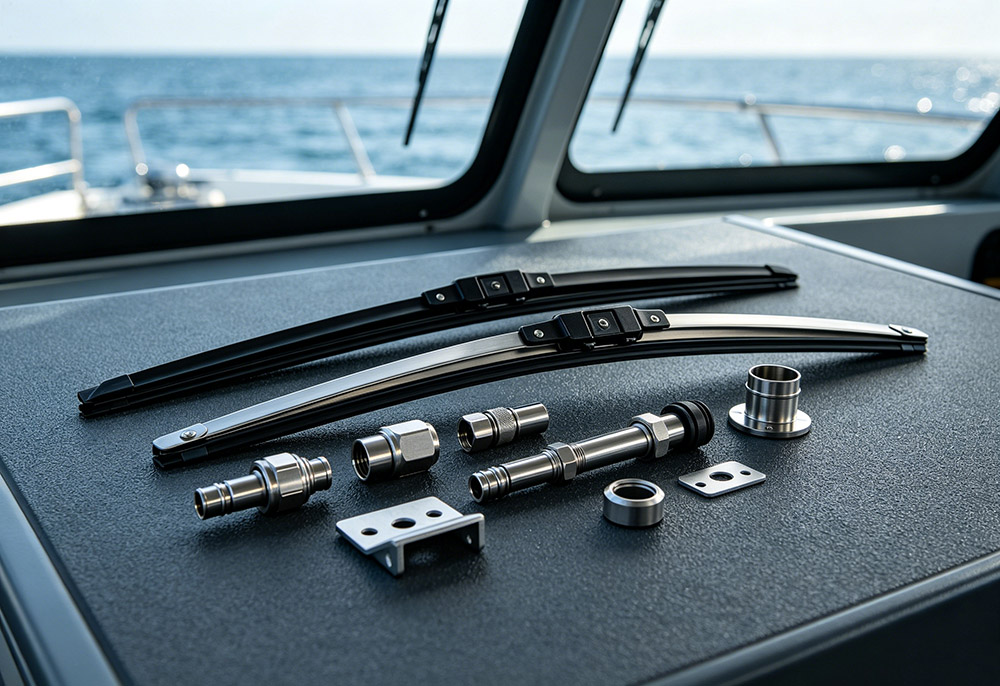
The saltwater exposure checklist
Salt and corrosion resistance
Marine blades sit in salt-rich air and direct spray. That changes the frame requirement first. Our T-B103 uses stainless steel multi-frame construction so the structure can resist corrosion in marine service instead of acting like a standard road-use frame.
UV and temperature swings
A marine blade also stays exposed to strong sun and wide temperature changes. T-B103 uses a Teflon-coated silicone rubber element that resists salt, UV, and debris, and it is designed for a working range of -40°C to 80°C. For buyers, that means the rubber spec cannot be an afterthought. It belongs in the first quotation round.
Curved glass and operating noise
Many boat windshields are curved, and pressure distribution matters. A marine blade has to keep contact without chattering across uneven glass. Our multi-frame construction was built for quiet, reliable operation on curved boat windows. That is an important point for fleets and builders because noise complaints often point back to fitment or pressure distribution, not just rubber quality.
Size range and fitment coverage before you place a PO
Start with the sweep area, not only the old blade
We recommend mapping the windshield size and the area that must be wiped, then matching that requirement to blade length. In our marine program, the available size coverage is 12 to 28 inches. That range helps buyers build one program across smaller craft and larger applications without mixing unrelated suppliers.
Confirm arm coverage early
Connector confusion slows projects. T-B103 uses multi-fit adapters designed to cover 95%+ of marine wiper arms. That does not remove the need for verification, but it reduces the number of exceptions a distributor or boatbuilder has to manage. In procurement terms, broad arm coverage lowers the risk of dead stock tied to uncommon interfaces.
Do not approve a marine line on size alone
Two blades may share the same length and still perform differently on the vessel. Buyers should confirm the arm type, the glass shape, and the expected wiped area before locking the SKU list. This is especially important for importers building a private label range, because packaging can hide fitment gaps until the first installation wave.
Materials and coatings that belong in the RFQ
Material specifications should be clearly stated in the RFQ rather than scattered across emails or discussed only during later stages of the project.
For the TOPEX T-B103 marine wiper blade, the key material details include a stainless steel multi-frame construction, Teflon-coated silicone rubber, and eco-friendly material selection.
Each element serves a practical purpose. The stainless steel frame is designed to better handle marine corrosion conditions, while the Teflon-coated silicone rubber helps maintain wiping performance in environments exposed to salt, UV, and surface debris. Eco-friendly materials also support customers who need clearer product documentation for their own markets and end users.
When evaluating marine wiper suppliers, buyers should ask for specific information upfront, including frame material, rubber compound, coating type, operating temperature range, and recommended application environment. A quotation is much easier to evaluate when these details are clearly defined from the beginning.
Verify performance with marine-specific evidence
Product claims are easy to include in a brochure. For procurement teams, the important question is whether the supplier can provide evidence that reflects actual marine conditions.
TOPEX marine wiper blades are validated through 1 million wipe cycles and salt spray testing. These evaluations are designed to confirm performance under repeated wiping and exposure to corrosion-related environments, rather than relying only on basic laboratory checks.
Build a documentation package for your supply chain
The most useful product evidence is the information that can be shared internally and passed along to sales teams, quality departments, and channel partners.
A typical marine wiper program file should include:
- product specification sheet
- available size range
- arm compatibility information
- wiping durability test results
- salt spray test verification
- packaging and labeling requirements
Supplier capability is another factor worth considering. At TOPEX, more than 96% of our products are developed and manufactured in-house, supported by more than 10 domestic and international patents. While manufacturing capability does not replace product testing, it gives buyers a clearer view of the engineering and quality control behind the product.
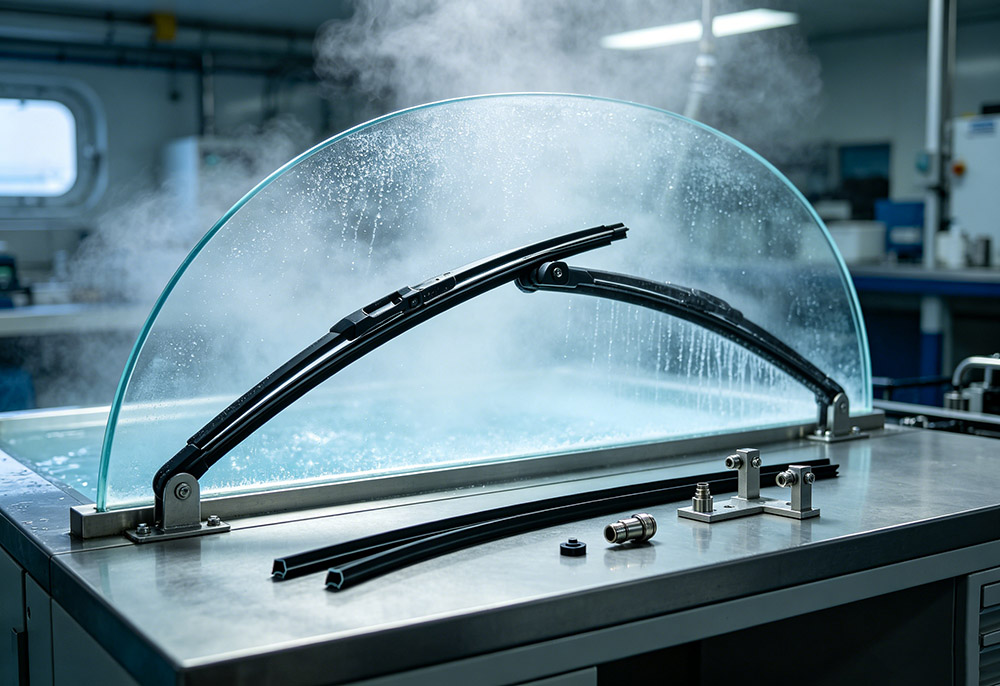
A practical RFQ for marine wiper blade programs
A strong RFQ prevents most avoidable back-and-forth. We recommend collecting the fields below before quotation approval.
| RFQ item | Why it matters | What we need from the buyer |
| Target market or channel | Stocking logic changes by distributor, boatbuilder, fleet, or private label program | Sales region and customer type |
| Blade sizes needed | Prevents overbuying slow-moving lengths | Planned range within 12 to 28 inches |
| Wiper arm interfaces in use | Reduces fitment disputes | Known arm types or sample reference |
| Windshield shape and wiped area | Affects pressure distribution and real coverage | Glass shape notes, photos, or drawings |
| Service environment | Confirms marine-grade material needs | Salt exposure, UV exposure, debris exposure |
| Documentation needs | Helps internal approval and sales launch | Test evidence and spec sheet requirements |
| Packaging format | Impacts channel sell-through and branding | Branded boxes, plain packs, or blister displays |
| Branding scope | Defines OEM/ODM workload | Logo, color, and private label requests |
For buyers building a new line, our OEM/ODM support page shows the types of custom programs we handle. If your team also needs a user-facing article for downstream sales training, our existing boat wiper blade selection guide covers the end-user side rather than the procurement side.
Stocking and channel planning
Different channels require different stocking strategies. A distributor may need a balanced size range, reliable adapter coverage, and packaging that works for both warehouse handling and retail display. A boatbuilder may place more importance on consistent fitment, technical documentation, and stable supply throughout production. Fleet customers often prefer a smaller approved range with clear application references to simplify maintenance purchasing.
A practical approach is to begin with the sizes and applications that match current demand, then expand the range as order patterns become clear. Wider coverage can create more selling opportunities, but every additional SKU also increases inventory investment and management effort.
It is also important to define the brand strategy at the start of the project. Whether the product is sold under the TOPEX brand or developed as a private label program, we can support different requirements, including logo customization, color options, and packaging formats such as branded boxes, plain packs, and blister displays.
FAQ
What is the difference between an automotive blade quote and a marine blade quote?
A marine blade quote considers corrosion, UV exposure, debris, windshield shape, and arm compatibility. Size alone is not enough.
Is 95%+ arm compatibility enough for marine wipers?
No. High compatibility reduces fitment issues, but buyers should still confirm arm types and application requirements before ordering.
What documents should buyers request before launching a marine wiper line?
Key documents include specifications, size range, arm compatibility, durability test results, salt spray verification, and packaging details.
Can you provide private label marine wiper blades?
Yes. TOPEX supports OEM/ODM, private labeling, logo customization, color options, and customized packaging.
How should buyers start a marine wiper project?
Begin with the target market, size requirements, arm types, and application details. Clear specifications help speed up quotation and supply planning.

--- END ---


