
50-Piece Low MOQ: How Wholesalers Can Quickly Test One-Piece Spoiler Wiper Blades Without Inventory Risk
Aug 05, 2026
You want to add a higher-margin one-piece spoiler line. The factory quotes 3,000 or 10,000 pieces minimum. You either walk away or risk locking up too much cash in untested stock.
A genuine 50-piece low MOQ lets wholesalers test one-piece spoiler wiper blades with minimal capital, validate real demand and performance, reduce inventory risk, and scale only what sells. This removes the all-or-nothing pressure of traditional high-minimum orders.
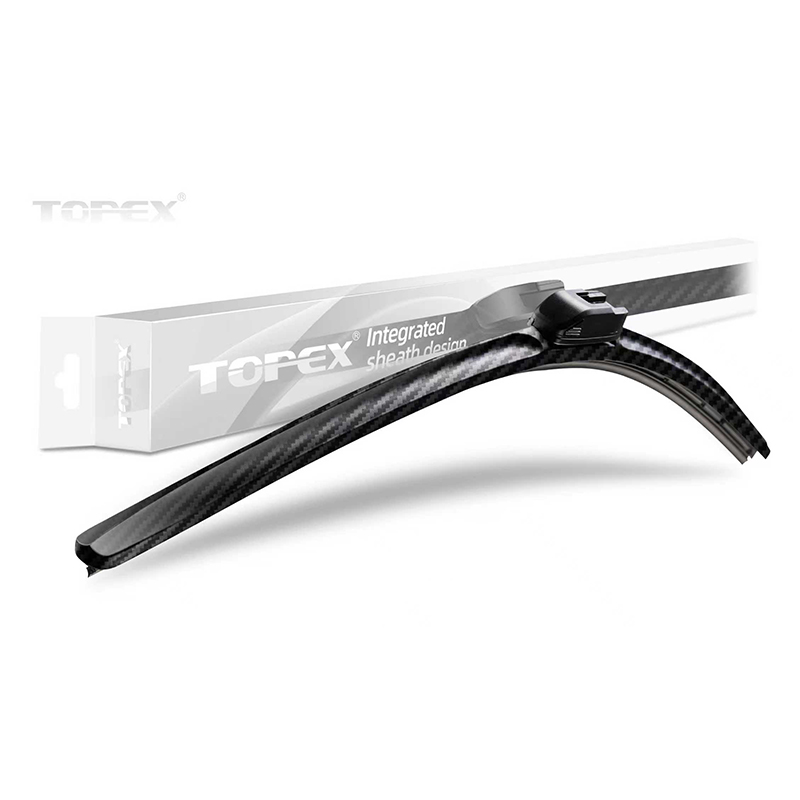
You now see a practical way to test premium blades without heavy inventory risk. Let’s examine why high MOQs hurt margins and slow launches, the common traps wholesalers fall into, how 50-piece orders enable safe real-market testing, why one-piece spoiler designs plus ultra-low MOQ outperform traditional models, and the exact steps to launch your first test and scale successfully.
Why High MOQs Are Killing Wholesaler Margins and Slowing New Product Launches
I speak with wholesalers and importers every month. Many see the potential of one-piece spoiler blades. The conversation often stops when the minimum order quantity appears.
High MOQs kill margins and slow new product launches because they force large capital commitments, create excess inventory risk, delay market feedback, and make it expensive or impossible for most mid-sized wholesalers to test premium designs.
Capital Locked in Unsold Stock
A minimum of 3,000–10,000 pieces per style or color ties up significant cash. That money cannot be used for other SKUs, marketing, or faster-moving products while you wait to see if the new line sells.
Elevated Risk of Slow-Moving Inventory
If the blades do not perform as expected or the market response is weak, you are left with excess stock that is hard to clear without heavy discounts. Margins disappear.
Delayed Feedback Loop
Large forced orders mean you learn about real sell-through, returns, and customer comments only after a major commitment. Adjustments become expensive.
Barrier to Premium and Private-Label Ideas
One-piece spoiler blades and custom options often carry higher unit costs at low volume. High MOQs make the first step too risky, so many wholesalers stay with basic commodity blades and lower margins.
Slower Response to Market Opportunities
When testing a new design requires a large order, wholesalers move slowly. Competitors who can test faster gain the early relationships with retailers.
| High-MOQ Problem | Immediate Effect | Business Impact |
|---|---|---|
| Large capital outlay | Cash tied up | Reduced flexibility |
| Excess stock risk | Potential dead inventory | Margin erosion |
| Slow market learning | Late adjustments | Missed opportunities |
| Barrier to new lines | Sticking with basic products | Lower long-term margins |
This table shows how high minimums keep many wholesalers cautious and capital-constrained. Flexibility is the missing piece for testing higher-value products.
My Wholesaler Conversation Pattern
A mid-sized importer told me he had wanted to introduce one-piece spoiler blades for over a year. Every traditional supplier required quantities he could not justify for an unproven line. The project stayed on hold while he continued with lower-margin standard blades.
Market Reality in 2026
Demand for better high-speed performance and differentiated products continues to grow. Wholesalers who cannot access low-risk testing options remain stuck in the commodity segment with ongoing price pressure.
High MOQs create structural pressure. Most attempts to work around them introduce new problems.
The Common Traps Wholesalers Fall Into When Testing New Wiper Lines
Wholesalers try different approaches to launch new blades. Several common paths look reasonable but create hidden costs and high return rates.
Common traps include accepting high MOQs against better judgment, neglecting accurate fitment data and packaging, focusing only on generic low-margin blades, and scaling up without small-batch validation. These errors lead to excess stock, high returns, and weak profits.
Accepting High MOQs Out of Necessity
When most suppliers quote large minimums, some wholesalers proceed anyway. They hope the stock will move and later face slow-moving inventory and cash-flow stress.
Ignoring Fitment Accuracy and Packaging Quality
Poor fitment charts or weak packaging drive high return rates. Industry data shows wrong fitment alone can account for a large share of returns. Weak packaging increases damage claims.
Staying Only with Generic Low-Margin Blades
Avoiding premium one-piece spoiler designs because of MOQ barriers keeps the wholesaler in pure price competition. Margins stay thin and differentiation remains limited.
Scaling Without Real Market Proof
Launching a full range based on assumptions rather than test sales leads to overstock of the wrong sizes or styles. Corrections become costly.
Choosing Suppliers Only on Lowest Unit Price
The cheapest quoted price often comes with the highest minimum and weaker support for fitment data or packaging. Total risk receives less attention than the headline number.
| Trap | Typical Consequence | Better Approach |
|---|---|---|
| High MOQ acceptance | Excess inventory risk | Seek true low-MOQ partners |
| Weak fitment & packaging | High return rates | Demand accurate data & strong packs |
| Generic-only focus | Thin margins | Test premium designs safely |
| No small validation | Costly overstock | Prove demand first |
This table highlights the most frequent errors. Avoiding them keeps new-line launches under control.
My Observed Pattern
Wholesalers who repeatedly accepted high minimums without testing often described the same outcome: cash tied up and higher-than-expected returns. Those who found flexible low-MOQ options moved faster and with less stress.
Practical Lesson
The real cost of an order includes the capital it locks, the return risk it creates, and the speed of learning it allows. Unit price is only one part of the equation.
Traps increase pressure. The right order quantity model removes much of that pressure while supporting better products.
How 50-Piece Low MOQ Lets You Safely Test One-Piece Spoiler Blades in Real Markets
A genuine 50-piece minimum changes the economics of testing premium one-piece spoiler blades.
A 50-piece low MOQ lets wholesalers place small test orders, mix sizes, receive samples quickly, measure real high-speed performance and return rates, collect customer feedback, and decide whether to scale—all with minimal capital risk.
Small Tests Replace Large Gambles
Instead of committing thousands of pieces, you can order 50 pieces of a one-piece spoiler design. Real sales data, return rates, and performance comments appear before any larger decision.
Mix Sizes and Connectors in One Trial
Flexible suppliers allow mixed lengths and adapters within the 50-piece order. You can cover the most common vehicle applications without ordering full cartons of every size.
Fast Sampling and Delivery
Typical lead times for small test orders are short—often around one week for samples or initial production. You move from decision to market feedback quickly.
Clear Testing Focus Areas
During the trial you can measure high-speed stability (no lift-off or chatter), noise levels, actual return reasons, customer comments, and net margin after returns. These data points guide the scale-up decision.
Limited Capital Exposure
Far less money is locked in each trial. Working capital stays available for other products or faster replenishment of proven sellers.
- Start with the most popular sizes for your market.
- Include mixed adapters to cover common arm types.
- Track sell-through speed and return reasons carefully.
- Collect direct feedback on quietness and high-speed clearing.
- Reorder only the combinations that perform and sell well.
These steps turn a new product launch into a controlled experiment rather than a large bet.
Cash-Flow and Learning Impact
Wholesalers who switch part of their new-line activity to low-MOQ orders commonly report less money sitting in the warehouse and faster, more confident decisions based on real numbers.
Speed Advantage
The time from idea to market feedback shrinks dramatically. You learn what works in your specific channels before committing serious inventory.
The model works when the supplier can deliver true 50-piece orders with consistent quality and reliable fitment support. That capability remains uncommon for premium designs.
Why One-Piece Spoiler + Ultra-Low MOQ Beats Traditional Wholesale Models
Combining a performance-focused design with genuine low MOQ creates advantages that traditional high-volume commodity models cannot match.
One-piece spoiler blades plus ultra-low MOQ outperform traditional models by reducing return rates through better high-speed stability, enabling private-label and color testing at low risk, supporting higher margins, and allowing faster inventory turns based on proven demand.
Lower Returns from Better Performance
One-piece spoiler designs reduce lift-off, chatter, and uneven wiping at highway speeds. Fewer performance-related complaints mean lower return rates and higher net margins.
Safe Path to Differentiation
Low MOQ makes it practical to test private-label branding or custom colors on a proven one-piece platform. You can create visible differentiation without large inventory risk.
Higher Margin Potential
Premium one-piece spoiler blades support better retail pricing than basic commodity blades. When returns stay low, the net profit improvement is often significant—commonly in the 20–40% range compared with standard lines.
Faster Inventory Turns
You stock only what has already shown sell-through. Capital cycles more quickly and slow-moving risk drops.
Stronger Retailer Relationships
Retailers prefer suppliers who bring tested, lower-return products. Successful small trials build confidence for larger ongoing orders.
| Advantage | Traditional High-MOQ Model | One-Piece + 50-Piece MOQ |
|---|---|---|
| Return risk | Higher from fitment & performance | Lower from stable design |
| Test capability | Expensive or impossible | Low-risk and fast |
| Margin potential | Thin commodity margins | Higher with differentiation |
| Inventory flexibility | Large forced commitments | Scale only what sells |
This table shows why the combination is more attractive for modern wholesalers. Performance and flexibility reinforce each other.
My Partnership Experience
Wholesalers who begin with 50-piece one-piece spoiler tests often expand the successful sizes and drop the rest. The process feels controlled. Cash flow stays healthier and return rates stay manageable.
Feedback Pattern
Partners value the ability to move from idea to small delivery without long negotiations or large deposits. They report faster decisions and better retailer feedback once the blades are in real use.
The combination removes the usual barriers. The final step is executing a clear test-and-scale process.
Step-by-Step: How to Launch Your First 50-Piece Test Order and Scale Successfully
A simple, disciplined process turns the low-MOQ opportunity into consistent results.
To launch your first 50-piece test order and scale successfully, select a capable supplier, request clear pricing and samples, define sizes and packaging, put the blades into real sales channels, measure the key data, and only then decide on larger volumes.
Step 1: Choose the Right Supplier
Look for proven one-piece spoiler designs, genuine low MOQ, accurate fitment support, and the ability to reorder quickly. Ask for evidence of high-speed stability and current production capability.
Step 2: Request Quotation and Samples
Obtain clear pricing for 50 pieces, mixed sizes if needed, and any packaging options. Request samples so you can check build quality, adapter fit, and initial wiping performance yourself.
Step 3: Define the Test Range
Select the most common lengths for your market and the adapters that cover the highest-volume vehicles. Keep the first test focused so results are easy to read.
Step 4: Place the Order and Prepare for Sale
Confirm lead time, packaging, and labeling. Once the blades arrive, put them into your normal sales channels or selected retail partners.
Step 5: Measure the Critical Data
Track sell-through speed, return rate and reasons, customer comments on noise and high-speed clearing, and net margin after returns. These numbers decide the next step.
Step 6: Scale Only What Works
Reorder the successful sizes and combinations in appropriate volumes. Drop or adjust the weak performers. Use the data to negotiate better terms as quantities grow.
- Keep the first test simple and measurable.
- Focus on fitment accuracy and packaging strength to control returns.
- Collect both sales numbers and qualitative feedback.
- Reorder quickly when a combination proves itself.
- Treat each test as a learning step, not a one-time event.
These steps create a repeatable system for adding higher-value blades without heavy risk.
My Recommended Starting Approach
I advise wholesalers to begin with the two or three highest-volume sizes in their market and a straightforward packaging option. The goal of the first 50-piece order is clean data, not maximum variety.
Practical Scaling Tip
Once a size or style shows strong sell-through and low returns, move to regular wholesale quantities. Annual forecasts and repeat orders usually unlock better pricing tiers.
For proven one-piece spoiler designs that support low-MOQ testing, explore the Topex one-piece spoiler category. You can also review specific models such as the Topex T-PRO-F one-piece spoiler and the T-PRO-SC custom for practical starting points.
Conclusion
High minimum order quantities used to force wholesalers into all-or-nothing bets on wiper blades. That era is ending. With genuine 50-piece low MOQ options on one-piece spoiler designs, you can validate real demand, test premium performance (no lift-off, quieter wipe, longer life), build private-label differentiation, and protect cash flow—all before committing serious inventory. Start small, measure returns and sell-through, then scale only what works. The wholesalers who move first on low-risk testing will capture higher margins and stronger retailer relationships in 2026.
Frequently Asked Questions About 50-Piece Low MOQ One-Piece Spoiler Blades
What is a realistic low MOQ for one-piece spoiler wiper blades from Chinese factories in 2026?
Genuine low MOQs of around 50 pieces are available from flexible manufacturers for certain one-piece spoiler and custom lines. Traditional suppliers still often require 3,000 pieces or more.
Can I mix different sizes and connectors in a 50-piece trial order?
Yes. Most flexible suppliers allow mixed lengths and adapters within a small test order so you can cover the main vehicle applications without ordering full cartons of every size.
How much does a 50-piece test order typically cost, and what pricing tiers apply when I scale?
Unit cost is higher at 50 pieces than at volume. Pricing usually improves at a few hundred pieces and becomes more competitive at several thousand. The exact tiers depend on the supplier and specifications.
How do one-piece spoiler blades help reduce the high return rates wholesalers normally face?
They reduce lift-off, chatter, and uneven wiping at highway speeds. Fewer performance complaints and better fitment support lower the overall return rate compared with basic multi-piece blades.
What should I check and measure during a low-MOQ test (performance, packaging, customer feedback)?
Track sell-through speed, return rate and exact reasons, customer comments on noise and high-speed clearing, packaging condition on arrival, and net margin after returns. These data points guide the scale-up decision.
How quickly can I move from a 50-piece sample/test order to regular wholesale volumes?
Once a size or style shows strong sell-through and low returns, you can place larger follow-up orders. Lead times for repeat production are typically short when the supplier is set up for flexible manufacturing.

--- END ---


