
Wiper Blade Fitment Data: How Accuracy Reduces Returns and Prevents Lost Sales
Sep 10, 2026
Wiper blade fitment data may look like basic catalog information, but it directly affects sales, inventory efficiency, customer satisfaction, and profitability. A blade can offer excellent rubber quality and wiping performance yet still generate a return if the customer receives the wrong length, connector, adapter, or installation position.
The opposite problem is less visible but equally important. If a compatibility system fails to display a suitable product for a vehicle, the customer may leave without purchasing. The distributor records no return because the sale never happened. Poor fitment data can therefore create both unnecessary costs and hidden revenue loss.
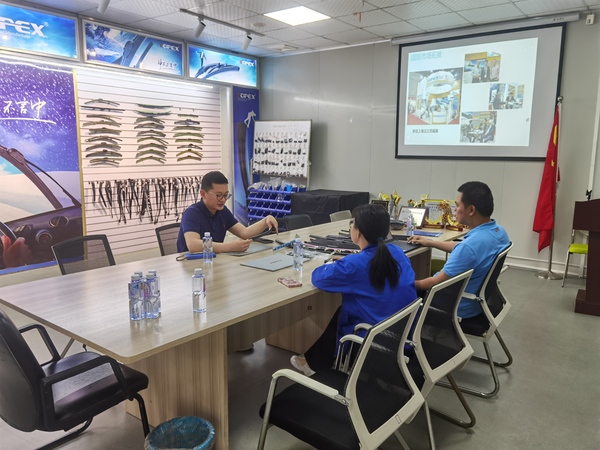
For wholesalers, importers, retailers, service chains, and e-commerce sellers, improving fitment accuracy requires more than adding year, make, and model to a spreadsheet. Each product must be connected to the correct market, vehicle version, blade position, length, arm connection, adapter, and SKU. That information must then remain consistent across every customer-facing channel.
Why Inaccurate Fitment Data Costs More Than a Returned Wiper Blade
The direct cost of an incorrect recommendation usually begins with a refund. However, the complete commercial cost may also include outbound delivery, return freight, customer-service time, inspection, repacking, replacement shipment, marketplace fees, and inventory handling.
Some returned blades cannot be sold as new because the packaging has been opened or damaged. Others remain unavailable during the return process, even though they are technically still inventory. When these losses are added together, a fitment error can cost substantially more than the blade itself.
The consequences extend beyond one transaction:
- The customer may post a negative review.
- Marketplace performance metrics may decline.
- Customer-service workload may increase.
- A workshop may lose installation time.
- Returned stock may require inspection and repackaging.
- The correct replacement may need expedited delivery.
- The buyer may avoid the brand during the next purchase.
- Retail employees may stop recommending a product they do not trust.
Inaccurate data can create two main types of fitment failure.
| Fitment failure | What the system does | Immediate result | Longer-term effect |
|---|---|---|---|
| False positive | Recommends an incompatible blade | Return, refund, or complaint | Lower trust and higher support costs |
| False negative | Hides a compatible blade | Customer cannot find a product | Lost sale and weaker conversion |
| Ambiguous match | Shows several products without enough guidance | Customer guesses or abandons the purchase | More returns or checkout abandonment |
| Incomplete match | Shows the correct length but not the required connector | Installation fails | Negative reviews and replacement costs |
| Regional mismatch | Applies data from one market to another | Incorrect application recommendation | Repeated errors across a vehicle range |
False negatives are particularly difficult to measure. A retailer can count products returned as “does not fit,” but it may not know how many customers searched for a vehicle, received no result, and purchased from a competitor.
Website search logs, failed compatibility checks, customer questions, and abandoned product pages should therefore be reviewed alongside return data. According to PartWiz’s discussion of automotive fitment data, customers are less likely to complete a purchase when compatibility remains uncertain.
For wiper blade distributors, the practical lesson is clear: accurate product exclusion matters, but accurate product discovery matters too.
The Fitment Data Errors That Spread Across Every Sales Channel
A fitment mistake rarely remains in one spreadsheet. Once incorrect information enters a product-information workflow, it can spread to websites, marketplaces, printed catalogs, package labels, sales presentations, warehouse systems, and customer-service scripts.
Correcting only one channel does not solve the problem. A retailer may update its website while outdated packaging continues to provide the wrong vehicle reference. A marketplace listing may recommend one SKU while the downloadable catalog recommends another. These conflicts make customers and employees uncertain even when one source is technically correct.
Matching Products by Length Alone
Two blades with the same length are not necessarily interchangeable. They may use different arm connections, adapters, pressure distributions, spoiler orientations, or installation positions. A 24-inch blade intended for a J-hook arm cannot automatically replace every other 24-inch blade.
A complete match may depend on:
- Sales country or region
- Vehicle make and model
- Model year or production date
- Vehicle generation or body version
- Driver, passenger, or rear position
- Required blade length
- Wiper-arm connection
- Adapter code
- Blade orientation
- Product SKU
- Included installation components
Omitting the Installation Position
Many vehicles use different lengths on the driver and passenger sides. Some applications also use different connector angles or blade constructions for the left and right positions. Rear blades are often even more vehicle-specific.
A record that says “fits this vehicle” without defining the position can cause customers to order the right product for the wrong side. Position should therefore be stored as a structured field rather than buried in a product description.
Mixing Regional Vehicle Configurations
The same model name may refer to different generations, body styles, or equipment configurations in different countries. A fitment validated for a European vehicle should not automatically be copied into an application table for Asia, North America, or the Middle East.
Regional differences may affect:
- Model-year ranges
- Driver-side orientation
- Wiper-arm types
- Blade lengths
- Vehicle trim or body style
- Front and rear equipment
- Local model names
Allowing Connector Data to Become Outdated
Vehicle manufacturers use J-hook, push-button, pinch-tab, bayonet, side-lock, top-lock, and other connection systems. Newer model years may introduce a different arm even when the vehicle name remains unchanged.
The TOPEX guide to wiper blade connection types provides practical information about common interfaces. Such guidance helps buyers identify connectors, but the connector must still be connected to verified vehicle and SKU records.
Maintaining Separate, Uncontrolled Files
Independent spreadsheets maintained by sales, e-commerce, packaging, and customer-service teams create multiple versions of the truth. When a correction is made, nobody can be certain that every file has been updated.
| Common data problem | Customer-facing symptom | Business risk |
|---|---|---|
| Length-only matching | Blade cannot attach or wipe correctly | Returns and complaints |
| Missing position | Driver and passenger blades are reversed | Installation failure |
| Outdated connector | Adapter does not lock | Safety concern and warranty claim |
| Regional data mixed together | Listed application differs from the local vehicle | Repeated market-specific returns |
| Duplicate vehicle naming | Search produces conflicting choices | Abandoned purchases |
| Packaging not updated | Box contradicts the website | Lost customer confidence |
| Separate channel spreadsheets | Different platforms show different results | Difficult correction and weak control |
How to Build and Maintain a Reliable Wiper Blade Fitment Database
A reliable database begins with a consistent record structure. Every team and supplier should use the same field definitions, naming rules, position codes, and adapter identifiers. Free-text descriptions may help customers, but they should not replace structured data.
A practical wiper blade fitment record should include the following fields:
| Data field | Purpose |
|---|---|
| Sales region | Prevents incompatible regional applications from being combined |
| Vehicle make | Identifies the manufacturer |
| Model | Connects the blade to the correct vehicle family |
| Generation or body type | Distinguishes vehicles sharing the same model name |
| Start and end year | Defines the applicable production period |
| Vehicle position | Identifies driver, passenger, or rear installation |
| Blade length | Confirms the required nominal size |
| Arm type | Identifies the vehicle-side connection |
| Adapter code | Identifies the required mounting component |
| Product SKU | Connects the application to sellable inventory |
| Included parts | Confirms which adapters or accessories are supplied |
| Data source | Shows where the application information originated |
| Verification status | Distinguishes reported, sample-checked, and vehicle-tested records |
| Last review date | Identifies information that may require updating |
| Version history | Records what changed, when, and why |
Establish One Controlled Master Database
The business should maintain one authoritative database instead of allowing every channel to edit its own application list. Changes should enter the master source first and move through an approval process before being distributed.
A basic data workflow can follow these steps:
- Collect application information from the manufacturer, vehicle references, sales records, and trusted technical sources.
- Normalize vehicle names, model years, positions, connector terms, and adapter codes.
- Match every application to a specific sellable SKU.
- Identify the source and confidence level for each record.
- Prioritize popular local vehicles for physical verification.
- Approve or reject the application according to defined evidence.
- Publish the approved data to each sales channel.
- Record the update date and version.
- Monitor returns, customer questions, and unsuccessful searches.
- Correct the master record before redistributing an update.
Use Clear Verification Levels
Not every record has the same level of evidence. A distributor may initially receive an application from a supplier database and later confirm it through sample installation or real-vehicle testing. These stages should be visible internally.
A practical verification system can use the following levels:
- Reported: Supplied by an external catalog or manufacturer.
- Cross-checked: Confirmed through more than one credible data source.
- Sample verified: The product and adapter have been checked against the stated specification.
- Vehicle verified: The blade has been installed and tested on the actual vehicle application.
- Temporarily restricted: The application has been removed from customer-facing channels while a conflict is investigated.
This approach helps the business decide which claims can be published confidently and which applications require further work.
Test More Than Physical Attachment
A connector that can be attached is not automatically a correct fit. Verification should include:
- Adapter locking security
- Installation and removal difficulty
- Blade angle relative to the glass
- Clearance around the arm and connector
- Contact across the windshield curvature
- Correct driver and passenger lengths
- Complete sweep coverage
- Absence of interference between paired blades
- Wet wiping performance
- Stability during normal operating speeds
Multi-fit products require particular attention because one blade platform may use several adapters. Broad coverage can improve inventory efficiency, but only when the adapter selection and application data are accurate.
Control Distribution Across Channels
A centralized database is useful only if its updates reach every sales point. Guidance from azFitment on maintaining accurate fitment information emphasizes the importance of consistent information across platforms instead of relying on disconnected channel files.
Each approved update should be distributed to:
- Company websites
- B2B ordering portals
- Online marketplaces
- Printed and downloadable catalogs
- Retail packaging
- Shelf-selection guides
- Barcode and product-information systems
- Customer-service tools
- Sales-team documents
- Installation instructions
Printed packaging cannot be changed as quickly as a website. Buyers should therefore plan revision dates, packaging consumption, corrective labels, and obsolete-material control before changing an application claim.
How TOPEX Supports Accurate Applications and Easier Product Selection
A wiper blade supplier should provide more than physical products. Distributors also need application tables, connector references, product photographs, adapter identification, installation information, and a practical method for confirming uncertain vehicles.
At TOPEX, application support can begin with the customer’s target country, vehicle population, preferred blade structures, sales channel, and planned SKU range. This makes it possible to focus validation on commercially important applications instead of copying an entire global catalog into a local program.
TOPEX can support a fitment project through:
- Vehicle application lists
- Blade-length and position references
- Connector and adapter identification
- Product and installation photographs
- Sample preparation for important applications
- Multi-fit and vehicle-specific product options
- Retail packaging and labeling information
- Catalog and online-listing content
- Review of customer-provided application data
- Feedback on uncertain or unusual connections
The TOPEX flat wiper blade range can provide a starting point for distributors developing modern aftermarket coverage. However, product selection should still be based on actual local vehicles, connector requirements, climate, price positioning, and channel needs.
Use Samples to Confirm Data Before Launch
A sample approval process should connect the physical blade to the application record. Buyers should not test an unlabeled sample and later assume that the mass-production SKU uses the same adapter, rubber specification, or packaging.
Each sample should be identified with:
- Product code
- Length
- Blade structure
- Adapter code
- Intended vehicle applications
- Sample date or batch
- Test result
- Approval status
- Notes on installation or wiping performance
If the application is approved, the sample result should be linked to the corresponding database record. If it fails, the record should be blocked until the supplier and buyer identify whether the problem comes from the blade, adapter, vehicle information, or installation instructions.
Make Selection Easier for Different Buyers
Professional technicians, retail employees, and consumers do not use fitment information in the same way. A workshop may search by license plate, VIN, or technical catalog. A consumer may know only the vehicle model and year. A retail employee may rely on a printed guide or packaging chart.
The underlying application data should remain consistent while the presentation changes by channel. Connector images and installation videos are especially useful for consumers, but visual materials should confirm structured data rather than substitute for it.
| User type | Typical selection method | Information that helps most |
|---|---|---|
| Distributor buyer | Application table and SKU analysis | Market coverage, connector codes, and product mapping |
| Workshop technician | Vehicle or registration lookup | Exact position, adapter, and installation method |
| Retail employee | Catalog or packaging guide | Clear vehicle, length, and connector references |
| Online consumer | Year-make-model search | Compatibility confirmation and connector images |
| Customer-service agent | Internal product system | Verified records, installation notes, and revision history |
Turn Returns and Unsuccessful Searches into Better Fitment Coverage
Fitment management should continue after products enter the market. Returns, customer questions, installation complaints, and website searches provide evidence that can improve the application database.
The first step is to stop grouping every problem under “does not fit.” That description is too broad to support corrective action.
| Return category | Possible root cause | Corrective action |
|---|---|---|
| Wrong length | Incorrect application record or customer selection | Correct size data and selection prompts |
| Connector incompatible | Wrong arm type or adapter code | Review connector mapping |
| Adapter missing | Packing or listing error | Correct the BOM, packaging, or content |
| Difficult installation | Weak instructions or confusing adapter labels | Improve visual guidance |
| Blade attaches but wipes poorly | Curvature, angle, pressure, or product issue | Conduct vehicle and performance testing |
| Wrong position | Driver, passenger, or rear field missing | Update position-specific data |
| Product defect | Manufacturing or material problem | Start quality corrective action |
| Customer changed mind | Not a fitment problem | Exclude it from fitment-error analysis |
Customer-service teams should collect the exact vehicle make, model, year, region, body version, blade position, connector, ordered SKU, and return reason. Photographs of the wiper arm and supplied adapter can help separate a data problem from an installation problem.
Monitor Searches That Do Not Produce a Sale
Returns reveal false-positive matches, but unsuccessful searches help identify false negatives and missing coverage. E-commerce teams should monitor:
- Vehicle searches with no compatible result
- Searches that repeatedly lead to customer-service questions
- Product pages with high compatibility-tool exit rates
- Customers who change their vehicle information several times
- Add-to-cart activity followed by abandonment
- Search terms containing connector names
- Popular vehicles with low wiper blade conversion
- Requests for products that are not currently listed
A high number of searches without results may indicate a genuine range gap. It may also mean that a compatible product exists but is not connected to the vehicle in the database.
For example, a multi-fit blade may physically and functionally suit a vehicle, but the corresponding adapter and vehicle record may be missing from the online catalog. The company already holds sellable inventory, yet the database prevents the customer from finding it.
Create a Continuous Improvement Loop
A disciplined correction process should follow this sequence:
- Capture the return, complaint, or unsuccessful search.
- Classify the probable root cause.
- Reproduce the application using the recorded vehicle details.
- Review the connector, position, length, and SKU mapping.
- Conduct physical verification when necessary.
- Approve the corrected master record.
- Assign a new database version.
- Synchronize every digital and printed channel.
- Notify customer-service and sales teams.
- Monitor the corrected application for repeated problems.
Priority should be based on commercial impact. A fitment error involving a high-volume SKU and a popular vehicle should normally be investigated before an isolated issue affecting a rare application.
Useful performance indicators include:
- Fitment-return rate by SKU
- Fitment-return rate by vehicle application
- Returns by connector or adapter type
- Unsuccessful vehicle-search frequency
- Conversion after compatibility confirmation
- Customer-service contacts per order
- Repeated installation complaints
- Time required to correct all channels
- Lost sales linked to missing applications
- Return-adjusted gross margin by SKU
These measurements convert fitment from a static catalog task into a continuous commercial improvement program.
Conclusion
Accurate wiper blade fitment data is not simply a catalog feature—it is an important part of inventory control, customer experience, and sales performance. Incorrect matches create returns and support costs, while missing applications prevent buyers from seeing products that would fit their vehicles.
Distributors should maintain one controlled source of fitment data covering vehicle details, blade position, size, connector, adapter, SKU, and regional variations. Important applications should be confirmed through structured review and, where possible, physical installation and wiping tests.
Returns, customer questions, and unsuccessful searches should then be used to identify data gaps. By verifying corrections and synchronizing them across websites, marketplaces, catalogs, packaging, and customer-service systems, businesses can reduce avoidable returns while capturing more compatible-vehicle sales.
Frequently Asked Questions About Wiper Blade Fitment Data
What information should a wiper blade fitment record include?
A reliable record should include the sales region, vehicle make, model, generation or body type, model-year range, installation position, blade length, arm connection, adapter code, product SKU, included components, data source, verification status, and last review date. Vehicle-specific notes may also be required when configurations changed during a model year.
Why is blade length alone insufficient for accurate fitment?
Blades of the same length can use different connectors, adapters, angles, structures, and installation positions. A blade may match the required measurement but fail to attach securely or maintain correct windshield contact. Length must therefore be evaluated together with the vehicle, position, arm type, and adapter.
How can incorrect fitment data cause both returns and lost sales?
A false-positive match recommends an incompatible product and creates a return. A false-negative match hides a suitable product and causes the buyer to leave without purchasing. Businesses must monitor both fitment-related returns and searches that produce no product result.
How often should a wiper blade application database be updated?
The database should be reviewed continuously as new vehicles, model years, connectors, and products enter the market. High-volume applications deserve more frequent review. Updates should also be triggered by recurring returns, supplier revisions, customer questions, or conflicting information between sales channels.
How should distributors verify fitment data supplied by manufacturers?
Distributors should compare supplier records with trusted regional references and test representative high-demand vehicles. Verification should cover length, position, connector, adapter security, installation clearance, windshield contact, and wet wiping. Every confirmed result should be recorded with its source, date, and verification level.
How can fitment data remain consistent across different sales channels?
The distributor should maintain one version-controlled master database and distribute approved records from that source. Websites, marketplaces, catalogs, packaging, customer-service systems, and sales documents should not be updated independently. Each correction needs an owner, approval date, version number, and channel synchronization record.

--- END ---


