
Beam vs. Hybrid vs. Conventional Wiper Blades: Which Type Is Best?
Oct 21, 2026
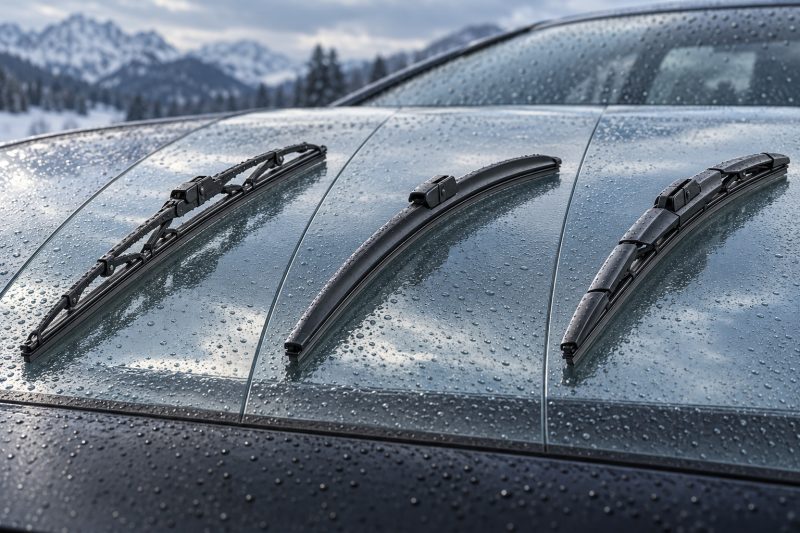
Beam, hybrid, and conventional wiper blades all perform the same basic task: maintaining a clear view through the windshield. However, they use different structures to transfer wiper-arm pressure to the rubber edge. Those structural differences influence windshield contact, aerodynamic stability, snow resistance, appearance, price, and vehicle compatibility.
It is tempting to describe beam blades as the premium choice, conventional blades as the budget option, and hybrid blades as a compromise between the two. That comparison is too simple. A correctly engineered conventional blade can outperform a poorly matched beam blade, while a hybrid blade may be the most appropriate replacement for a vehicle originally designed around that structure.
There is no single wiper blade design that is best for every vehicle. The correct choice depends on verified fitment, windshield curvature, original equipment design, climate, driving conditions, rubber quality, pressure distribution, and actual wiping performance.
I am Jacky Huang, CEO of Xiamen TOPEX Auto Parts Co., Ltd. In my work with wiper blade development, fitment data, private-label programs, and international distributors, I evaluate the complete product rather than relying on the category name. Blade construction matters, but it must work with the vehicle’s arm, connector, windshield, and operating environment.
Why Choosing the Wrong Wiper Blade Design Can Reduce Visibility
A wiper blade must distribute the pressure from the wiper arm across its complete length. If the blade structure does not conform to the windshield, some parts of the rubber may press too heavily while others lose contact.
The driver may then see streaks, water films, missed areas, or unstable blade movement. These symptoms can become more serious during heavy rain, snow, road spray, glare, or nighttime driving.
Windshield Curvature Affects Blade Contact
Modern windshields are rarely flat. Their curvature can vary between the centre, edges, driver side, and passenger side. The correct blade must follow that shape throughout the entire wiping movement.
A blade with unsuitable curvature may show one of several contact problems:
- The blade ends lift away from the glass.
- The centre presses too firmly against the windshield.
- A repeated section remains uncleared.
- The rubber reverses direction unevenly.
- The blade skips or chatters during part of the sweep.
- Pressure changes as the blade moves across the glass.
Beam blades use an internal tension structure intended to provide more continuous pressure. Conventional blades use a jointed frame to create several pressure points. Hybrid blades normally retain a supporting structure beneath an aerodynamic cover.
None of these methods works correctly if the blade is not designed for the application.
Vehicle Speed Changes the Aerodynamic Load
At higher speeds, airflow can reduce blade contact or create vibration. A low-profile beam blade or a hybrid blade with an aerodynamic cover may provide greater resistance to wind lift than a basic exposed frame.
However, the spoiler shape and installation direction still matter. An incorrectly installed or unsuitable aerodynamic blade can produce noise, unstable movement, or poor contact.
Climate Changes the Value of Each Design
Snow and ice can collect around the exposed joints of a conventional blade. A beam blade has fewer openings and moving joints, while a hybrid blade may protect part of its supporting structure beneath a cover.
In hot and dusty climates, rubber formulation, ultraviolet resistance, and contamination control may be more important than snow performance. In high-rainfall markets, wiping stability and consistent glass contact may receive greater attention.
| Operating condition | Main blade requirement | Possible result of a poor match |
|---|---|---|
| Curved windshield | Even pressure and correct blade profile | End lift or missed areas |
| Highway driving | Aerodynamic stability | Wind lift, vibration, or noise |
| Snow and freezing rain | Resistance to ice buildup | Frozen joints and uneven contact |
| Strong sunlight | Flexible and durable rubber | Hardening, cracking, or streaking |
| Dust and road film | Clean wiping edge and suitable washer fluid | Smearing or abrasion |
| Heavy rainfall | Stable contact through the complete sweep | Water films and reduced visibility |
| Coastal conditions | Corrosion-resistant components | Stiff joints or structural deterioration |
The wrong design may attach to the arm and look acceptable while parked. The real difference appears when the blade operates on wet glass under actual driving conditions.
The Common Mistakes Drivers Make When Comparing Wiper Blades
Many buyers compare wiper blades by price, appearance, or marketing label. These factors may influence a purchase, but they cannot confirm vehicle compatibility or wiping quality.
Assuming Beam Blades Are Always Better
Beam blades offer important advantages, including a low profile, fewer exposed joints, and continuous spring pressure. They are often suitable for modern curved windshields and challenging winter conditions.
That does not mean every beam blade will outperform every conventional or hybrid blade. Performance still depends on:
- Spring-steel quality and curvature
- Rubber formulation and edge precision
- Spoiler design
- Adapter security
- Blade length
- Wiper-arm pressure
- Windshield geometry
- Production consistency
A beam blade with the wrong curvature may lose contact at one or both ends. A well-made conventional blade designed for the vehicle may provide more complete and stable wiping.
Choosing by Price Alone
A low price may be appropriate for a basic replacement program, but buyers should confirm what is included in the specification. Two visually similar blades may use different rubber compounds, coatings, steel, plastics, adapters, or production controls.
A higher-priced product is not automatically better either. Premium materials and branding should be supported by measurable performance.
The useful comparison is not simply the purchase price. It should include:
- Wiping quality
- Fitment accuracy
- Expected service life
- Noise performance
- Connector retention
- Weather resistance
- Installation simplicity
- Return and warranty risk
Ignoring the Original Blade Design
The original equipment design provides a useful starting point because the vehicle manufacturer selected a particular blade profile, pressure system, and connector arrangement.
Vehicles originally equipped with beam or hybrid blades may benefit from replacements that preserve similar geometry. Replacing an OE-specific design with a universal alternative may be possible, but it should be verified through reliable application data.
Buying by Length Without Checking the Connector
Correct length does not guarantee compatibility. Wiper arms can use U-hook, push-button, pinch-tab, side-pin, bayonet, top-lock, side-lock, and many vehicle-specific connections.
A blade that is the correct length but has the wrong adapter may:
- Fail to attach
- Lock incompletely
- Sit at an incorrect angle
- Move inside the connector
- Contact the arm or windshield trim
- Separate during operation
Judging Performance on Dry Glass
Wiper blades should be evaluated on a properly wet windshield. Dry operation creates unnecessary friction and may produce noise that does not represent normal rain performance.
A complete wet test should confirm that the blade clears the glass consistently without streaking, smearing, chattering, skipping, scraping, or leaving repeated missed areas.
How Beam, Hybrid and Conventional Wiper Blades Actually Work
The primary difference among the three categories is the way each blade transfers arm pressure along the rubber element.
Conventional Wiper Blades
A conventional blade uses a frame containing several linked sections. The wiper arm applies force near the centre, and the articulated frame distributes that force through multiple pressure points.
This familiar design offers several commercial advantages:
- Broad availability
- Competitive pricing
- Many sizes and applications
- Straightforward replacement for older vehicles
- Familiar U-hook and traditional connector options
- Easy visual inspection of the frame
The exposed frame can also create disadvantages. Snow, ice, leaves, or debris may interfere with the joints. Metal components require effective corrosion protection, and the higher profile may be more affected by airflow.
Conventional blades remain relevant for older vehicles, price-sensitive markets, fleets, and applications originally designed for framed products. They should not be removed from an aftermarket range simply because beam blades are newer.
Beam Wiper Blades
Beam blades remove the articulated external frame. They normally use one or more pre-curved spring-steel elements inside the blade to distribute pressure along the wiping edge.
The jointless structure can provide:
- More continuous pressure distribution
- Good conformity to many curved windshields
- A lower aerodynamic profile
- Reduced wind lift at higher speeds
- Fewer spaces where snow and ice can accumulate
- A modern appearance
Beam blades are sometimes called flat or frameless blades. However, not every beam product has the same spring curvature, spoiler profile, rubber specification, or adapter design.
The TOPEX flat wiper blade range includes different product and adapter options for aftermarket programs. Buyers should select them according to verified vehicle coverage rather than assuming that one beam platform fits every windshield.
Hybrid Wiper Blades
Hybrid blades combine characteristics of conventional and beam designs. A typical hybrid blade uses a supporting frame or pressure system covered by an aerodynamic shell.
The internal support helps distribute arm pressure, while the outer cover can:
- Improve appearance
- Reduce wind lift
- Protect parts of the structure
- Direct airflow over the blade
- Limit direct exposure to weather and contamination
Hybrid blades are not simply conventional blades with decorative plastic. Their performance depends on the relationship between the supporting frame, cover, rubber, and connector.
The TOPEX hybrid wiper blade range provides options for markets that need structural support combined with aerodynamic styling and weather protection.
Structural Comparison
| Feature | Conventional blade | Beam blade | Hybrid blade |
|---|---|---|---|
| Pressure system | Jointed frame with multiple pressure points | Curved internal tension element | Supporting frame or tension system beneath a cover |
| External profile | More exposed and usually taller | Low and streamlined | Covered and aerodynamic |
| Snow accumulation | More likely around exposed joints | Fewer openings for buildup | Reduced in some designs, but cover gaps still matter |
| Curved-glass conformity | Application-dependent | Often strong when correctly engineered | Application-dependent |
| High-speed stability | Depends on frame and spoiler | Generally good due to low profile | Often good due to aerodynamic cover |
| Price positioning | Usually economy to mainstream | Mainstream to premium | Mainstream to premium |
| Typical applications | Older vehicles and price-sensitive replacement | Modern vehicles and curved windshields | Vehicles originally using hybrid or covered designs |
| Main fitment risk | Uneven or frozen joints | Incorrect spring curvature | Incorrect profile or cover interference |
Category descriptions explain how a blade is built. They do not establish its quality level. Rubber consistency, edge finishing, steel tension, adapter moulding, assembly control, and fitment accuracy determine whether the structure performs as intended.
Which Wiper Blade Type Is Best for Your Vehicle and Climate?
The best design is the one that matches the vehicle and maintains clear, stable wiping under the driver’s real operating conditions.
When Conventional Blades Make Sense
A conventional blade can be the correct choice when:
- The vehicle was originally equipped with a framed blade.
- The windshield profile suits the frame.
- The buyer needs an economical replacement.
- Snow and ice accumulation are not major concerns.
- The correct application is widely available.
- The vehicle uses a common traditional connection.
- The blade demonstrates complete contact during testing.
Conventional blades can be particularly valuable in markets with older vehicle populations and strong demand for affordable replacement parts.
When Beam Blades May Be Better
Beam blades are often a strong option when:
- The vehicle has a curved windshield.
- The original blade uses a flat or beam structure.
- Highway stability is important.
- The driver regularly encounters snow or ice.
- A low-profile appearance is preferred.
- A verified multi-fit or OE exact-fit application is available.
- The blade’s spring curvature has been matched to the vehicle.
In winter climates, fewer exposed joints can reduce ice accumulation. Nevertheless, drivers must still remove heavy snow and bonded ice before operating the wipers.
When Hybrid Blades Are Appropriate
Hybrid blades may be the preferred choice when:
- The vehicle was originally equipped with a hybrid design.
- Strong structural support is needed.
- The buyer wants an aerodynamic outer profile.
- The market positions hybrid blades as a premium upgrade.
- The cover fits without interfering with the arm or glass.
- Testing confirms consistent pressure across the windshield.
A hybrid blade can provide a useful balance between the articulated support of a framed product and the protected appearance of a modern aerodynamic design.
A Practical Selection Matrix
| Vehicle or operating need | Likely starting point | What still requires verification |
|---|---|---|
| Older vehicle with a simple windshield | Conventional blade | Size, connector, contact, and arm condition |
| Modern vehicle with curved glass | Beam blade | Spring curvature and application data |
| Vehicle originally using a covered blade | Hybrid blade | Connector, profile, and full-sweep clearance |
| Frequent snow and freezing weather | Beam or winter-capable design | Rubber flexibility and ice resistance |
| High-speed motorway use | Beam or aerodynamic hybrid | Wind lift, noise, and secure retention |
| Price-sensitive replacement | Conventional blade | Minimum quality and wiping performance |
| Premium retail program | Beam or hybrid blade | Evidence supporting premium claims |
| Mixed vehicle fleet | Application-based combination | Coverage, inventory, and installation control |
Climate should influence the decision without replacing vehicle-specific fitment. A beam blade is not automatically suitable for every winter vehicle, and a conventional blade is not automatically unsuitable for rain or highway use.
A Final Fitment and Performance Check Before You Buy
Before choosing among beam, hybrid, and conventional blades, confirm the exact vehicle application. The selection process should begin with fitment and end with wet performance testing.
Confirm the Complete Vehicle Identity
Record:
- Sales country or region
- Vehicle make and model
- Model year
- Generation or body variant
- Driver- or passenger-side position
- Front or rear installation position
- Required blade length
- Wiper-arm connector
- Required adapter
- Original blade structure
Driver- and passenger-side blades often have different lengths. Some vehicles also use different connectors or blade profiles across production years.
Inspect the Original Equipment
The original blade helps identify the expected structure, connection, installation angle, and profile. It should be used as a confirmation point rather than the only fitment source because an incorrect replacement may already be installed.
Cross-check important applications against:
- A professional vehicle-fitment database
- The owner’s manual
- An OE reference where available
- A second reliable catalogue
- Physical inspection of the arm and original blade
Inspect Product Quality Before Installation
A new blade should have:
- A clean and straight rubber edge
- No visible cracks, cuts, or deformation
- A stable frame or tension structure
- Secure end caps
- A correctly moulded adapter
- Smooth connector engagement
- No loose spoiler or cover
- Consistent appearance across the blade
- Clear position and installation instructions
At TOPEX, I recommend that B2B buyers test several lengths and adapters rather than approving one sample. Pressure distribution, windshield contact, connector retention, and wiping quality can change across a product range.
Complete a Wet-Windshield Test
After installation, wet the glass before operating the system. Observe several cycles at normal and higher wiping speeds.
The blades should:
- Lock securely onto the arms.
- Remain within the intended glass area.
- Avoid contact with each other.
- Maintain contact throughout the sweep.
- Clear the driver’s required viewing area.
- Reverse direction smoothly.
- Avoid repeated streaks or water films.
- Operate without chatter, skipping, scraping, or abnormal noise.
- Return to the correct parked position.
If a new blade performs poorly, do not assume that the category is unsuitable. Check the glass, rubber, installation, adapter, size, arm pressure, curvature, and application data before reaching a conclusion.
Conclusion
There is no single wiper blade design that is best for every vehicle. Conventional blades remain a practical and affordable choice when they match the windshield and original wiper system. Beam blades provide a low-profile, jointless structure that can distribute pressure across curved glass while reducing wind lift and snow buildup.
Hybrid blades combine a supporting structure with an aerodynamic cover, making them particularly suitable for vehicles originally equipped with that design. However, the category name alone cannot guarantee wiping quality or service life.
Buyers should prioritize verified fitment, windshield conformity, rubber quality, climate suitability, connector security, and wet wiping performance rather than selecting a blade by price or appearance alone. The best blade is the one that fits securely and clears the windshield consistently under the vehicle’s real operating conditions.
Frequently Asked Questions About Wiper Blade Types
What is the difference between beam, hybrid and conventional wiper blades?
Conventional blades use a jointed frame to distribute pressure through several contact points. Beam blades use an internal curved tension structure without an exposed articulated frame. Hybrid blades normally combine a supporting frame or pressure system with an aerodynamic cover. Each design manages pressure, airflow, and weather exposure differently.
Are beam wiper blades better than conventional blades?
Beam blades can provide better conformity on many curved windshields, greater aerodynamic stability, and fewer spaces for snow and ice to accumulate. However, they are not automatically better for every vehicle. A correctly fitted, well-made conventional blade may outperform a beam blade with unsuitable curvature, poor rubber, or an incorrect adapter.
Are hybrid wiper blades worth the higher price?
They may be worth the price when their supporting structure, aerodynamic cover, and fitment provide a real performance benefit. Hybrid blades can be particularly appropriate for vehicles originally equipped with that design. Buyers should confirm wiping quality, connector accuracy, durability, and high-speed stability rather than paying more for appearance alone.
Which wiper blade type performs best in snow and ice?
Beam blades generally have fewer exposed joints where snow and ice can accumulate. Traditional winter blades may protect a supporting frame with an enclosed boot. Some hybrid designs also shield part of the structure. The best option depends on the complete design, rubber flexibility, fitment, and severity of the winter conditions.
Can I replace conventional wipers with beam blades?
Often, yes, if the beam blade is verified for the specific vehicle, position, length, connector, and windshield geometry. The presence of an adapter that attaches to the arm does not independently confirm suitability. The replacement should be tested for secure retention, full windshield contact, clearance, and wet wiping performance.
Should I choose the same wiper blade type originally fitted to my car?
The original design is a useful and generally low-risk starting point because it reflects the vehicle’s windshield, arm, connector, and aerodynamic requirements. A different design may be suitable when supported by verified application data and performance testing. Drivers should not change categories based only on appearance or a general claim that one type is universally superior.

--- END ---


