Windshield Washer Fluid Not Spraying? Causes & Fixes
Nov 17, 2026
You pull the washer stalk, the wipers move across the glass, but there’s no spray. It’s tempting to assume the washer pump has failed. Before ordering a replacement, though, a few simple checks can tell you where the problem is.
Start by listening. What you hear—or don’t hear—when you activate the washers can save a lot of unnecessary work.
First, listen for the washer pump
Switch off the radio and cabin fan, then briefly operate the washers. A faint buzzing or humming sound usually means the pump is receiving power and trying to move fluid. No sound at all makes a fuse, wiring problem, switch issue, or faulty pump more likely.
The sound isn’t a definitive diagnosis. A pump can run without producing enough pressure, and a frozen pump may be silent even when the electrical supply is fine. But it gives you a sensible place to start.
If you hear the pump but nothing sprays
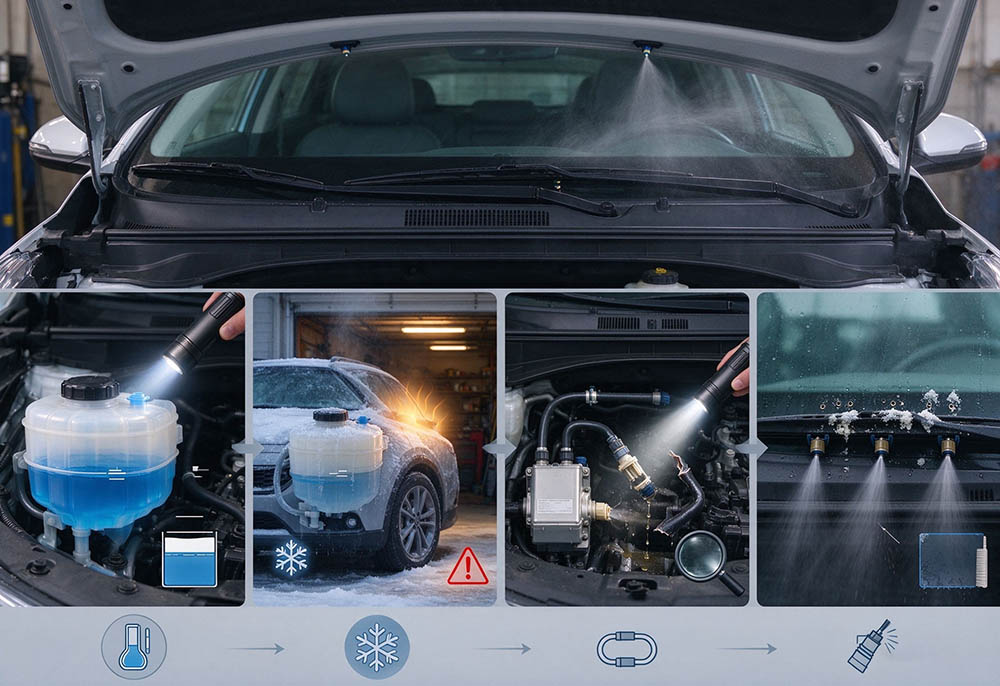
Check the washer reservoir before touching any components. It’s easy to overlook a low fluid level, especially when the warning light hasn’t come on. Top up with the correct washer fluid and try again briefly.
Cold weather is another common culprit. Fluid that isn’t rated for freezing temperatures can turn to ice in the reservoir, hoses, or nozzles. Move the car somewhere warm and allow the system to thaw naturally. Avoid repeatedly holding the washer switch down while the fluid is frozen; that only puts more strain on the pump.
If the reservoir is full and the weather isn’t the issue, look under the hood. A loose connection, split hose, or kink in the washer line can prevent fluid from reaching the windshield. Damp fittings or washer fluid collecting under the car are useful clues. Check the tubing before assuming the nozzles themselves are blocked.
A partially clogged nozzle often gives itself away with a weak stream, an uneven spray pattern, or fluid that hits the wrong part of the glass. Dirt and mineral deposits can build up around the openings over time.
If the pump is completely silent
Find the washer system fuse using the owner’s manual or the fuse-box diagram. With the vehicle switched off, inspect it and replace it only with a fuse of the specified rating if it has blown. If the new fuse blows too, stop there: a short circuit or a seized pump may be causing the problem.
If the fuse is intact, the pump and its electrical connection are next. Corrosion or a loose plug can interrupt power. A voltage check at the connector can help distinguish a supply problem from a pump fault, but follow the vehicle’s service information and use a qualified technician if you’re not comfortable working with automotive electrics.
Remember the temperature, too. A pump immobilized by ice may start working again once everything has thawed. Give it that chance before replacing parts.
A practical six-point checklist
01Listen for the pump while briefly activating the washers.
02Check the fluid level and whether the fluid suits the weather.
03Look for leaks, loose connections, and kinked hoses.
04Inspect the correct washer fuse.
05Check the pump connector and electrical supply if needed.
06Clean or replace a blocked nozzle after confirming fluid reaches it.
How to clean a clogged washer nozzle
Start gently. Wipe away visible debris around the nozzle opening with a soft cloth and test the spray again. On a vehicle where the washer hose can be detached safely, checking whether fluid reaches the hose end can help you separate a nozzle blockage from a problem farther back in the system.
If the nozzle is removable, follow the vehicle’s instructions before taking it out. Some models have heated nozzles or washers built into the wiper arms, and forcing a fitting can damage the assembly. Avoid poking a needle deep into a precision spray opening or blasting it with high-pressure air; either can change the spray pattern or damage the part.
Household remedies such as vinegar aren’t a universal fix. Washer-system materials vary, so use a cleaning method approved for your vehicle rather than pouring chemicals into the reservoir. A badly blocked or damaged nozzle may simply need replacing.
Why the washer fluid matters
Plain water may seem good enough in mild weather, but it doesn’t clean road film as effectively as proper washer fluid. In winter, it can freeze throughout the system. Hard water can also leave mineral deposits that contribute to blocked nozzles.
Choose a washer fluid with a temperature rating suitable for where you drive and follow the vehicle manufacturer’s guidance. It’s a small detail that can prevent a frustrating failure on a cold morning.
Common questions
Why is the spray weak rather than completely absent?
A partially blocked nozzle, restricted hose, low fluid level, or weak pump can all reduce flow. Check for leaks and restrictions first, then consider the pump if the rest of the system looks clear.
Can vinegar unclog washer nozzles?
It may dissolve some mineral deposits, but running vinegar through the washer system isn’t recommended unless the vehicle manufacturer allows it. Start with gentle external cleaning and the approved service procedure instead.
The pump hums, but no washer fluid comes out. Do I need a new pump?
Not necessarily. Check the reservoir, frozen fluid, hoses, and nozzles first. A humming motor tells you the pump is operating, but it doesn’t guarantee that it is generating normal pressure.
What if the replacement fuse blows again?
Don’t keep fitting new fuses. A repeated failure points to an underlying electrical fault or a pump drawing too much current and should be diagnosed before the washers are used again.
Once the spray is back, check the wiper blades too
A working washer system is only half the job. If the blades still leave streaks, chatter, or miss patches of glass, check their condition and fit. TOPEX offers flat wiper blades and OE exact-fit options for different vehicles—just confirm the correct blade size and connector before ordering, or contact our team for fitment support.

--- END ---