How to Put Wipers in Service Mode: Tesla, BMW, VW & More
Nov 16, 2026
On many newer cars, replacing windshield wiper blades isn’t as simple as lifting the wiper arms. The blades sit low against the windshield, and the hood can block the arms from lifting fully. Trying to force them up could damage the wipers or scratch the hood.
That’s where wiper service mode comes in. It moves the wipers to a position that makes blade replacement easier and safer. The process varies between brands like Tesla, BMW, Volkswagen, Hyundai, and Kia, and some models have different steps depending on the year. Here’s how to activate wiper service mode on each brand so you can replace your blades without damaging your car.
What is wiper service mode?
Wiper service mode (sometimes called the service position or maintenance position) moves the arms up from their usual parked location. On vehicles with concealed wipers, that extra clearance makes it possible to replace a blade or clean the lower part of the windshield without scraping the hood.
Not every car needs it. If your wiper arms are fully exposed and lift freely in their normal position, you may be able to change the blades without activating a special setting. Never force an arm that catches on the hood.
How to activate wiper service mode by brand
These are common procedures for the brands below, not universal instructions for every trim and model year. Make sure the vehicle is stationary and the wipers are switched off before you begin.
Tesla: use the touchscreen
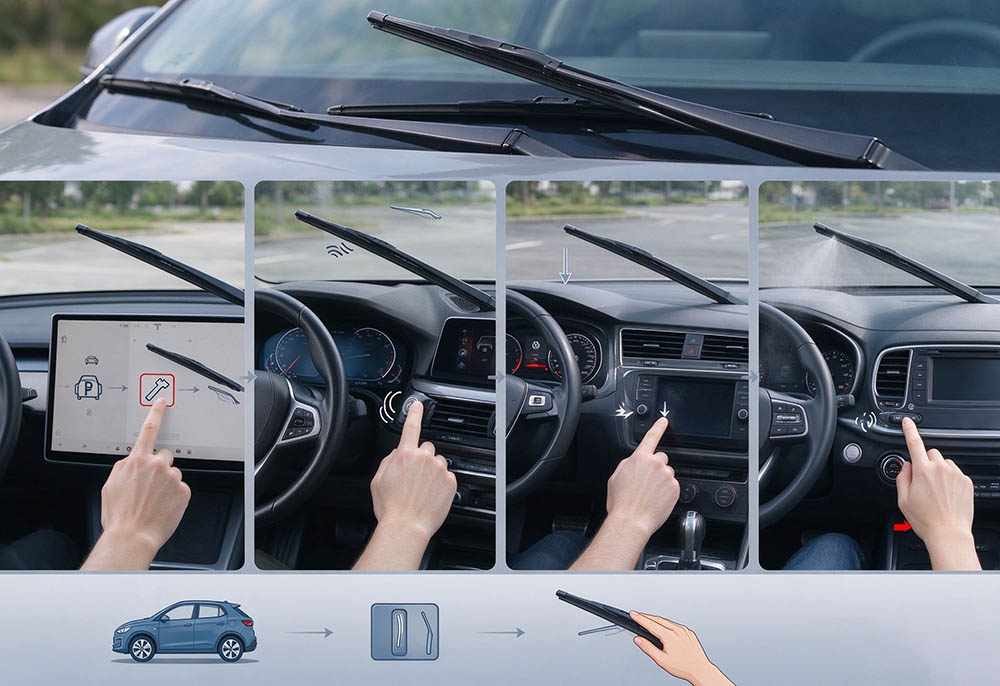
On many Tesla models, put the vehicle in Park, then open Controls > Service > Wiper Service Mode. The wipers move up to a position where you can access the blades. When you’re done, switch Wiper Service Mode off to return them to their normal resting position.
Support the arm as you lift it away from the glass, and lower it gently when you finish. Check the instructions for your Tesla model before attempting to lift or remove a blade.
BMW: hold the wiper stalk up
On many BMW models, switch off the ignition and, shortly afterward, push the wiper stalk upward and hold it until the arms move into the service position. Timing matters here: if nothing happens, start again rather than pulling the arms up by hand.
Some BMW models use a different sequence or menu setting, so check the model-specific instructions if this doesn’t work.
Volkswagen: briefly press the stalk down
For many Volkswagen vehicles, switch the ignition on and then off. While the car is stationary, briefly press the wiper stalk downward to the single-wipe position. The blades should move up into their service position.
That downward movement is easy to confuse with BMW’s upward-stalk procedure. If the wipers stay parked, consult your VW owner’s manual; the sequence can vary between models.
Hyundai and Kia: use the mist setting
On many Hyundai and Kia vehicles, turn the vehicle off and promptly hold the wiper stalk in the MIST or single-wipe position for a few seconds. The arms should move up and stop where you can reach them. Release the stalk once they are in place.
The timing and stalk direction are not identical across every Hyundai or Kia model, particularly newer vehicles, so follow your manual if the expected movement doesn’t occur.
What if you drive another brand?
There isn’t one service-mode shortcut that works on every vehicle. Some cars use a stalk sequence after the ignition is switched off; others have a setting in the vehicle menu. Search your manual for “wiper service position,” “maintenance position,” or “winter position.” If you can’t confirm the procedure, don’t try to pry the arms out of their parked position.
Before you replace a blade, avoid these common mistakes
The actual blade change is usually straightforward. Most avoidable damage happens while lifting or lowering the arm, so a little care at this stage makes a difference.
Frequently asked questions
Do all cars need wiper service mode?
No. It mainly matters when the wipers park partly under the hood and cannot be lifted safely from that position. With exposed wiper arms, the normal parked position may be all you need.
Why are my wipers sitting halfway up the windshield?
They may be in the service position. If you’ve just activated it, this is expected. Return the wipers to their normal position using your vehicle’s instructions. If they stopped there unexpectedly, check the manual rather than assuming service mode is the cause.
Can I drive with the wipers in service mode?
Return the wipers to their normal parked position before driving. Service mode is intended for maintenance, not normal use on the road.
When should I replace my wiper blades?
Inspect them regularly and replace them when they leave streaks, skip, chatter, or fail to clear water effectively. Many drivers replace blades around every 6–12 months, although sun exposure, winter weather, and driving conditions can change that interval.
Ready to fit new blades?
Once you know how to move the arms safely, the next step is finding the right replacement. Check the blade lengths and connector style for your specific vehicle, then browse the TOPEX flat wiper blade range for a compatible fit, or contact our wiper specialists for fitment assistance. Matching the connector matters just as much as matching the length.

--- END ---