
2026 Wholesale Strategies for Multi-Fit Universal Wiper Blades: Reduce Returns & Maximize Margins
May 21, 2026
The Growing Demand and Challenges for Multi-Fit Universal Wiper Blades in Wholesale Markets (2026)
The wholesale wiper blade market in 2026 is experiencing strong growth driven by increasing vehicle parc, rising demand for convenient replacement parts, and the shift toward all-weather performance products. However, this growth comes with significant operational headaches for distributors and wholesalers.
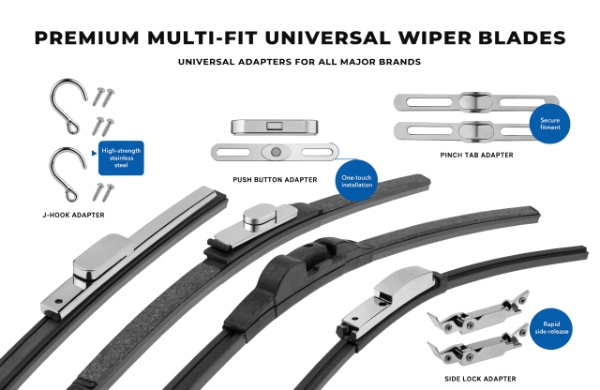
High return rates remain the biggest pain point. Many traditional single-connector blades lead to 15–30% return rates because customers or repair shops receive the wrong arm type. This creates a cascade of costs: double shipping, restocking labor, damaged reputation, and lost repeat business. At the same time, inventory complexity is exploding as new vehicle models introduce more arm designs every year.
Multi-fit universal wiper blades solve these exact problems by covering multiple connector types with one SKU. Distributors who adopt them report dramatically lower return rates, simplified inventory, faster turnover, and healthier margins. Yet many wholesalers are still hesitant due to concerns about quality, compatibility accuracy, and supplier reliability.
Understanding the real demand drivers and operational challenges is the first step toward building a more profitable wiper blade business in 2026.
Understanding Wiper Blade Connectors and Why Multi-Fit Systems Reduce Returns Dramatically
Modern vehicles use a wide variety of wiper arm connectors. The most common types in 2026 include:
- J-Hook (still the most widespread)
- Pinch Tab
- Side Lock
- Top Lock
- Push Button
- Bayonet
Each type requires a specific adapter or blade design. When distributors stock single-connector blades, they must maintain dozens of SKUs to cover popular models. This leads to overstocking slow-movers and frequent stockouts of high-demand items.
Multi-fit universal systems change the game. A single blade with 18–22 built-in adapters can cover 95%+ of vehicles in major markets. This approach reduces SKU count by 60–70%, lowers inventory carrying costs, and minimizes the chance of shipping the wrong product.
Here is a practical overview of how multi-fit systems work:
| Connector Type | Traditional Approach (Single SKU) | Multi-Fit Universal Approach | Impact on Distributor |
|---|---|---|---|
| J-Hook | Dedicated blade | Built-in adapter | Covers majority of older vehicles |
| Pinch Tab | Separate SKU | Included in multi-fit set | Reduces Asian/European model issues |
| Side Lock / Top Lock | Multiple dedicated SKUs | One multi-fit blade | Simplifies newer GM/Ford coverage |
| Push Button | Specialized blade | Adapter included | Better compatibility with European cars |
By consolidating connectors into multi-fit designs, wholesalers can streamline operations and significantly cut return rates caused by compatibility errors.
Wholesale Pricing Strategies: Negotiating Factory Quotes and Maximizing Margins
Smart wholesale pricing starts with understanding factory cost structures and negotiating effectively.
Reliable Chinese manufacturers typically offer multi-fit universal blades at competitive tiered pricing based on volume. Entry-level orders (500–1,000 pieces) allow testing, while larger commitments (5,000+ pieces) unlock better per-unit costs and customization options.
Key pricing factors in 2026 include:
- Base blade construction (standard rubber vs silicone-enhanced)
- Number and quality of adapters included
- Packaging level (basic vs retail-ready reinforced)
- Customization (logo, color, private label)
Distributors who negotiate based on annual volume forecasts, provide accurate forecasts, and commit to longer-term partnerships routinely achieve 35–45% gross margins on multi-fit lines.
Here’s a realistic wholesale pricing structure example for multi-fit universal blades:
| Order Quantity | Standard Rubber Multi-Fit | Silicone-Enhanced Multi-Fit | Typical Margin Potential |
|---|---|---|---|
| 500–2,000 pcs | $1.8–2.3 per blade | $2.6–3.2 per blade | 38–42% |
| 5,000–10,000 pcs | $1.4–1.8 per blade | $2.1–2.6 per blade | 45–52% |
| 20,000+ pcs | $1.1–1.5 per blade | $1.8–2.3 per blade | 48–55% |
Combining smart negotiation with value-added services like private labeling and marketing support allows distributors to command premium pricing while maintaining strong margins.
Supply Chain and Inventory Optimization for Multi-Fit Blades
Effective supply chain management is critical for success with multi-fit universal blades.
The key advantage of multi-fit systems is inventory simplification. Instead of stocking 30–50 single-connector SKUs, distributors can cover the same vehicle range with 8–12 multi-fit SKUs. This reduces warehouse space requirements, lowers capital tied up in stock, and decreases obsolescence risk.
Best practices for 2026 include:
- Implement JIT (Just-In-Time) ordering based on sales velocity and seasonal weather patterns.
- Use accurate demand forecasting tools that factor in regional vehicle parc data.
- Maintain safety stock only for top-selling multi-fit SKUs.
- Work with suppliers offering flexible production schedules and fast replenishment (25–35 days lead time).
- Adopt retail-ready reinforced packaging to minimize transit damage and support e-commerce growth.
TOPEX supports these strategies with low MOQ flexibility, consistent quality across batches, and reliable shipping options that help distributors maintain optimal inventory levels without overstocking.
Proven Tactics to Slash Return Rates and Boost Customer Loyalty
Reducing returns requires a multi-layered approach that goes beyond the product itself.
Top-performing distributors use these proven tactics:
- Provide high-resolution product images from multiple angles, including clear close-ups of all adapters.
- Include downloadable fitment charts and QR codes linking to short installation videos.
- Offer reinforced, protective packaging with foam inserts and edge guards to prevent shipping damage.
- Train sales teams and provide retailers with simple arm-type identification tools.
- Implement a clear returns policy combined with proactive compatibility support.
Distributors who combine high-quality multi-fit blades with strong educational materials and reliable packaging routinely achieve return rates below 5%, compared to the industry average of 15–25%.

Strong packaging and clear fitment tools are essential for low return rates
Conclusion
In the competitive 2026 wholesale landscape, multi-fit universal wiper blades stand out as a high-margin, low-complexity solution that addresses the core pain points of inventory bloat and high return rates. By partnering with reliable Chinese factories offering 18–22 adapters for 95–99% vehicle coverage, reinforced packaging, and detailed fitment data, wholesalers can achieve 30–50% lower returns, faster turnover, and stronger retailer partnerships. Whether you serve emerging markets focused on U-hook simplicity or mixed global fleets needing full connector versatility, investing in quality multi-fit systems today ensures resilient supply chains and sustained profitability tomorrow.
Contact trusted suppliers now for custom quotes and fitment toolkits — secure your edge before peak seasons hit.
Chat with our technical specialist on WhatsApp. Competitive wholesale pricing • Low MOQ • Technical support for distributors.
FAQ
What are the main connector types included in multi-fit universal wiper blades, and how many adapters do they typically have?
Most quality multi-fit blades include 18–22 adapters covering J-Hook, Pinch Tab, Side Lock, Top Lock, Push Button, Bayonet, and more.
How do multi-fit blades help wholesalers reduce return rates compared to traditional exact-fit or single-connector options?
By covering multiple arm types with one SKU, multi-fit blades dramatically reduce the chance of sending the wrong product, often cutting returns by 40–60%.
What is the typical wholesale pricing structure for multi-fit wiper blades, and what MOQ should I expect from Chinese factories?
Pricing ranges from $1.1–3.2 per blade depending on volume and material (rubber vs silicone). Reliable factories offer MOQ as low as 500 pieces for testing.
How can I optimize inventory and supply chain for multi-fit blades to avoid overstocking while covering diverse vehicle models?
Focus on top-selling multi-fit SKUs, use sales + weather forecasting, and work with suppliers offering fast replenishment and flexible production.
What packaging and product imaging best practices minimize damage claims and buyer confusion in e-commerce wholesale?
Use reinforced double-wall boxes with foam inserts, protective edge caps, high-resolution multi-angle photos, and clear adapter close-ups.
Are multi-fit universal blades suitable for all weather conditions and major markets (North America, Europe, emerging regions) in 2026?
Yes. Premium multi-fit blades with silicone or graphite coatings perform well across climates when paired with proper adapter systems.
More resources: Flat Wiper Blades | Truck and Bus Wiper Blades | How to Choose the Right Wiper Blade Type | Applicable Models PDF

--- END ---


