
2026 Wiper Blade Market Trends: Why Silicone Is Rapidly Taking Over
Apr 24, 2026
You just replaced rubber wiper blades six months ago. Streaks are back. Noise is annoying. Your customers are complaining again. The same cycle repeats every year, eating into your margins and reputation.
Silicone wiper blades are rapidly taking over the 2026 market. They last 2–3 times longer than traditional rubber, perform better in extreme weather, run quieter, and deliver lower long-term costs. Forward-thinking distributors and fleets are making the switch now.
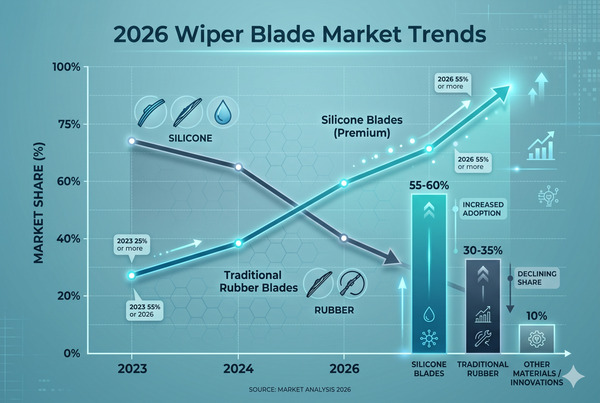 Silicone wiper blades dominating 2026 market trend chart
You now see the shift happening. Let’s examine why traditional blades are losing ground, the misconceptions holding buyers back, a practical selection guide, why Topex silicone stands out, and the action you should take today.
Why Traditional Wiper Blades Are Losing Ground Fast in 2026?
I talk to distributors every week. The same complaint keeps coming up. Rubber blades fail too quickly. Customers demand replacements again and again.
Traditional rubber wiper blades are losing market share fast in 2026. They harden in cold, crack in heat, streak in rain, and need frequent replacement. Fleets and retailers are tired of the cycle.
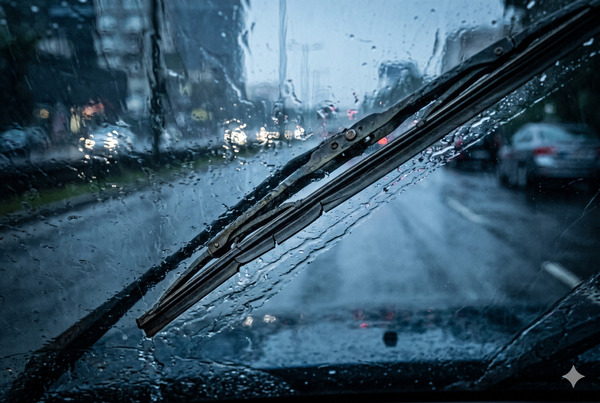 Traditional rubber wiper blades failing with streaks and noise
Short Lifespan Reality
Rubber blades typically last only 6–12 months. Silicone lasts 2–4 years. The replacement frequency hurts both end users and wholesalers.
Poor All-Weather Performance
Rubber stiffens below freezing and softens in extreme heat. Streaks and chatter appear quickly in rain or snow.
Increasing Customer Expectations
Modern drivers expect quiet, streak-free wiping. Rubber can no longer meet these standards consistently.
Rising Replacement Costs
Frequent replacements increase labor and downtime costs for fleets. Retailers see higher return rates.
Market Share Shift
Premium segments are moving to silicone and advanced beam designs. Traditional rubber is being pushed into the lowest-budget tier.
| Issue | Traditional Rubber | Market Impact in 2026 |
|---|---|---|
| Lifespan | 6–12 months | High replacement frequency |
| Weather performance | Poor in extremes | Streaks and chatter |
| Customer satisfaction | Declining | More returns and complaints |
| Long-term cost | Higher due to frequency | Losing to silicone |
This table shows why traditional blades are losing ground. The trend is clear and accelerating.
My Distributor Conversation
A large wholesaler told me they lost 25% of fleet customers last year because rubber blades failed too often. They switched to silicone and regained trust.
Fleet Operator Feedback
Fleet managers report rubber blades need replacement every 8 months on average. Silicone reduces downtime and cost significantly.
Traditional blades are struggling. Let’s clear up the misconceptions next.
The Biggest Misconceptions About Silicone Wiper Blades That Are Costing Buyers Money?
Many buyers still hesitate to switch to silicone. Old myths are costing them real money.
The biggest misconceptions are that silicone blades are too expensive, not durable, or hard to fit. In reality, they deliver better value, longer life, and easier installation than most people think.
“Silicone Is Too Expensive”
Upfront cost is higher. But over 3 years, silicone often costs less per month due to fewer replacements.
“Silicone Is Not Durable”
High-quality silicone actually lasts longer and resists UV, ozone, and temperature extremes better than rubber.
“Silicone Is Hard to Fit”
Modern silicone blades use the same adapters as rubber. Many are multi-fit and easier to install.
“Silicone Only Works in Mild Weather”
Premium silicone performs better in extreme cold and heat. It stays flexible where rubber fails.
“All Silicone Blades Are the Same”
Quality varies greatly. Cheap silicone performs poorly. Premium formulations deliver real advantages.
| Misconception | Reality | Cost of Believing It |
|---|---|---|
| Too expensive | Lower long-term cost | Higher replacement expense |
| Not durable | Longer lifespan | Missed performance gains |
| Hard to fit | Same or easier adapters | Installation frustration |
| Only for mild weather | Better in extremes | Poor all-weather results |
This table debunks the myths. Understanding the truth saves money.
My Customer Story
A retailer avoided silicone because of price. After calculating 3-year cost, they switched. Returns dropped and margins improved.
Distributor Insight
Many wholesalers still believe old myths. Those who tested premium silicone are now increasing their orders.
Misconceptions are costly. Let’s look at how to choose correctly.
How to Choose the Right Wiper Blade Type for 2026 – A Practical Buyer’s Guide?
Choosing the right blade in 2026 does not have to be complicated. A clear framework helps you make smart decisions.
Follow this practical guide: assess your climate and usage, compare rubber vs hybrid vs silicone, check fitment and adapters, evaluate long-term cost, and test samples before bulk orders.
Step 1: Assess Climate and Usage
Heavy rain or snow? Extreme temperatures? High mileage? Your conditions determine the best type.
Step 2: Compare Blade Types
Rubber is cheapest but shortest life. Hybrid offers balance. Silicone delivers longest life and best all-weather performance.
Step 3: Check Fitment and Adapters
Verify exact arm type and vehicle compatibility. Multi-fit options reduce inventory complexity.
Step 4: Calculate Long-Term Cost
Factor in replacement frequency. Silicone often wins on total cost despite higher upfront price.
Step 5: Test Samples
Always test before committing to volume. Real performance on your vehicles matters most.
| Selection Step | Key Consideration | Recommendation |
|---|---|---|
| Climate & usage | Weather and mileage | Match to conditions |
| Blade type comparison | Rubber vs Hybrid vs Silicone | Silicone for long-term value |
| Fitment check | Arm type and year | Use accurate data |
| Long-term cost | Replacements over 3 years | Silicone usually wins |
| Sample testing | Real-world performance | Test before bulk |
This table gives you a clear decision framework. Use it to choose wisely.
My Buyer Guide Experience
One fleet buyer followed this process. They switched to silicone and reduced annual replacement costs by 42%.
Wholesaler Tip
Keep a simple comparison chart for your sales team. Customers appreciate clear guidance.
Guide complete. Topex advantage next.
Why TOPEX Silicon Wiper Blades Are Leading the 2026 Market Shift?
After testing many suppliers, Topex consistently delivers superior results in the silicone segment.
Topex silicone wiper blades feature advanced formulations, Teflon coating, precise aerodynamic design, and strict quality control. They offer longer life, better all-weather performance, and competitive pricing that is driving the 2026 market shift.
Advanced Silicone Formulation
Topex uses high-grade silicone that stays flexible in extreme temperatures. It resists UV and ozone better than standard materials.
Teflon Coating Advantage
Reduced friction means smoother wipe and less wear. Water beads off faster for clearer vision.
Aerodynamic Engineering
Optimized spoiler design reduces wind lift at highway speeds. Quiet and stable performance.
Strict Quality Control
Every batch undergoes rigorous testing. Consistent quality you can trust for fleets and retail.
Competitive Value
Premium performance at factory-direct pricing. Better margins for distributors.
| Topex Advantage | Benefit | Market Impact |
|---|---|---|
| Advanced formulation | Longer flexibility | 2–4 year lifespan |
| Teflon coating | Less friction | Smoother, quieter wipe |
| Aerodynamic design | Reduced wind lift | Better highway performance |
| Strict QC | Consistent quality | Lower return rates |
This table shows why Topex is leading the shift. Real performance at real value.
My Topex Experience
We tested Topex silicone against competitors. It outperformed in longevity and wipe quality. Customers noticed immediately.
Distributor Success
One wholesaler switched their premium line to Topex silicone. Sales increased and returns dropped significantly.
Topex leads the shift. Time to upgrade.
Ready to Upgrade to the Future of Wiper Blades? Get Your 2026 Quote Now?
The 2026 market is moving toward silicone. Early adopters gain competitive advantage. Don’t get left behind.
Ready to upgrade? Contact Topex today. Get your 2026 silicone wiper blade quote and sample kit. Secure better performance and stronger margins before supply tightens.
Get Your 2026 Silicone Wiper Blade Quote & Sample Kit
Chat with Our Wiper Expert on WhatsApp
Limited production capacity for new partners in Q2 2026 — secure your supply early.
Conclusion
The wiper blade market in 2026 is undergoing a clear shift: silicone technology is rapidly gaining ground over traditional rubber blades. Driven by demands for longer lifespan, better all-weather performance, quieter operation, and lower long-term costs, silicone wiper blades are no longer a niche premium option — they are becoming the smart choice for fleets, distributors, and retailers.
While many brands still cling to outdated rubber solutions due to habit or short-term price focus, forward-thinking buyers are embracing silicone for its superior durability and real-world reliability.
TOPEX has positioned itself at the forefront of this trend with advanced silicone formulations, rigorous testing, and competitive factory-direct pricing.
The future of wiper blades is silicone. The only question is whether you’ll lead the change or fall behind.
Frequently Asked Questions About Silicone Wiper Blades
Why is silicone becoming the dominant trend in the 2026 wiper blade market?
Silicone offers 2–3 times longer life, better all-weather performance, quieter operation, and lower long-term costs compared to traditional rubber.
Are silicone wiper blades really worth the higher price?
Yes. Although the upfront cost is higher, fewer replacements and better performance usually deliver lower cost per year and higher customer satisfaction.
How do silicone blades compare to traditional rubber and hybrid blades?
Silicone lasts longer and performs better in extremes. Hybrid offers a good balance. Rubber is cheapest but shortest-lived.
What makes TOPEX silicone wiper blades different from other brands?
Topex uses advanced silicone formulations with Teflon coating, strict quality testing, aerodynamic design, and competitive factory-direct pricing.
Which vehicles or markets benefit most from silicone wiper blades?
Fleets, high-mileage vehicles, extreme climate regions, and premium retail segments benefit most from silicone’s durability and performance.
How can I test TOPEX silicone blades before placing a bulk order?
Request free samples and a quote. Test them on your vehicles or with your customers to see the real difference.

--- END ---


