

How to Maintain Rear Wiper Assemblies for Optimal Performance
May 18, 2026
Why Rear Wiper Assemblies Are Often Overlooked and the Risks of Poor Maintenance in 2026
Rear wiper assemblies are one of the most neglected components on SUVs, crossovers, hatchbacks, and minivans. Drivers focus on front wipers because they are used constantly, while the rear wiper sits idle for long periods — only to be activated during sudden rain, snow, or when reversing in poor visibility. This “out of sight, out of mind” attitude leads to accelerated wear that many owners discover too late.
In 2026, with more extreme weather patterns and higher safety expectations, a failing rear wiper creates serious risks. Streaking, skipping, or completely ineffective wiping on the rear window reduces visibility when backing up or driving in heavy rain, increasing accident probability. Degraded rubber can scratch the rear glass, leading to expensive repairs. Worn mechanisms also strain the rear wiper motor, causing premature failure and costly replacements.
Poor maintenance doesn’t just affect individual drivers. Fleet operators and repair shops see increased comebacks, customer complaints, and warranty claims when rear wipers are ignored. Understanding these risks is the first step toward proactive care that protects safety and reduces long-term costs.
Key Benefits of Proper Rear Wiper Assembly Maintenance for Safety and Cost Savings
Regular maintenance of rear wiper assemblies delivers clear, measurable benefits that go far beyond simple convenience.
First, it ensures consistent rear visibility. A well-maintained blade clears water, snow, and dirt effectively, giving drivers confidence when reversing in bad weather or at night. This directly improves safety for families, delivery drivers, and fleet vehicles.
Second, proper care extends component lifespan. Timely blade replacement and lubrication prevent excessive wear on the wiper arm and motor. Many owners report doubling the service life of their rear assembly through simple routines.
Third, it prevents expensive secondary damage. Cracked or hardened rubber blades can scratch rear glass, requiring costly polishing or replacement. Overworked motors from seized mechanisms lead to electrical failures that are far more expensive to fix.
Fourth, it reduces overall ownership costs. Fewer replacements, fewer repairs, and fewer shop visits add up to significant savings over time. For repair chains and wholesalers, recommending proper rear wiper maintenance also builds customer trust and increases repeat business.
Investing just a few minutes every few months in rear wiper care pays substantial dividends in safety, performance, and budget protection.
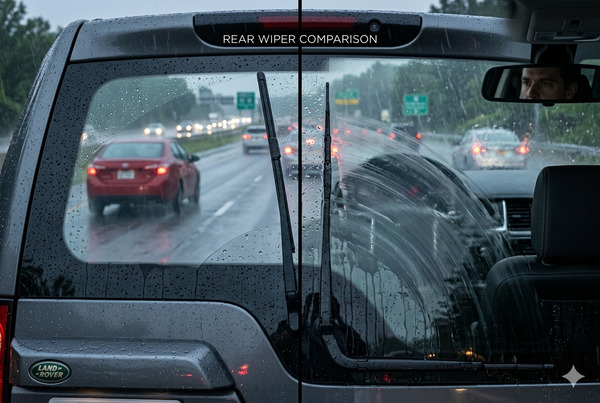
A well-maintained rear wiper provides clear visibility while neglected ones create safety risks
Essential Inspection, Cleaning, and Lubrication Techniques for Rear Wipers
Effective maintenance starts with regular inspection and basic care routines.
Begin by visually inspecting the blade every month. Look for cracks, tears, hardened edges, or uneven wear. Lift the arm gently and run your finger along the rubber edge — it should feel smooth and flexible. Any roughness or missing sections means it’s time for replacement.
Cleaning is equally important. Use a mild glass cleaner and microfiber cloth to remove dirt, road grime, and residue from both the blade and rear windshield. Avoid harsh chemicals or abrasive pads that can damage the rubber. For best results, clean the blade after every car wash or every 1,000 miles.
Lubrication prevents mechanical issues. Apply a small amount of silicone spray or white lithium grease to the pivot points and linkage joints every 6 months. This keeps movement smooth and reduces strain on the motor. Wipe away any excess to prevent dust attraction.
Simple routines like these take less than 10 minutes but dramatically improve performance and longevity.
Step-by-Step Guide to Replacing Blades, Arms, and Troubleshooting Common Issues
Replacing rear wiper components correctly ensures optimal performance and prevents future problems.
Blade Replacement Steps:
- Lift the wiper arm away from the glass and lock it in position.
- Press the release tab or button on the blade connector.
- Slide the old blade off and align the new blade with the arm.
- Push until it clicks securely.
- Lower the arm gently and test on wet glass.
Full Arm Assembly Replacement:
- Remove the old blade first.
- Locate and remove the nut or bolt at the base of the arm.
- Gently pull the arm off the motor shaft (note the position for reinstallation).
- Install the new arm in the same orientation and tighten securely.
- Reinstall the blade and test operation.
Common Troubleshooting:
- Streaking — Clean the blade and glass thoroughly or replace the blade.
- Skipping or Chatter — Check arm tension and lubricate pivots.
- Motor runs but blade doesn’t move — Inspect linkage for broken parts.
- Blade lifts in wind — Ensure correct size and proper installation angle.
Always match the exact size and connector type recommended for your vehicle.
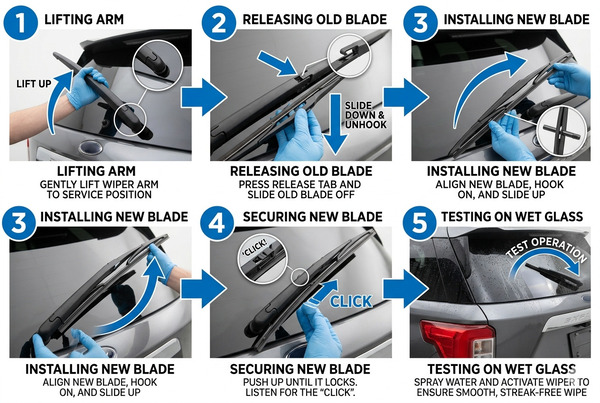
Correct installation technique prevents common rear wiper problems
Advanced Tips and Seasonal Strategies to Maximize Rear Wiper Lifespan
For maximum performance, adopt these advanced maintenance strategies:
- Winter Protection — Lift the arm and cover the blade with a protective sock or bag when temperatures drop below freezing to prevent ice buildup.
- Summer UV Defense — Park in shade when possible and apply rubber protectant every 3 months to fight hardening and cracking.
- Deep Cleaning Routine — Every 3 months, remove the blade and soak it in warm soapy water, then rinse thoroughly.
- Motor and Linkage Check — During seasonal service, inspect the entire assembly for corrosion or loose connections.
- Professional Inspection — Have the full rear wiper system checked during annual vehicle service.
Fleet operators should establish standardized maintenance schedules and train technicians on proper rear wiper care. Retailers can increase customer satisfaction by offering rear wiper inspection as part of every service visit.
Following these practices helps rear wiper assemblies last significantly longer while maintaining peak performance year-round.
Conclusion
Maintaining your rear wiper assemblies is a small investment that delivers outsized returns in safety, visibility, and cost savings. In 2026’s increasingly extreme weather patterns, a well-maintained rear wiper can mean the difference between clear rear vision and dangerous blind spots. By committing to regular inspections, timely blade replacements every 6–12 months, proper cleaning habits, and seasonal protections, you’ll extend component life, prevent glass scratches, and reduce motor strain. Whether you’re a daily driver, fleet operator, or wholesaler advising customers, proactive rear wiper care transforms an often-ignored part into a reliable safety asset. Start today — lift the arm, inspect the blade, and schedule your next check. Clearer roads and fewer repairs await.
Chat with our technical specialist on WhatsApp for fleet or retail support.
FAQ
How often should I replace the rear wiper blade or full assembly for optimal performance?
Every 6–12 months, or sooner in harsh climates. Inspect monthly and replace at the first sign of streaking or cracking.
What are the most common signs that my rear wiper assembly needs maintenance or replacement?
Streaking, skipping, squeaking, visible cracks, reduced wiping area, or the blade dragging across the glass.
Can I use front wiper blades on the rear, or do I need specific rear wiper assemblies?
Specific rear blades are recommended. Rear blades are usually shorter and designed for the different curvature and arm mechanics.
How do I properly clean and lubricate the rear wiper arm and mechanism?
Clean with mild soap and microfiber, then apply silicone spray to pivots and joints. Avoid over-lubricating to prevent dust buildup.
What should I do to protect rear wipers from freezing in winter or UV damage in summer?
In winter, lift arms or use protective covers. In summer, park in shade and apply rubber protectant regularly.
How can neglecting rear wiper maintenance lead to costly glass or motor repairs?
Hardened blades scratch glass, while seized mechanisms overwork the motor, leading to expensive failures.
More resources:
Rear Wiper Blades
How to Choose the Right Wiper Blade Type
Truck and Bus Wiper Blades
Flat Wiper Blades
Silicone Wiper Blades
Applicable Models PDF

--- END ---
Related Blogs

