
Winter Wiper Blades vs. Regular Wipers: When Should You Switch?
Oct 20, 2026
Wiper blades are easy to overlook until snow, freezing rain, or road spray suddenly reduces visibility. A blade that performs well during warm rain may become less effective when ice forms around its structure or the rubber hardens in low temperatures.
Winter wiper blades are designed to reduce some of these problems, but they are not automatically necessary for every driver. A high-quality beam or hybrid blade may provide reliable year-round performance in a mild winter climate. In regions with frequent snow, ice, road salt, and repeated freeze–thaw cycles, however, a dedicated winter design may provide more consistent windshield contact.
Drivers should consider switching to winter wiper blades when freezing conditions repeatedly cause their regular blades to clog with snow, develop frozen joints, lose windshield contact, or leave areas uncleared. The decision should be based on local weather, parking conditions, vehicle use, and actual wiping performance—not on the calendar alone.
I am Jacky Huang, CEO of Xiamen TOPEX Auto Parts Co., Ltd. Through my work with wiper blade development, vehicle fitment, wholesale programs, and aftermarket buyers, I have found that successful winter performance depends on the complete wiping system. The blade structure matters, but so do correct fitment, rubber flexibility, arm pressure, washer fluid, glass preparation, and daily maintenance.
Why Regular Wiper Blades Can Struggle in Snow and Freezing Weather
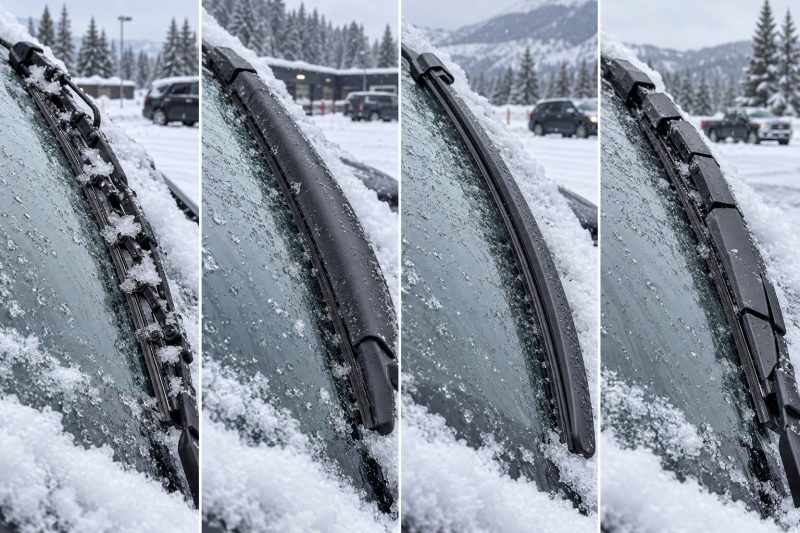
A conventional wiper blade normally uses a metal or plastic supporting frame with several exposed joints. These pressure points allow the rubber edge to follow the windshield under ordinary conditions. In freezing weather, however, snow and ice can collect around the frame and restrict movement.
Once one or more joints become frozen, the frame may no longer distribute arm pressure evenly. Part of the rubber may stay in contact with the glass while another section lifts away. The result can be streaking, skipping, water films, or a large missed area.
Exposed Joints Can Become Blocked
Conventional framed blades rely on multiple moving sections. Wet snow can enter these openings, melt when the windshield warms, and then refreeze when the vehicle is parked. Road spray can create a similar problem during long winter journeys.
Common symptoms include:
- The blade remains rigid instead of following the glass.
- One end of the rubber loses contact with the windshield.
- A repeated band of water remains after every pass.
- The blade skips or chatters across frozen contamination.
- Snow accumulates inside the frame.
- The rubber edge becomes twisted or displaced.
- The blade produces more noise than it did in warmer weather.
A driver may temporarily restore contact by safely removing accumulated ice, but repeated freezing indicates that the blade structure or condition is unsuitable for the operating environment.
Cold Temperatures Can Change Rubber Performance
Rubber must remain flexible enough to reverse direction smoothly and maintain contact with the windshield. Low temperatures can make some compounds harder and less responsive. Previous damage from heat, ultraviolet exposure, ozone, dirt, and age may become more obvious during winter.
A blade that has survived summer may therefore fail during the first freezing conditions. Fine cracks, hardened rubber, damaged edges, and weak contact pressure can produce streaking even when the frame is free from snow.
Winter Conditions Create Several Problems at Once
The blade is only one part of the visibility system. Winter performance can also be affected by frozen washer fluid, blocked nozzles, road salt, dirty glass, weak arm pressure, ice around the parked blade, or an unsuitable replacement size.
| Winter condition | Effect on the wiping system | Possible symptom |
|---|---|---|
| Wet snow | Collects around exposed joints | Uneven contact and missed areas |
| Freezing rain | Bonds the blade to the windshield | Torn rubber or overloaded mechanism |
| Freeze–thaw cycles | Refreezes water inside the frame | Stiff or locked pressure points |
| Road salt | Creates an oily or abrasive film | Smearing and reduced visibility |
| Extreme cold | Reduces rubber flexibility | Noise, streaking, or skipping |
| Outdoor parking | Exposes blades to overnight frost | Frozen rubber and restricted movement |
| Strong winter wind | Increases lift on an unstable blade | Reduced contact at higher speeds |
A winter blade can reduce ice buildup around the blade structure, but it cannot compensate for an empty washer reservoir, incorrect fitment, worn arms, or a windshield that has not been cleared properly.
The Winter Wiper Mistakes That Can Damage Blades and Windshields
The most damaging winter habits usually occur before the vehicle begins moving. Drivers may activate frozen wipers, use them to push away heavy snow, or pull the rubber away from the glass before the ice has released.
These actions can damage the blade, arm, linkage, motor, fuse, or windshield.
Using Wipers to Remove Heavy Snow
Wipers are designed to move water and light contamination—not to operate as snowplows. Heavy or compacted snow creates much more resistance than rainwater.
Attempting to push it away can:
- Bend the blade structure
- Damage adapters or connectors
- Overload the wiper motor
- Stress the linkage
- Tear or displace the rubber
- Cause the blades to collide
- Scratch the windshield when ice is trapped underneath
Heavy snow should be removed manually with suitable equipment before the wipers are activated. The driver should also clear snow from the roof and bonnet according to local safety requirements so it does not move back onto the windshield.
Operating Blades Frozen to the Glass
When the rubber is frozen to the windshield, the arm may move while the wiping edge remains fixed. This can tear the rubber, damage the connection, or overload the motor.
The safest sequence is to:
- Start the vehicle according to the manufacturer’s instructions.
- Activate the windshield defroster.
- Remove loose snow with a suitable snow brush.
- Allow bonded ice to soften.
- Use an appropriate scraper where safe.
- Confirm that the blades move freely.
- Wet-test the system only after the glass is clear.
Hot water should not be poured onto a frozen windshield. Rapid temperature change can damage the glass, and the water may refreeze around the blades.
Pulling or Striking Frozen Blades
A driver may be tempted to pull a frozen blade upward or strike it against the windshield to break away ice. This can deform the frame, damage the spring rails, weaken the connector, tear the rubber, or allow the metal arm to snap against the glass.
Ice should be removed gradually after the defroster has warmed the windshield. If the blade is lifted for cleaning, the vehicle instructions should be followed because some vehicles require the wipers to enter a service position first.
Using Unsuitable Washer Fluid
Ordinary water or warm-weather washer fluid may freeze inside the reservoir, pump, hoses, or nozzles. It can also refreeze across the windshield immediately after spraying.
Winter-rated fluid should be selected for the expected local temperature. Drivers should not mix products without checking compatibility because dilution may increase the freezing point.
| Winter mistake | Possible damage | Better response |
|---|---|---|
| Activating frozen blades | Torn rubber or motor overload | Defrost and release the blades first |
| Using wipers on heavy snow | Bent structure or damaged linkage | Remove snow manually |
| Striking blades against the glass | Connector, frame, or glass damage | Allow ice to soften safely |
| Pulling bonded rubber upward | Split or deformed wiping edge | Use the defroster before lifting |
| Using water in the washer system | Frozen reservoir, lines, or nozzles | Use suitable winter-rated fluid |
| Scraping around the blade carelessly | Rubber cuts or windshield scratches | Move slowly with suitable tools |
| Operating on dry, salted glass | Abrasion and smearing | Apply suitable washer fluid first |
Winter maintenance should protect the entire wiping system rather than focusing only on the blade.
How Winter, Beam and Regular Wiper Blades Differ
Winter blades, beam blades, and conventional blades can all work effectively when they are correctly matched to the vehicle and conditions. Their structures manage pressure and snow accumulation differently.
Conventional Framed Wiper Blades
A conventional blade uses a supporting frame with several pressure points. Its advantages can include a competitive price, broad availability, familiar installation, and good performance on many older vehicles.
Its exposed joints are also its main weakness in heavy winter weather. Snow and ice can enter the frame and prevent its sections from moving independently.
Traditional Winter Wiper Blades
A traditional winter blade commonly places a flexible rubber boot around the supporting frame. The enclosure helps prevent snow and ice from packing into the joints.
Winter blades may be heavier or less aerodynamic than some beam designs, but their protected frames can be useful in frequent snow, freezing rain, and repeated freeze–thaw conditions.
The label “winter” is not enough by itself. Buyers should still evaluate rubber flexibility, boot durability, connector security, wiping quality, and vehicle compatibility.
Beam Wiper Blades
A beam blade uses a frameless or jointless structure with internal tension elements. Because it does not rely on multiple exposed hinges, it offers fewer spaces where snow and ice can collect.
Beam blades can also provide a low aerodynamic profile and more continuous pressure across a curved windshield. However, performance depends on the spring-rail curvature, rubber compound, arm pressure, adapter, and actual vehicle application.
The TOPEX flat wiper blade range gives aftermarket buyers options for different lengths, adapters, and vehicle programs. Each application should still be tested for windshield contact and winter performance.
Hybrid Wiper Blades
Hybrid blades usually combine a supporting frame with an aerodynamic cover. The cover can reduce direct exposure of the internal structure while providing the strength and pressure distribution associated with a framed blade.
A hybrid product may perform well in mixed weather, but seams and openings can still collect contamination depending on the design. The TOPEX hybrid wiper blade range can support markets that need a balance of covered structure, modern appearance, and stable wiping.
| Feature | Conventional blade | Traditional winter blade | Beam blade | Hybrid blade |
|---|---|---|---|---|
| Basic structure | Exposed supporting frame | Framed blade with protective boot | Jointless spring structure | Frame with aerodynamic cover |
| Snow accumulation | More likely around joints | Reduced by enclosed construction | Fewer openings for buildup | Depends on cover design |
| Pressure distribution | Multiple frame pressure points | Similar to framed blade | Continuous spring pressure | Frame-supported pressure |
| Aerodynamic profile | Usually higher | Often heavier or bulkier | Generally lower | Usually streamlined |
| Windshield curvature | Application-dependent | Application-dependent | Often suitable for curved glass | Application-dependent |
| Everyday use | Good when properly fitted | Strong seasonal positioning | Suitable for many year-round programs | Useful all-weather option |
| Main selection risk | Frozen joints | Boot quality and added weight | Incorrect curvature or adapter | Ice entering cover openings |
No construction guarantees perfect performance. A correctly fitted, well-maintained blade is more valuable than a premium label applied to an unsuitable product.
When You Really Need to Switch to Winter Wiper Blades
There is no universal temperature or date that requires every driver to install winter blades. The decision should reflect how often the vehicle experiences freezing precipitation and whether the current blades continue to perform safely.
Frequent Snow and Freezing Rain Increase the Benefit
Dedicated winter blades become more valuable when a vehicle regularly encounters:
- Repeated snowfall
- Freezing rain or sleet
- Overnight frost
- Road salt and dirty winter spray
- Freeze–thaw cycles
- Long outdoor parking periods
- Mountain or remote winter travel
- Extended operation below freezing
Drivers who frequently stop and restart in winter may experience repeated melting and refreezing around the blade. This can be more demanding than one short cold period.
Outdoor Parking Changes the Risk
A vehicle stored in a heated or protected garage may experience less overnight ice buildup than one parked outside. However, the blade still needs to perform during winter travel.
Fleet vehicles, delivery vans, taxis, and commercial vehicles may face longer operating hours, more road spray, and more frequent replacement needs. Their purchasing decisions should consider downtime and inspection frequency as well as blade price.
Actual Performance Should Guide the Decision
Before winter, test the existing blades on a wet windshield. Replace or change the design if cleaning and correct installation do not eliminate:
- Persistent streaking
- Repeated missed areas
- Chattering or skipping
- Smearing across the driver’s view
- Rubber cracking or splitting
- Poor contact at the blade ends
- Unstable movement at road speed
- Frequent ice blockage around exposed joints
A six-to-twelve-month replacement interval can serve as an inspection reminder, but it is not a guarantee. Climate, storage, mileage, contamination, and product quality all affect service life.
Mild Climates May Not Require a Separate Set
Drivers in regions with occasional frost but little snow may not need dedicated winter blades. A properly fitted beam or hybrid blade with flexible rubber may provide adequate year-round performance.
I recommend asking four practical questions:
- Does snow or ice repeatedly block the current blade structure?
- Does the vehicle spend substantial time outdoors in freezing weather?
- Does the existing blade maintain complete windshield contact?
- Would a seasonal change provide a measurable visibility benefit?
If the current blades remain flexible, secure, quiet, and effective, switching only because winter appears on the calendar may not be necessary.
A Practical Wiper Routine Before, During and After Winter
Winter blade selection is only one part of seasonal vehicle preparation. A repeatable maintenance routine helps drivers identify problems before severe weather exposes them.
Before Winter Begins
Inspect the rubber, blade structure, adapters, arms, washer system, and windshield. Test all wiping speeds on wet glass.
A useful pre-winter checklist includes:
- Check the rubber for cracks, cuts, hardening, and deformation.
- Confirm that each blade is the correct length and application.
- Verify that adapters lock securely.
- Check the driver, passenger, and rear blades separately.
- Inspect arm pressure and visible corrosion.
- Fill the reservoir with suitable winter-rated washer fluid.
- Test the pump and nozzle spray pattern.
- Clean road film from the inside and outside of the windshield.
- Confirm that the defroster works effectively.
- Replace blades that leave persistent defects after cleaning.
At TOPEX, I recommend that wholesalers and distributors evaluate winter programs according to the target market’s vehicles, climate, connectors, product positioning, and seasonal delivery schedule. A market with heavy snowfall requires a different range from one with occasional frost and frequent rain.
During Winter
Before operating the wipers:
- Remove loose snow from the windshield.
- Activate the defroster.
- Release frozen blades carefully.
- Remove ice with a suitable scraper.
- Confirm that the blades can move freely.
- Check that the washer fluid is not frozen.
- Operate the system only after the glass is ready.
Clean the rubber edges regularly because salt, grit, and oily road film can cause smearing. Use a suitable cleaning method and avoid products that leave damaging residue.
After Winter
When freezing conditions have ended, inspect the blades again. Winter exposure may have damaged the rubber, boot, frame, spring rails, or connector.
| Inspection point | Keep using the blade when | Replace or investigate when |
|---|---|---|
| Rubber edge | Flexible, smooth, and undamaged | Split, hardened, torn, or deformed |
| Blade structure | Straight and stable | Bent, loose, or corroded |
| Winter boot | Sealed and flexible | Cracked, separated, or holding moisture |
| Connector | Locks securely | Loose, damaged, or difficult to engage |
| Wet wiping | Clear and quiet | Streaking, smearing, chatter, or missed areas |
| Windshield contact | Even across the full length | Ends or centre repeatedly lift |
| Washer system | Fluid reaches the required area | Weak, blocked, leaking, or frozen |
Traditional winter blades may be changed back to lighter regular blades when snow and freezing rain are no longer expected. Quality beam blades can often remain in service year-round if their condition and performance remain acceptable.
Conclusion
Winter wiper blades are most valuable in areas where drivers regularly encounter snow, freezing rain, road salt, and repeated freeze–thaw cycles. Their enclosed or simplified construction helps prevent ice from interfering with blade movement and windshield contact.
However, drivers in mild climates—or those already using quality beam blades that remain flexible and clear the glass effectively—may not need a separate seasonal set. The decision should be based on local conditions and actual wiping performance rather than the calendar alone.
Whatever blade type you use, remove heavy snow and ice manually, apply the defroster, use winter-rated washer fluid, and replace blades that streak, chatter, split, or leave areas uncleared. Correct fitment and regular maintenance remain essential in every season.
Frequently Asked Questions About Winter Wiper Blades
What is the difference between winter and regular wiper blades?
A conventional regular blade normally has an exposed supporting frame with several joints. Snow and ice can accumulate around those joints and prevent even windshield contact. A traditional winter blade covers the frame with a flexible boot to reduce buildup. However, construction and quality vary, so the product must still be correctly fitted and tested.
Are winter wiper blades better than beam blades in snow?
Not automatically. Traditional winter blades use a protective enclosure, while beam blades avoid most exposed joints through a simplified structure. Either design may perform well. The better choice depends on rubber flexibility, pressure distribution, connector security, windshield curvature, snow conditions, and vehicle fitment.
At what temperature should I install winter wiper blades?
There is no single temperature that applies to every vehicle or region. Consider installing them before recurring freezing temperatures, snow, or freezing rain begin. If regular blades repeatedly freeze, lose contact, or leave areas uncleared, the operating conditions—not a specific thermometer reading—provide the clearest reason to switch.
Can winter wiper blades be used throughout the year?
They can remain installed if they fit correctly and continue to perform well, but traditional winter blades may be heavier and less aerodynamic than some regular or beam designs. Drivers should inspect them after winter and decide whether their year-round performance, noise, durability, and appearance remain acceptable.
When should I switch back to regular wiper blades?
Consider switching after the risk of regular snow, ice, and freezing rain has passed. Inspect the winter blades first. If they remain in good condition, they may be stored appropriately for the next season or retained when suitable. Damaged, hardened, or poorly performing blades should be replaced rather than stored.
How can I prevent wiper blades from freezing to the windshield?
Use the vehicle’s defroster, winter-rated washer fluid, and proper snow-removal tools. Clear accumulated snow and ice before activating the system. Follow the vehicle manufacturer’s guidance about service position or lifting the arms, because leaving blades raised may not be appropriate in strong wind or for every wiper design.

--- END ---


