
How to Ensure Consistent Wiper Blade Quality Across Repeat Orders
Sep 22, 2026
You approve a sample that wipes clean and fits well. The first shipment arrives and customers are satisfied. Then the next order starts showing streaks, noise, or loose adapters. The difference is small at first, but it keeps returning.
Consistent wiper blade quality across repeat orders depends on locked materials, measurable specifications, golden samples, batch testing, change control, and full traceability. Approving one good sample is not enough. Buyers and suppliers must control the same standards on every production run.
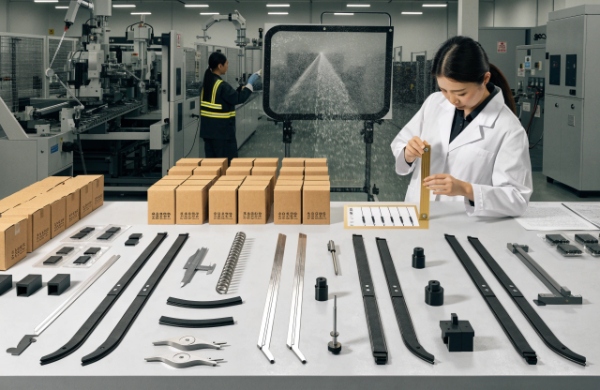
You now see that quality drift is a process problem, not only a product problem. Let’s examine why repeat orders sometimes differ from approved samples, the quality-control mistakes buyers often discover too late, what must be controlled in every production batch, what separates a reliable supplier from a sample seller, and how to build a practical repeat-order quality agreement.
Why Repeat Orders Sometimes Perform Differently from Approved Samples
I hear the same story from distributors and fleet buyers. The sample looked perfect. The first container was acceptable. Later shipments began to show small but costly differences.
Repeat orders can perform differently from approved samples when rubber formulation, spring-steel curvature, adapter materials, assembly pressure, coating, or packaging changes without clear control. Even small shifts can create streaking, noise, weak locking force, or fitment complaints.
Material Changes Are Hard to See
The blade may still look the same. The rubber compound, steel temper, coating, or adapter resin may have changed. Flexibility, contact pressure, and durability can move even when the appearance stays close to the sample.
Process Drift Builds Slowly
Assembly pressure, adhesive amount, curing time, or jig settings can drift over successive runs. The first pieces pass. Later pieces in the same order or the next order begin to fail in the field.
Sub-Supplier Switches Create Hidden Risk
A factory may change a rubber, steel, or plastic supplier for cost or availability reasons. Without written approval, the finished blade can lose the performance that was originally approved.
Packaging and Handling Affect the Final Result
Heat, UV, moisture, or poor carton support can deform the beam or harden the rubber after production. The factory test may have been fine. The blade that reaches the customer is no longer the same.
| Common Drift Source | Typical Field Symptom | Why It Escapes Early Checks |
|---|---|---|
| Rubber formula change | Streaks, hardening, noise | Looks identical |
| Spring curvature shift | Uneven wipe, skipping | Hard to judge by eye |
| Adapter resin or lock force | Loose fit, detachment risk | Needs force measurement |
| Assembly pressure variation | Chatter or incomplete contact | Needs process control |
| Packaging / storage damage | Deformed blade, early failure | Happens after production |
This table shows why visual approval of one sample cannot protect later orders. The risk is structural.
My Buyer Conversation Pattern
A distributor once told me the first two shipments performed well. The third shipment generated a wave of noise and streaking complaints. The root cause was a rubber compound adjustment that had never been reported. The sample was still sitting on the shelf, but production had already moved.
Commercial Impact
Inconsistent batches raise return rates, damage retailer confidence, and increase claim handling cost. The unit price may look attractive, but the true cost of quality drift is higher.
The problem is clear. The next step is understanding the mistakes that allow it to continue.
The Quality-Control Mistakes Buyers Often Discover Too Late
Many quality problems become visible only after products reach the market. By then the cost is already high.
Buyers often discover quality problems too late because they rely on appearance checks, treat the first sample as a permanent standard, accept unapproved material substitutions, or wait until final shipment to inspect. These habits leave gradual batch drift undetected.
Checking Only Appearance and Quantity
Counting cartons and looking at surface finish is not enough. Rubber hardness, spring curvature, locking force, and wiping performance need measurable checks. Visual inspection alone misses many functional defects.
Treating the First Sample as a Permanent Standard
A golden sample is useful only when it is linked to written specifications. Without numbers for length, hardness, curvature, and performance limits, later comparisons become subjective.
Accepting Unapproved Material Changes
Factories sometimes replace rubber, steel, coating, or adapter resin for cost or supply reasons. If the buyer has no change-control rule, the substitution can pass unnoticed until complaints appear.
Inspecting Too Late
Waiting until the full order is packed leaves little room for correction. Problems found at the container stage are expensive to sort and slow to resolve.
Ignoring Storage and Transit Conditions
Even a correctly produced blade can degrade if packaging support is weak or warehouse conditions are poor. Buyers who specify only factory tests miss this stage of risk.
- Do not rely on visual checks alone.
- Link every golden sample to measurable limits.
- Require written approval for any material or process change.
- Inspect earlier in the production cycle, not only at shipment.
- Include packaging and storage rules in the quality agreement.
These mistakes are common because they feel efficient in the short term. They become expensive when returns and claims start.
Practical Observation
Teams that only open a few cartons at arrival often miss systematic issues. Teams that check key dimensions, hardness, and wiping performance on defined samples catch problems earlier and reduce after-sales cost.
Why Late Discovery Hurts More
Once product is in the distribution network, sorting, returns, and customer communication multiply the original quality cost. Prevention is cheaper than correction.
Mistakes are avoidable. The next section defines what must be controlled on every batch.
What Should Be Controlled in Every Wiper Blade Production Batch
Consistent quality requires control points across materials, process, finished product, and documentation.
Every production batch should control rubber dimensions and hardness, spring-steel curvature, adapter strength and lock force, wiping performance, packaging integrity, and vehicle fitment. Incoming inspection, in-process checks, finished sampling, and release records should all be documented.
Incoming Material Control
Check rubber compound consistency, spring steel, adapter resin, coatings, and adhesives against the approved standard. Reject or quarantine non-conforming lots before they enter production.
First-Piece and In-Process Checks
Approve the first pieces of each run against the golden sample and specification. Continue periodic checks on curvature, assembly pressure, and connector retention during the run.
Finished Product Sampling
Sample finished blades for appearance, dimensions, hardness, locking force, and wiping performance. Test for streaking, smearing, skipping, chattering, and missed areas under controlled conditions.
Fitment and Packaging Verification
Confirm adapters lock securely on the target arm types. Check carton support, blade protection, labeling, and packing quantity so transit does not create new defects.
Traceability and Release Authorization
Assign batch or lot numbers. Record test results and release only when the batch meets the agreed limits. Keep the records available for later complaint analysis.
| Control Stage | Key Checks | Purpose |
|---|---|---|
| Incoming materials | Rubber, steel, resin, coating | Stop bad inputs early |
| First piece / in-process | Curvature, assembly, lock force | Prevent process drift |
| Finished sampling | Wipe test, dimensions, hardness | Confirm final performance |
| Packaging & fitment | Adapter security, carton support | Protect product after release |
| Documentation | Lot number, test record, release note | Enable traceability |
This table outlines a practical control loop. Visual checks alone cannot replace it.
Wiping Performance Must Be Tested
Streaking, noise, and incomplete contact often come from edge damage, incorrect curvature, or uneven pressure. These defects are functional, not only cosmetic. Batch testing should include them.
Why Records Matter
When a complaint appears months later, the lot number and test record show whether the issue is isolated or systematic. Without records, corrective action becomes guesswork.
Control points define the work. Supplier capability determines whether those points are sustained over time.
What Separates a Reliable Repeat-Order Supplier from a Sample Seller
A supplier that can produce one good sample is not automatically able to protect quality across many orders.
A reliable repeat-order supplier maintains golden-sample control, incoming inspection, process discipline, batch traceability, formal change notification, and structured corrective action. A sample seller focuses on the first approval and offers weaker control after the order is placed.
Golden Sample and Specification Management
Reliable suppliers keep controlled golden samples linked to written limits. They use those samples for ongoing comparison, not only for the first approval.
Incoming and Process Discipline
They inspect critical materials before use and monitor process parameters during production. Variation is detected before full batches are completed.
Batch Traceability
Every shipment carries lot information that can be linked back to materials, process records, and test results. This supports fast and accurate response to claims.
Change Notification and Approval
Any proposed change to rubber, steel, adapter resin, coating, adhesive, packaging, or sub-supplier is reported in writing before implementation. The buyer can approve, reject, or request new samples.
Corrective Action Capability
When problems appear, the supplier analyzes root cause by batch and failure mode, implements corrective action, and verifies that later lots improve. Temporary excuses are not enough.
- Keep controlled golden samples with measurable specs.
- Inspect incoming materials and process points.
- Provide batch traceability on every shipment.
- Notify and seek approval before any material or process change.
- Close complaints with verified corrective action.
These capabilities separate long-term partners from one-time sample sources.
My Supplier Evaluation Practice
When I assess a factory for repeat business, I ask how they control the second and third order, not only the first sample. I look for written change control, lot records, and evidence that previous corrective actions actually worked.
Commercial Meaning for Buyers
Choosing a sample seller may reduce the first purchase price. Choosing a controlled supplier reduces return cost, claim volume, and the risk of damaging retail relationships.
Supplier capability is necessary. A formal quality agreement turns capability into enforceable routine.
How to Build a Repeat-Order Quality Agreement with Your Supplier
A clear agreement converts expectations into measurable rules that both sides can follow.
A practical repeat-order quality agreement should lock technical specifications and tolerances, seal golden samples, define sampling and test methods, require written approval for changes, and use claim data by SKU, batch, and failure mode to evaluate supplier performance over time.
Define the Commercial Standard
Document blade length, rubber profile and hardness, spring curvature, adapter dimensions, locking force, appearance criteria, packaging requirements, and wiping-performance limits. Attach photos and measured values from the approved sample.
Seal and Control Golden Samples
Keep sealed golden samples at both buyer and supplier sites. Use them for incoming inspection and dispute resolution. Replace them only through a formal approval process.
Agree Sampling and Test Methods
State how many pieces are checked per batch, which tests are mandatory, and what acceptance limits apply. Include wiping tests, not only visual inspection.
Require Change Control
List materials and process elements that cannot change without written buyer approval. This should cover rubber compound, spring steel, adapter resin, coating, adhesive, packaging, and critical sub-suppliers.
Track Claims and Trends
Record each complaint by SKU, lot number, production date, vehicle application, install position, and failure symptom. Review trends regularly and link them to corrective actions.
- Lock measurable specifications before volume production.
- Maintain controlled golden samples on both sides.
- Define sampling plans and mandatory tests.
- Require written approval for any critical change.
- Use claim data by batch to verify continuous improvement.
These clauses turn quality from a hope into a managed system.
Implementation Sequence
Start with the highest-volume SKUs. Agree the specification and golden sample first. Run one or two controlled production lots with full records. Expand the same system to the rest of the range once the process is stable.
Ongoing Review
Review claim rates, batch trends, and open corrective actions at agreed intervals. A supplier that improves over time is more valuable than one that only reacts to individual complaints.
For flat and hybrid platforms that support stable repeat production with controlled specifications, explore the Topex flat wiper blade category and the Topex hybrid wiper blade category. You can also review models such as the Topex T-PRO-F one-piece spoiler when building a controlled private-label or repeat-order program.
Conclusion
Consistent wiper blade quality does not come from approving one good sample. It requires the buyer and supplier to control the same materials, specifications, production parameters, testing methods, and acceptance limits across every order. A signed specification sheet and approved golden sample should define the commercial standard, while incoming inspection, in-process checks, wiping tests, fitment verification, and batch traceability confirm that production still matches it. Any proposed change to the rubber compound, spring steel, adapter resin, coating, adhesive, packaging, or sub-supplier should require written approval. Tracking complaints by SKU, batch, vehicle application, and failure mode then turns after-sales claims into useful evidence for preventing repeat problems.
Frequently Asked Questions About Consistent Wiper Blade Quality
Why can repeat wiper blade orders differ from approved samples?
Rubber formulation, spring curvature, adapter materials, assembly pressure, coating, or packaging can change between runs. Even when the blade looks the same, flexibility, contact pressure, locking force, and durability may shift and create field complaints.
What should be included in a wiper blade quality specification?
Include length, rubber profile and hardness, spring-steel curvature, adapter dimensions, locking force, appearance limits, packaging requirements, and wiping-performance criteria. Link the written limits to an approved golden sample so inspection remains objective.
Which tests should be repeated for every production batch?
Check critical dimensions, rubber hardness, spring curvature, adapter lock force, appearance, and wiping performance for streaking, smearing, skipping, and chatter. Add fitment checks and packaging integrity verification before release.
How should buyers use golden samples during inspection?
Compare production pieces against the sealed golden sample and the written specification. Use the sample for visual reference and the numbers for measurable decisions. Do not rely on memory or subjective judgment alone.
When must a supplier notify the buyer about production changes?
Any change to rubber compound, spring steel, adapter resin, coating, adhesive, packaging, or critical sub-suppliers should be reported in writing before implementation. The buyer should approve, reject, or request new validation samples.
How can distributors trace recurring wiper blade complaints?
Record each claim with SKU, lot number, production date, vehicle application, installation position, and failure symptom. Connect the data back to the supplier’s batch records so isolated issues can be separated from systematic material or process problems.

--- END ---
Already the last article
Already the latest article


