
How Flat Wiper Blades Reduce E-commerce & Retail Return Rates (Fitment + Listing Optimization)
Aug 14, 2026
You list the blades. Orders come in. Then the returns start. Wrong size. Wrong connector. “Doesn’t wipe well.” “Too noisy.” “Arrived damaged.” Every return costs shipping, restocking time, and a review that hurts the next sale.
High return rates on wiper blades are largely preventable. Fitment errors, unclear listings, and packaging damage drive most returns. Flat blades help by delivering more consistent performance, while accurate fitment data, strong product images, installation support, and reinforced packaging close the remaining gaps. Sellers who combine both routinely cut returns 30–50%.
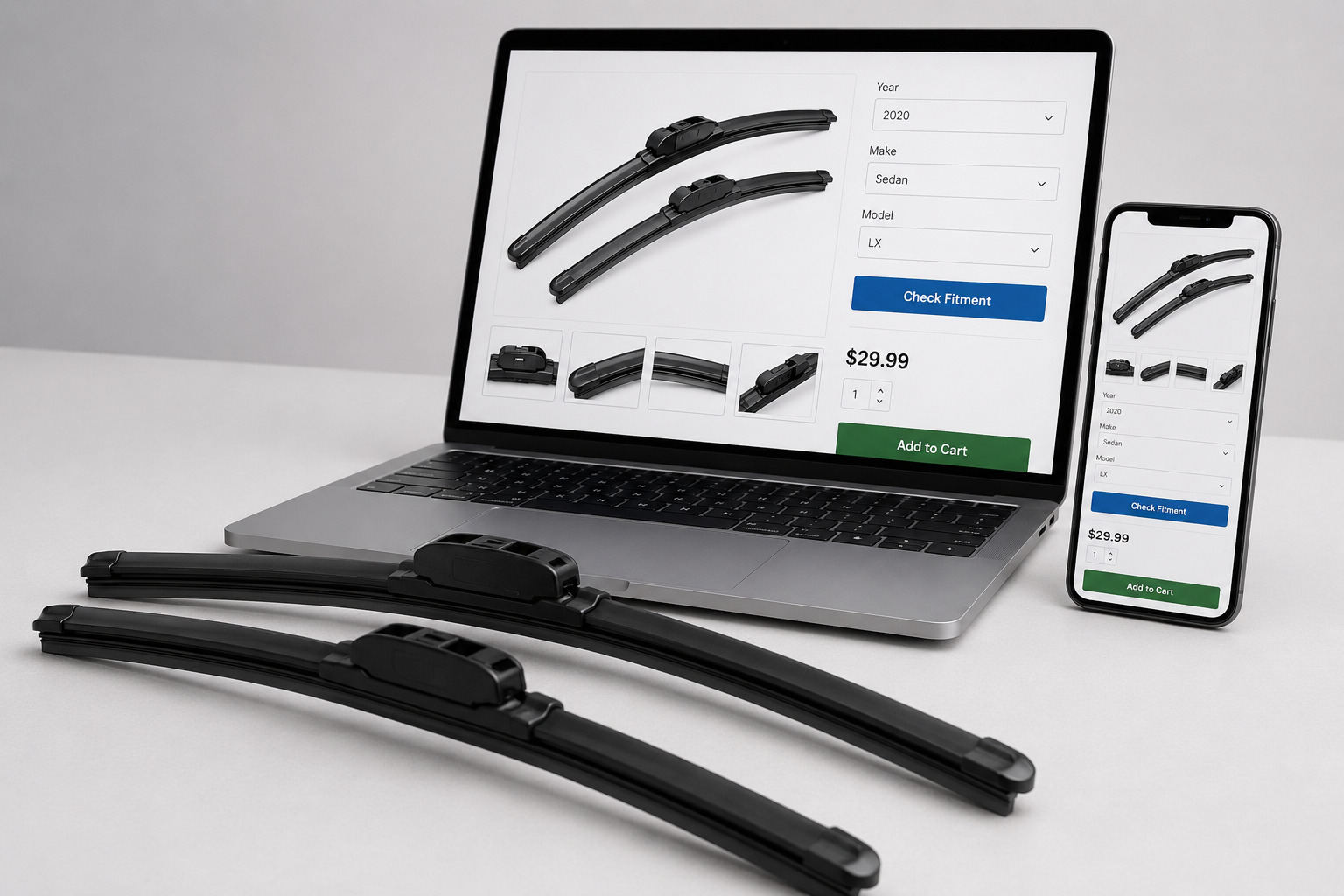
You now see that returns are not inevitable. Let’s examine why wiper blade return rates stay high in e-commerce and retail, the natural advantages of flat blades in lowering performance complaints, the product-page elements that prevent wrong orders, the listing copy and packaging practices that protect conversion, and the practical results sellers achieve when they combine the right product with optimized listings.
Why Wiper Blade Return Rates Stay High in E-commerce and Retail
I review return reports with sellers every month. The same three reasons appear again and again.
Wiper blade return rates stay high because fitment errors, performance expectation gaps, and installation or packaging problems account for the majority of cases. Industry averages of 15–25% quietly erode margin, raise handling cost, and damage seller ratings.
Fitment Errors Dominate
Wrong length or wrong connector type is the single largest driver. Many returns lists show fitment issues accounting for 40–60% of all wiper returns. Customers order by memory or by incomplete vehicle selectors and receive a blade that simply will not attach.
Performance Expectation Gaps
Customers expect quiet, streak-free wiping. When a conventional frame blade lifts at speed, chatters, or leaves streaks on curved glass, the complaint becomes “doesn’t work” or “poor quality,” even if the blade is correctly sized.
Installation Difficulty and Unclear Guidance
Some customers struggle with adapters or miss the locking click. Without clear images or short video guidance they assume the product is defective and start a return.
Packaging Damage in Transit
Blades ship long distances. Weak boxes or insufficient edge protection lead to bent beams, lost adapters, or crushed packaging. “Arrived damaged” claims add another 15–25% to the return total in many accounts.
Vague Listings Amplify Every Problem
Missing year-make-model data, low-resolution photos, and generic titles force customers to guess. Guessing produces wrong orders and post-purchase regret.
| Return Driver | Typical Share of Returns | Direct Cost Impact |
|---|---|---|
| Wrong size / connector | 40–60% | Highest volume |
| Performance complaints | Significant | Rating damage |
| Packaging / transit damage | 15–25% | Extra shipping & scrap |
| Unclear listing / photos | Amplifies all above | Preventable |
This table shows why average return rates of 15–25% are common and why they are not fixed by lowering price. The causes are structural.
My Seller Conversation Pattern
An online seller once showed me a return rate above 20% on his wiper range. After we separated the reasons, more than half were pure fitment mistakes and another large block was “noisy / streaks.” The product itself was not the only problem—the listing and packaging left too many gaps.
Margin Reality
Every returned blade costs outbound shipping, inbound shipping or disposal, restocking labor, and often a negative review. At 15–25% returns the category can become barely profitable even when unit margin looks healthy on paper.
Returns stay high for clear reasons. Flat blades address one major group of those reasons directly.
The Natural Advantages of Flat Blades in Lowering Returns
Not every blade type generates the same volume of performance complaints.
Flat blades lower performance-related returns through even pressure distribution, lower noise, and superior high-speed stability. These characteristics reduce “doesn’t wipe well,” “noisy,” and “lifts at speed” complaints compared with many conventional frame designs.
Even Pressure on Modern Glass
Flat (beam) blades use a continuous spring structure. Pressure stays consistent across curved windshields. Customers experience fewer streaks and missed zones, so fewer “poor wiping” returns appear.
Quiet Operation
Reduced vibration and chatter mean fewer noise complaints. Drivers notice the difference on the first rainy drive and are less likely to open a return for “squeaking” or “chattering.”
High-Speed Stability
Integrated spoilers and low-profile design resist wind lift. At highway speeds the blade stays on the glass instead of skipping or rising. This single trait eliminates a common source of “doesn’t work at speed” feedback.
Better Match to Post-2010 Vehicles
Most vehicles built after 2010 left the factory with beam-style blades. Supplying a flat blade meets the customer’s existing expectation and reduces the chance of disappointment.
Longer Perceived Quality Window
When the blade performs quietly and clears cleanly from day one, customers are more willing to keep it. Early performance satisfaction is one of the strongest protections against returns.
- Even pressure cuts streaking complaints.
- Lower noise reduces “annoying sound” returns.
- Wind-lift resistance protects high-speed satisfaction.
- OE-style appearance matches modern vehicle expectations.
- Consistent first-use performance builds keep rates.
These advantages do not eliminate fitment errors, but they measurably shrink the performance-related slice of the return pie.
Practical Observation
Sellers who shifted their best-selling sizes from basic conventional frames to quality flat blades commonly report a clear drop in “doesn’t wipe well / noisy” returns on those SKUs, even before any listing changes.
Residual Limits
Flat blades still need correct length and connector. Performance advantages only help when the customer receives the right part. That is why listing optimization must work together with the product choice.
Product advantages help. Listing and data close the largest remaining gap.
Product Page Optimization That Prevents Wrong Orders
Most fitment returns are preventable at the moment of selection.
Product pages that include precise year-make-model data, clear connector icons, multi-angle images, size selectors, and installation guidance stop the majority of wrong-size and wrong-connector orders before they are placed.
Accurate Fitment Data
Every listing should carry complete, verified year-make-model coverage. When a vehicle selector is available, it must be kept current. Incomplete or outdated fitment tables are the fastest way to generate returns.
Connector Visibility
Show the adapter or connector type with clear photos and simple icons. Customers who can see the arm style they have are far less likely to order the wrong interface.
Multi-Angle, High-Resolution Images
Include the full blade, close-ups of the connector end, the rubber edge, and any adapter pieces. Customers use these images to confirm they are ordering the correct physical product.
Size Selector and Length Call-Out
Make the exact length prominent in the title and in a clear dropdown or bullet. Many customers still order by remembered size; a visible confirmation step reduces mistakes.
Installation Support
Short video clips or QR-linked guides that show the adapter attachment and the locking click give customers confidence. They also reduce post-purchase “I can’t install it” returns.
- Keep YMM fitment data complete and updated.
- Photograph every connector and adapter clearly.
- State the exact length in title and selector.
- Provide a simple installation visual or video.
- Use multi-fit systems only when adapters are clearly labeled.
These elements turn the product page into a filter that stops wrong orders.
Multi-Fit Specific Note
Multi-fit flat blades can reduce the number of separate listings, but only when the packaging and page clearly show which adapters are included and how they attach. Ambiguous multi-fit claims create new confusion and new returns.
Seller Checklist
Before publishing or updating a listing, verify that a customer who knows only their vehicle year, make, model, and arm type can confirm the correct blade in under one minute. If they cannot, the page still has gaps.
Optimized pages stop wrong orders. Copy, packaging, and logistics protect the remaining conversion and prevent damage claims.
Listing Copy, Packaging & Logistics That Protect Conversion and Reduce Damage Returns
Words and physical packaging complete the defense against returns.
Clear listing copy that highlights frameless design, no lift, and quiet operation sets accurate expectations, while reinforced packaging and complete on-pack information cut transit damage and “not as described” claims.
Listing Copy That Matches Reality
Use precise language: “frameless beam design,” “resists wind lift at highway speeds,” “quiet operation,” “even pressure on curved glass.” Avoid vague superlatives. Accurate claims reduce the gap between expectation and received performance.
Title and Bullet Structure
Lead with size and vehicle coverage. Follow with the key performance traits and the connector or multi-fit note. Customers scanning on mobile should understand the product in the first two lines.
Reinforced Packaging
Double-wall cartons, internal edge protection, and secure adapter retention prevent bent beams and lost pieces. Sellers who upgraded packaging report clear drops in “arrived damaged” returns.
On-Pack Clarity
The physical package should repeat the size, show the connector, and include basic installation steps or a QR code. Customers who open the box and immediately understand what they received are less likely to initiate a return.
Logistics Alignment
Choose packaging that survives the actual shipping method used. Lightweight mailers that crush under stack pressure create avoidable damage claims.
- Write titles and bullets that state size, coverage, and key traits clearly.
- Reinforce boxes and protect the beam and adapters.
- Put size, connector, and basic instructions on the pack itself.
- Match packaging strength to the shipping environment.
- Keep claims consistent between the listing and the physical product.
These practices protect both conversion rate and post-purchase satisfaction.
Damage Return Reality
Packaging-related returns of 15–25% are common when blades ship in thin or poorly supported packs. Moving to retail-ready or double-wall construction with internal supports routinely cuts that slice of returns in half or more.
Expectation Alignment
When the listing shows a quiet, stable flat blade and the customer receives exactly that, the most common performance complaints disappear. Consistency between promise and product is the final return barrier.
Optimization works. The combined results are measurable.
Results & Action Plan: How Sellers Cut Returns 30–50% and Where to Start
Sellers who treat returns as a system problem rather than a product problem achieve large, lasting reductions.
Sellers who switch key sizes to quality flat blades, tighten fitment data and imagery, strengthen packaging, and align listing copy routinely cut overall return rates by 30–50%. Some optimized SKUs move below 5% returns, turning a cost center into a margin and reputation advantage.
Documented Improvement Path
- Audit current return reasons and separate fitment, performance, damage, and other.
- Move the highest-volume sizes to flat blades with proven quiet and high-speed performance.
- Rebuild product pages with complete YMM data, connector photos, size selectors, and installation support.
- Upgrade packaging to protect the beam and retain adapters.
- Rewrite titles and bullets to set accurate expectations.
- Measure return rate and reason codes for 60–90 days and refine.
Realistic Outcome Range
When fitment errors (often 40–60% of returns) and packaging damage (15–25%) are both addressed, and performance complaints fall because of the flat blade characteristics, total returns commonly drop 30–50%. Individual SKUs that receive full optimization frequently land under 5–8%.
Margin and Rating Impact
Lower returns reduce shipping and handling cost, protect seller metrics, and improve review scores. The same SKUs generate more net profit and stronger organic ranking over time.
Starting Sequence
Begin with the top five to ten SKUs by sales volume. These deliver the fastest absolute reduction in return units and the clearest data for further rollout.
- Separate return reasons before changing anything.
- Prioritize high-volume sizes for flat blade conversion.
- Fix fitment data and images first—they stop the largest error group.
- Strengthen packaging in the same cycle.
- Track results by reason code, not only by total return rate.
This sequence produces visible improvement within one to two months on the treated SKUs.
My Observed Seller Results
Online sellers and retail chains that completed the full loop—flat blade performance + precise fitment tools + reinforced packaging—consistently report the same pattern: fewer returns, cleaner reviews, and higher net margin on the optimized range. The category stops being a return problem and becomes a reliable contributor.
For flat blade platforms that support lower return rates through consistent performance and clear multi-fit options, explore the Topex flat wiper blade category. You can also review specific models such as the Topex T-PRO-F one-piece spoiler and the T-PRO-SC custom for constructions that combine aerodynamic stability with practical listing and packaging support.
Conclusion
High return rates on wiper blades are largely preventable. Fitment errors, unclear listings, and packaging damage account for the majority of returns. Flat blades help by delivering more consistent real-world performance—even pressure, quieter operation, and high-speed stability—while accurate fitment data, strong product imagery, installation support, and reinforced packaging close the remaining gaps. Sellers who combine the right product with optimized listings routinely cut returns by 30–50% and improve both margins and customer reviews. Start by auditing your current return reasons, upgrading fitment tools and images, and testing a focused Flat range with clear listing assets.
Frequently Asked Questions About Reducing Wiper Blade Returns
What are the top causes of wiper blade returns in e-commerce?
Fitment errors (wrong size or connector) commonly drive 40–60% of returns. Performance complaints, packaging damage in transit, and unclear product information make up most of the rest. Industry totals often sit between 15% and 25%.
How do Flat blades specifically help reduce performance-related returns?
Flat blades apply more even pressure, run quieter, and resist wind lift at highway speeds. These traits reduce “doesn’t wipe well,” “noisy,” and “lifts at speed” complaints compared with many conventional frame designs.
What fitment information should every product page include?
Complete year-make-model coverage, clear connector or adapter photos and icons, exact length call-out, and a simple size or vehicle selector. Installation visuals or short video further reduce post-purchase confusion.
How important are packaging and images for lowering damage and “not as described” returns?
Both are critical. High-resolution multi-angle images set correct expectations and help customers confirm the connector. Reinforced packaging (double-wall, edge protection) directly cuts transit-damage claims that often represent 15–25% of returns.
Can multi-fit Flat blades reduce fitment returns without increasing customer confusion?
Yes, when adapters are clearly photographed, labeled on the package, and explained on the product page. Ambiguous multi-fit claims create new errors; transparent multi-fit systems reduce the number of separate listings while keeping selection accurate.
What realistic return-rate improvement can sellers expect after optimization?
Sellers who combine quality flat blades, precise fitment data, strong imagery, and reinforced packaging commonly cut overall returns by 30–50%. Fully optimized SKUs frequently move below 5–8% returns.

--- END ---


