
Wiper Blade Refills vs Complete Blades: A Stocking Guide for Distributors
Nov 05, 2026
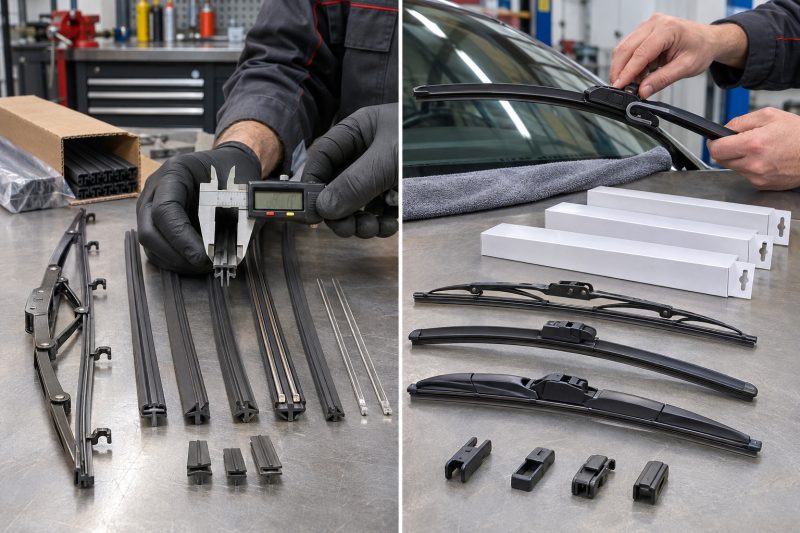
Wiper blade refills and complete blades do not replace the same components. A refill normally renews only the rubber or silicone wiping element, while a complete blade also replaces the supporting structure and connector. This distinction affects fitment, installation time, inventory planning and after-sales costs.
The lower purchasing price of a refill can be attractive, especially for fleets and workshops replacing the same products repeatedly. However, a refill programme becomes difficult when distributors stock too many profiles, customers cannot identify the correct insert or worn blade structures are reused incorrectly.
I am Jacky Huang, CEO of Xiamen TOPEX Auto Parts Co., Ltd. From our experience supplying wiper products to distributors, a profitable range should not force buyers to choose only refills or complete blades. It should use each product where its technical structure, sales channel and service cost make commercial sense.
Why the Cheapest Replacement Option Can Create Higher Service Costs
A refill usually contains less material and has a lower unit price than a complete blade. However, purchasing cost is only one part of the distributor’s actual expense.
Refill supply may also require:
- More detailed profile identification
- Installer training
- Additional fitting time
- Customer guidance
- Cross-section measurements
- Management of rails and end stops
- More compatibility records
- Handling of incorrect-profile returns
- Inspection of the reused blade structure
If the wrong refill is supplied, the workshop may spend time removing it, correcting the installation and eventually purchasing a complete blade. The initial saving can disappear quickly.
A more useful comparison is:
Total service cost = product cost + matching work + installation labour + customer support + return handling + unsold inventory
For a fleet using one refill-compatible blade platform across hundreds of vehicles, profile identification and installation can be standardized. In that situation, the lower material cost may create a genuine commercial advantage.
For a retailer serving many unrelated vehicles and inexperienced customers, a complete blade may produce a lower total service cost even though its purchase price is higher.
| Cost factor | Refill programme | Complete-blade programme |
|---|---|---|
| Initial product cost | Usually lower | Usually higher |
| Identification work | High when profiles vary | Focused on vehicle, length and connector |
| Installation labour | Usually higher | Generally easier to standardize |
| Customer education | More detailed | More straightforward |
| Packaging and freight | Usually lighter and smaller | Larger volume and weight |
| Return risk | Wrong profile, rail or retention method | Wrong connector or vehicle application |
| Old-component risk | Reuses frame, rails and connector | Replaces the complete blade structure |
| SKU complexity | Can become high across many profiles | Can become high across sizes and connectors |
Distributors should be careful with claims that refills always save a fixed percentage. Savings depend on local product prices, labour, customer behaviour, return rates and the number of profiles that must be stocked.
The replacement decision should begin with the condition and design of the existing blade—not with the lowest-priced item in the catalogue.
The Refill Stocking Mistakes That Lead to Fitment Problems and Returns
The most common refill error is treating length as the complete specification. Two inserts can both be described as 24-inch refills while having mechanically incompatible cross-sections.
Purchasing by Length Alone
Refill compatibility may depend on:
- Total length
- Main body width
- Wiping-lip width
- Overall height
- Cross-section shape
- Groove width and depth
- Rail configuration
- End-stop position
- Retention notch
- End-cut style
- Material and coating
A length-only order such as “1,000 pieces of 22-inch rubber” does not provide enough information for reliable production or stocking.
Assuming Profile Names Are Standardized
Manufacturers may use different names for similar profiles, and one supplier’s profile code may not match another supplier’s terminology.
A distributor should use:
- Dimensioned drawings
- End-on cross-section photographs
- Physical approved samples
- Blade-family references
- Rail specifications
- Defined tolerances
Profile names can support identification, but measurements should control the product.
Ignoring the Support Rails
Some refills use separate twin metal rails, while others use a poly backing, integrated structure or another supporting system.
The buyer must confirm whether the ordered product includes:
- Rubber only
- Rubber with separate rails
- Rubber with integrated backing
- A preassembled refill module
- End clips or stops
If rails are supplied, record their width, thickness, curvature and end features. If the original rails will be reused, inspect them for bending, corrosion and loss of shape.
Assuming Every Blade Is Refillable
Some conventional blades are designed for insert replacement. Certain OE and aftermarket beam products may also support dedicated refills.
Other products may use:
- Bonded elements
- Enclosed channels
- Integrated end caps
- Proprietary profiles
- Non-removable retaining structures
- Assemblies not intended for service
Trying to force a generic strip into a non-refillable blade can damage the blade or produce unsafe retention.
Reusing a Damaged Blade Structure
A new refill cannot repair:
- A bent frame
- Corroded joints
- Loose rivets
- Weak pressure distribution
- Damaged spring rails
- Cracked end caps
- A loose connector
- A warped beam structure
The reused blade determines how the wiping edge follows the windshield. If the structure is distorted, the new insert may streak, chatter or wear unevenly.
Stocking Too Many Unproven Profiles
A distributor can easily create dead stock by purchasing every refill profile offered by a supplier. The correct range should reflect the blade platforms already installed in the local market.
High-volume profiles deserve regular inventory. Rare profiles can be supplied by special order or added only after demand is confirmed.
Using Unclear Packaging
A refill package should identify more than length. Depending on the product, useful information may include:
- Profile code
- Cross-section illustration
- Width
- Height
- Rail type
- Compatible blade families
- Included components
- Installation instructions
- Quantity
- Material
- Product barcode
Clear identification reduces counter errors and helps workshops select the correct product.
How to Decide Whether a Refill or Complete Blade Is the Correct Replacement
A refill should be selected only after confirming three conditions:
- The original blade was designed to accept a replaceable insert.
- The blade structure, rails and connector remain serviceable.
- A refill with the correct profile and retention system is available.
If any condition is not satisfied, a complete blade is normally the safer replacement.
Step 1: Identify the Existing Blade
Record the:
- Blade brand and model
- Vehicle application
- Blade position
- Length
- Construction
- Connector
- Refill profile
- Rail arrangement
- End-cap and retention design
A vehicle application may help identify the original product, but the installed blade may already have been replaced with a different aftermarket design. Inspect the actual blade rather than relying only on the vehicle catalogue.
Step 2: Confirm That the Insert Is Replaceable
Look for a serviceable retaining clip, removable end cap or documented refill procedure. Consult the blade manufacturer’s instructions where available.
Do not cut, drill or force an integrated assembly to accept a generic refill.
Step 3: Inspect the Existing Structure
Replace the complete blade if the frame or beam shows:
- Bending or twisting
- Loose joints
- Significant corrosion
- Cracked plastic
- Missing end components
- Weak windshield contact
- A loose adapter
- Repeated tip lift
- Unstable movement
- Incorrect blade angle
A new wiping element should be installed only into a structure capable of supporting it correctly.
Step 4: Measure the Refill Profile
Use a steel ruler for length and a digital caliper for profile measurements. Apply light and consistent pressure because excessive force can compress the rubber.
Record:
- End-to-end length
- Main body width
- Wiping-lip width
- Overall height
- Groove width and depth
- Rail width and thickness
- Number of rails
- End-stop or notch positions
- Straight or angled end cut
- Retention method
Take an end-on photograph of the profile against a plain background with a scale reference in the same plane.
Step 5: Compare Material Requirements
Natural rubber, silicone and coated products can support different positioning, but the material name alone does not prove performance.
Confirm:
- Actual compound or product construction
- Surface treatment
- Wiping-edge finish
- Hardness requirement where relevant
- Temperature expectations
- UV or ozone resistance
- Target service conditions
Do not ask the supplier to reproduce the hardness of a heavily aged refill. A worn sample may no longer represent the original specification.
Step 6: Complete a Wet Test
After installation, test the refill on a clean, wet windshield.
Check for:
- Secure retention
- Full-length contact
- Fine streaks
- Water film
- Missed areas
- Noise
- Judder
- Tip lift
- Smooth direction change
- Correct parked position
If a correctly profiled refill performs poorly, inspect the reused frame, rails, connector and wiper arm before declaring the new rubber defective.
The TOPEX wiper blade refill buying guide provides additional guidance on compatibility, product structure and channel planning.
Refills vs Complete Blades: Comparing Cost, Labor, Coverage and Channel Fit
Neither product is universally better. The right option depends on the installed blade, customer capability and sales channel.
| Comparison item | Wiper blade refills | Complete wiper blades |
|---|---|---|
| Replacement scope | Primarily replaces the rubber or silicone wiping element | Replaces the element, supporting structure and connector |
| Fitment basis | Length, cross-section, width, height, rails and retention | Length, connector, vehicle year, curvature and arm design |
| Requirement for old blade | Frame, rails and connector must remain serviceable | Does not depend on the old blade structure |
| Installation difficulty | Usually requires more identification and handling | Generally easier to standardize |
| Unit purchase cost | Usually lower | Usually higher |
| Hidden costs | Matching, labour, training and returns | Product, freight and packaging expense |
| Inventory management | Multiple profiles can create slow-moving SKUs | Sizes and connectors create coverage complexity |
| Suitable channels | Workshops, fleets and distributor service centres | Retail, e-commerce and automotive chains |
| Main risk | Wrong profile or reuse of damaged hardware | Incorrect connector or vehicle application |
| Environmental benefit | Retains usable hardware and replaces less material | Replaces more components but renews the complete structure |
Workshop and Service-Centre Channels
Refills can work well where trained installers examine the original blade and select the correct profile.
These channels can manage:
- Detailed identification
- Rail transfer
- End-stop positioning
- Blade inspection
- Installation testing
- Repeat customer records
A workshop may also maintain a smaller group of profiles based on the vehicles it services regularly.
Fleet Channels
Fleet applications are suitable when many vehicles use the same blade platform. The fleet can standardize:
- Profile
- Length
- Installation method
- Maintenance interval
- Packaging
- Workshop instructions
Refills become less attractive when the fleet contains many vehicle types or when existing frames are already worn.
Retail Stores
Complete blades are generally easier to explain and install. Customers can search by vehicle, year, position, length and connector rather than measuring an unfamiliar rubber profile.
Retailers should avoid presenting a refill as a universal strip unless its true compatibility and installation requirements are clear.
E-Commerce
Online refill sales require excellent product information. Customers cannot compare the proposed insert physically with the product on a store shelf.
Listings should include:
- Dimensioned cross-section graphics
- Profile photographs
- Compatible blade families
- Included rails and clips
- Installation instructions
- Clear exclusions
- Return guidance
Complete blades are often easier to catalogue because the vehicle-to-SKU relationship can be managed through structured fitment data.
Private-Label Programmes
A two-tier private-label range can create an initial complete-blade sale followed by repeat refill purchases. However, the brand must control both products carefully.
The refill package should link to the compatible complete-blade model. The complete blade should also state whether it is refillable and identify the correct replacement insert.
How to Build a Profitable Two-Tier Wiper Blade Assortment
The most practical strategy for many distributors is to use complete blades as the core range and add selected refills where demand is measurable.
Establish the Complete-Blade Core
Complete blades can provide primary coverage across:
- Conventional applications
- Beam or flat blade applications
- Hybrid products
- Multi-fit connectors
- OE exact-fit vehicles
- Rear wipers
- Commercial vehicles
A broad core range does not mean stocking every available product. It should focus on locally important vehicles, sizes and connectors.
The TOPEX flat wiper blade range can support distributors building a complete-blade programme around mainstream and multi-fit applications.
Add Refills Selectively
A refill SKU should have a documented reason to enter the range.
Useful conditions include:
- A large installed base of compatible blades
- Stable workshop demand
- Repeat fleet consumption
- A profile used across several high-volume products
- Clear installation instructions
- Manageable MOQ
- Acceptable stock turnover
- Reliable supplier replenishment
Do not add a profile only because it appears inexpensive.
Create a Refill Compatibility Matrix
For every refill SKU, record:
| Data field | Purpose |
|---|---|
| Refill SKU | Inventory and ordering control |
| Profile drawing | Confirms physical geometry |
| Width and height | Prevents length-only matching |
| Rail specification | Identifies supplied or reused support |
| End-stop design | Controls retention |
| Compatible blade models | Links the insert to verified structures |
| Available lengths | Supports correct ordering |
| Material and coating | Defines the approved specification |
| Package format | Separates retail and workshop supply |
| Verification status | Distinguishes tested from theoretical compatibility |
The master data should be synchronized across catalogues, websites, packaging and customer-service systems.
Use Different Packaging for Different Channels
Retail packages should emphasize identification and instructions. Workshop or fleet products can use simpler bulk packaging when internal controls are strong.
Possible formats include:
- Individual sleeve
- Pair pack
- Blister card
- Colour box
- Bulk workshop bag
- Multipack
- Continuous-length roll where technically appropriate
Even bulk packaging should include profile, length, quantity, batch and material information.
Measure Profitability Beyond Gross Margin
Track each refill and complete-blade SKU using:
- Unit sales
- Gross margin
- Installation time
- Return rate
- Fitment enquiries
- Inventory age
- Reorder frequency
- Discounting
- Customer-support workload
- Unique coverage contribution
A refill with a high percentage margin may still perform poorly if it sells slowly or generates repeated matching questions. A complete blade with a lower percentage margin may produce more contribution through easier sales and fewer returns.
Begin with a Controlled Test
Launch refills with selected workshops, service centres or fleets before expanding them to every channel.
Collect feedback on:
- Profile identification
- Installation difficulty
- Retention
- Wiping performance
- Packaging clarity
- Repeat demand
- Return reasons
- Staff training needs
Strong profiles can then receive deeper inventory, while weak or confusing products can be corrected or discontinued.
Conclusion
There is no universal winner between wiper blade refills and complete blades. For most retail and e-commerce distributors, complete blades provide a more straightforward product to identify, explain, install and support.
Refills can still be a valuable secondary category when the original blade is designed to accept them, the supporting structure remains in good condition and the correct refill profile is available. Distributors should compare more than unit price: installation labour, fitment complexity, packaging, customer education, return rates and slow-moving inventory all affect profitability.
A practical assortment usually uses complete blades as the core range and adds selected refills for proven vehicle platforms, workshop customers or fleets with repeat demand.
Frequently Asked Questions
What is the difference between a wiper blade refill and a complete blade?
A refill normally replaces only the rubber or silicone wiping element. A complete blade also renews the supporting structure, end components and connector or adapter.
Are wiper blade refills universal if the length is correct?
No. Refills must also match the cross-section, body width, wiping-lip dimensions, overall height, rail arrangement, end stops and retention method.
How can distributors identify the correct wiper refill profile?
Use an unused approved sample or dimensioned drawing. Measure the cross-section with a caliper, photograph it end-on with a scale reference and document rails, grooves and retention features.
When should the complete wiper blade be replaced instead of the refill?
Replace the complete blade if it is not designed for inserts or if its frame, beam, rails, end caps or connector are bent, loose, corroded, cracked or unable to maintain windshield contact.
Should distributors stock both refills and complete wiper blades?
Often yes. Complete blades can form the main retail and e-commerce range, while selected refills serve workshops, service centres and fleets with verified repeat demand.
How can wholesalers reduce fitment errors and returns on wiper refills?
Stock only verified profiles, use detailed cross-section data, link each refill to compatible blade models, provide clear packaging and instructions, train staff and track returns by root cause.

--- END ---


