
Building Long-Term Supplier Relationships for Stable Wiper Supply (2026 Update)
May 22, 2026
The Growing Challenges in Wiper Blade Supply Chains and Why Long-Term Supplier Relationships Matter in 2026
The global wiper blade supply chain in 2026 faces more uncertainty than ever before. Raw material price fluctuations, shipping disruptions, stricter environmental regulations, and sudden demand spikes caused by extreme weather events have made short-term, transactional sourcing increasingly risky and expensive.
Distributors and wholesalers who continue to shop around for the lowest price every quarter often experience inconsistent quality, delayed shipments, sudden MOQ changes, and unexpected cost increases. During peak rain seasons or after major storms, these problems become critical — leading to stockouts, lost sales, and damaged relationships with repair shops and retailers.
Long-term supplier relationships address these challenges directly. When you build strategic partnerships with reliable manufacturers, you gain priority production slots during shortages, more stable pricing, better quality consistency, and collaborative problem-solving. Suppliers who view you as a long-term partner are more willing to invest in custom solutions, share forecast data, and work together on innovation such as improved multi-fit adapters or sustainable packaging.
In today’s volatile market, strong supplier relationships have become a true competitive advantage. They reduce risk, lower total cost of ownership, and create stability that transactional buying simply cannot deliver. For wiper blade wholesalers aiming for sustainable growth in 2026 and beyond, moving from price-focused transactions to strategic partnerships is no longer optional — it is essential.
Key Benefits of Strategic Supplier Partnerships for Wiper Wholesalers and Distributors
Strategic supplier partnerships deliver measurable advantages that go far beyond simple cost savings.
First, you achieve greater supply stability. Trusted partners prioritize your orders during tight supply periods and provide earlier warnings about potential disruptions. This reliability helps you maintain service levels to your customers even when the broader market struggles.
Second, consistent quality becomes the norm rather than the exception. Long-term partners understand your exact specifications and standards. They implement joint quality control processes and continuous improvement programs that reduce defects and returns over time.
Third, you gain better pricing and cost predictability. While short-term buyers chase the lowest spot price, strategic partners offer volume-based pricing, shared efficiency gains, and protection against raw material volatility through long-term agreements.
Fourth, innovation and customization become accessible. Reliable suppliers are more willing to co-develop new products — such as enhanced multi-fit adapters, silicone-coated blades for specific climates, or retail-ready sustainable packaging — because they see you as a growth partner rather than a one-time customer.
Fifth, risk is shared more effectively. Strong relationships include joint contingency planning, flexible payment terms during difficult periods, and mutual support that helps both sides weather market challenges.
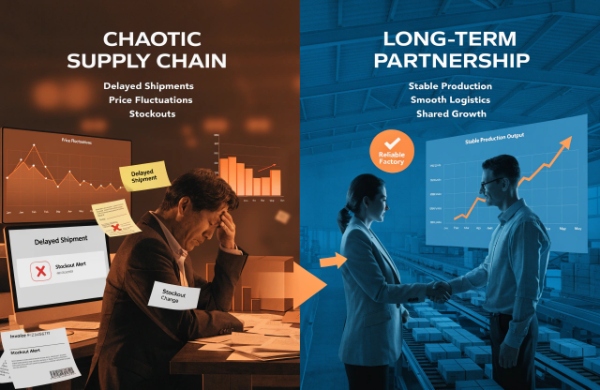
These benefits combine to create a more resilient, profitable, and competitive business. Distributors who invest in long-term supplier relationships consistently report lower return rates, higher customer satisfaction, and stronger margins compared to those who treat suppliers as interchangeable vendors.
Here’s a summary of the key benefits:
| Benefit | Short-Term Transactional Sourcing | Long-Term Strategic Partnership | Business Impact |
|---|---|---|---|
| Supply Stability | Low | High | Fewer stockouts and lost sales |
| Quality Consistency | Variable | High | Lower returns and complaints |
| Cost Predictability | Poor | Strong | Better margin planning |
| Innovation Access | Limited | High | New products and competitive edge |
| Risk Management | High risk | Shared risk | Greater resilience |
Proven Strategies to Build and Strengthen Long-Term Supplier Relationships
Building strong supplier relationships requires deliberate effort and consistent execution. The most successful wholesalers use these proven strategies:
- Start with Clear Communication — Establish regular meetings, share your business forecasts honestly, and set mutual expectations from the beginning.
- Focus on Trust-Building Actions — Pay on time, honor commitments, and be transparent about both successes and challenges.
- Create Win-Win Agreements — Design contracts that reward performance, volume growth, and quality improvements for both sides.
- Invest in Joint Planning — Collaborate on demand forecasting, new product development, and contingency planning for potential disruptions.
- Provide Feedback and Recognition — Regularly review performance together and celebrate successes to strengthen the relationship.
Successful distributors also segment their suppliers strategically. They identify a core group of 3–5 key wiper blade suppliers and invest the most time and resources in building deep partnerships with them, while maintaining good but less intensive relationships with secondary suppliers for risk diversification.
By treating top suppliers as strategic extensions of your own business, you create loyalty that translates into better pricing, priority support, and collaborative innovation.
Implementation Best Practices: Supplier Segmentation, Technology, and Performance Management
Turning good intentions into lasting partnerships requires structured implementation.
Start with supplier segmentation. Categorize your wiper blade suppliers into strategic, important, and transactional groups based on their impact on your business. Dedicate the most resources to strategic partners.
Implement robust performance management systems. Set clear KPIs such as on-time delivery rate, quality consistency, lead time reliability, and responsiveness. Conduct quarterly business reviews to discuss results and improvement plans openly.
Leverage technology to strengthen relationships. Use shared portals for real-time order tracking, inventory visibility, and forecast sharing. Modern ERP integration and AI-powered analytics help both sides make better decisions and anticipate problems before they occur.
Establish joint improvement programs. Work together on quality enhancement, cost reduction initiatives, and new product development. When suppliers see you investing in mutual success, they become more committed to your long-term growth.
Finally, develop clear escalation and conflict resolution processes. Address issues promptly and professionally, focusing on solutions rather than blame. This builds deeper trust over time.
Here’s a practical implementation checklist:
- Segment suppliers by strategic importance
- Define clear KPIs and review cadence
- Implement shared digital tools for visibility
- Schedule regular business reviews
- Create joint improvement and innovation plans
- Document and celebrate mutual successes
Measuring Success and Ensuring Resilient Wiper Supply for the Long Term
To ensure your supplier relationships deliver real results, track these key performance indicators:
- On-time delivery rate (target >98%)
- Quality defect rate and return rate trends
- Total cost of ownership reduction over time
- New product development cycle time
- Supplier responsiveness during disruptions

Regularly review these metrics with your strategic partners and adjust strategies as needed. The most successful wholesalers treat supplier relationship management as a continuous improvement process rather than a one-time project.
In 2026 and beyond, companies with strong supplier partnerships enjoy more stable supply, better pricing, faster innovation, and greater resilience against market volatility. They turn potential supply chain vulnerabilities into competitive advantages.
By investing time and resources in building long-term relationships today, you create a foundation for sustainable growth, higher profitability, and stronger market position tomorrow.
Conclusion
In the volatile 2026 automotive aftermarket, building long-term supplier relationships is no longer optional — it’s the foundation for stable wiper blade supply, consistent quality, and competitive margins. By shifting from transactional buying to true strategic partnerships — grounded in trust, open communication, shared data, and mutual growth — wholesalers can secure priority allocation during shortages, achieve better pricing, and co-develop innovative multi-fit solutions. The most successful distributors today treat top suppliers as extensions of their own business, investing in joint planning and technology for shared success. Start evaluating and segmenting your suppliers this quarter, implement structured SRM practices, and watch your supply chain transform from a vulnerability into a powerful competitive advantage. Reliable wiper supply tomorrow starts with stronger relationships today.
Chat with our partnership specialist on WhatsApp. Stable supply • Competitive pricing • Collaborative innovation.
FAQ
Why are long-term supplier relationships more important than short-term price negotiations for wiper blade wholesalers in 2026?
They provide supply stability, quality consistency, priority during shortages, and collaborative innovation that short-term buying cannot deliver.
What are the main benefits of strategic supplier partnerships in the wiper blade supply chain?
Greater reliability, better pricing predictability, lower total costs, faster innovation, and shared risk management.
How can I effectively segment suppliers and prioritize long-term relationships?
Categorize by strategic importance, volume impact, and quality reliability, then invest most resources in your top-tier partners.
What role does technology and data play in managing supplier relationships for stable supply?
Shared portals, ERP integration, and real-time analytics improve visibility, forecasting accuracy, and proactive problem-solving.
How do I build trust and resolve conflicts with wiper blade suppliers for lasting partnerships?
Maintain open communication, honor commitments, address issues promptly and professionally, and focus on mutual solutions.
What KPIs should I track to measure the success of my supplier relationship management efforts?
On-time delivery, quality consistency, total cost reduction, innovation contribution, and responsiveness during disruptions.
More resources: Wiper Blade Category | Flat Wiper Blades | How to Choose the Right Wiper Blade Type | Applicable Models PDF

--- END ---


