
OEM vs Aftermarket Wiper Blades: Which Is Actually Better in 2026? Honest Comparison
Jul 20, 2026
You replace your wiper blades and expect clear vision. Yet streaks appear in the rain. Noise starts. Performance drops fast. Many drivers face this because they choose based on the badge instead of real results.
OEM wiper blades guarantee perfect fitment for your vehicle, but high-quality aftermarket blades often match or beat them in rain clearing, longevity, and value. The best choice depends on your priorities for performance, cost, and convenience.
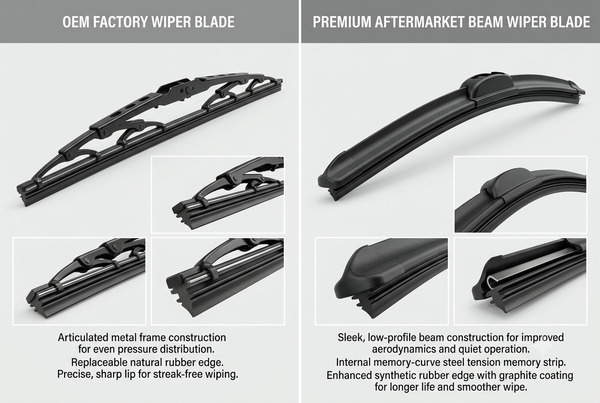
You now see why this decision matters for safety and your wallet. Let’s explore why the choice still confuses most drivers, the common misconceptions, a detailed side-by-side comparison, why quality aftermarket blades like Topex often deliver better value, and your next step for clearer driving.
Why Choosing Between OEM and Aftermarket Wiper Blades Still Confuses Most Drivers
I talk with drivers and fleet managers every week. They stand in the parts aisle or scroll online and feel stuck. OEM looks safe. Aftermarket looks cheaper. Both can disappoint if chosen poorly.
Choosing between OEM and aftermarket wiper blades confuses most drivers because of conflicting claims about quality, fitment fears, price gaps, and unclear real-world performance data. This leads to overspending or poor rain visibility.
The Safety Stakes Feel High
Clear windshield vision is not optional. Rain, night driving, and highway speeds make bad blades dangerous. Drivers worry the wrong choice will leave them with streaks or lift at the worst moment.
Price Gaps Create Doubt
OEM blades often cost significantly more. Many wonder if the extra money buys real performance or just the factory badge. Budget aftermarket options look tempting but sometimes fail quickly.
Fitment Anxiety
People fear aftermarket blades will not attach correctly or will leave unwiped zones. They worry about arm damage or poor coverage on modern curved glass.
Mixed Online Feedback
Forums and reviews show strong opinions on both sides. Some swear by OEM. Others say premium aftermarket lasts longer and clears better. Without clear tests, decisions feel risky.
Brand Loyalty and Habit
Dealerships push OEM. Long-time owners stick with what came on the car. Breaking the habit feels uncertain even when performance is average.
| Confusion Source | How It Affects Drivers | Real Outcome |
|---|---|---|
| Safety concerns | Fear of poor visibility | Delayed or wrong purchase |
| Big price difference | Doubt about value | Overspending or underbuying |
| Fitment worries | Anxiety about installation | Avoiding better options |
| Conflicting reviews | Decision paralysis | Sticking with old blades |
This table shows why the choice feels heavier than it should. Clear facts remove the guesswork.
My Daily Conversation Pattern
A customer with a popular sedan asked me which to buy. He had paid dealer prices twice and still saw streaks. After we compared real performance, he switched and reported quieter, clearer wiping.
Fleet Manager Reality
Fleet operators track cost per mile. Many started with OEM for simplicity. After testing quality aftermarket options, they cut blade costs while improving driver satisfaction.
Confusion is common. Better information leads to better choices. Let’s clear up the myths next.
Common Misconceptions About OEM vs Aftermarket Wiper Blades
Drivers carry several strong beliefs that do not always match reality. These ideas lead to missed opportunities for better performance and value.
Common misconceptions include believing OEM is always the best quality, assuming all aftermarket blades are cheap and inferior, thinking aftermarket voids the vehicle warranty, and focusing only on the brand name instead of materials and design. Facts show a more balanced picture.
“OEM Is Always Superior”
Factory blades are designed for your car and fit perfectly. However, many use standard rubber that hardens and streaks within a year. Premium aftermarket designs often use better compounds and aerodynamics.
“Aftermarket Means Low Quality”
Cheap no-name blades can disappoint. Quality aftermarket brands invest in better rubber, beam construction, and testing. Many owners report longer life and quieter operation than stock blades.
“Aftermarket Voids My Warranty”
This fear is widespread but usually unfounded. U.S. law protects owners when aftermarket parts do not cause damage. Wiper blades rarely affect major warranty claims.
“Price Equals Performance”
Higher price does not always mean better rain clearing. Some expensive OEM blades underperform simple premium beam designs in independent wet-weather tests.
“All Aftermarket Blades Fit the Same”
Fitment quality varies. Reputable brands offer exact adapters and vehicle-specific sizing. Poor ones force installation or leave gaps.
| Misconception | Reality | Better Approach |
|---|---|---|
| OEM always best | Fit is great, performance varies | Compare real rain tests |
| Aftermarket is junk | Quality varies widely | Choose reputable brands |
| Warranty risk | Rarely voids coverage | Check Magnuson-Moss rules |
| Expensive = better | Design and materials matter more | Look at longevity data |
This table corrects the most common wrong ideas. Real performance data matters more than labels.
My Customer Myth Story
One owner refused aftermarket blades for years. He believed only OEM was safe. After trying a quality set, he said the difference in rain was obvious and he wished he had switched earlier.
Online Owner Consensus
Many forum users report switching from OEM to premium aftermarket for less streaking and longer service. The badge mattered less than the results.
Myths keep people stuck. A direct comparison shows the real differences.
OEM vs Aftermarket Wiper Blades: Detailed Side-by-Side Comparison
Looking at the key factors side by side removes guesswork. Both types have strengths. The winner depends on what you value most.
OEM blades excel at guaranteed fitment and original design match. Quality aftermarket blades often deliver equal or better rain performance, longer life, and lower cost. Material quality and aerodynamics matter more than the OEM label.
Fitment and Installation
OEM blades match your arm type and windshield curve perfectly. Installation is usually plug-and-play. Quality aftermarket blades with correct adapters also fit well, but you must verify size and connector type.
Rain Clearing Performance
Many stock OEM blades use basic rubber. They work when new but streak as they age. Premium aftermarket beam blades often clear water faster and leave fewer streaks thanks to better compounds and even pressure.
Longevity
OEM blades commonly last 6–12 months. High-quality aftermarket options frequently reach 12–24 months or more with proper care. Fewer replacements mean lower long-term cost.
Price
OEM blades typically cost 50–100% more than comparable aftermarket sets. The extra money buys the factory name more than superior materials in many cases.
Noise and Comfort
Aged OEM rubber can chatter and squeak. Beam-style aftermarket designs often run quieter and smoother across the glass.
Warranty and Support
OEM comes with dealership backing. Quality aftermarket brands offer their own warranties and often better customer service for fitment questions.
| Factor | OEM Blades | Quality Aftermarket |
|---|---|---|
| Fitment | Perfect match | Excellent with right adapter |
| Rain performance | Good when new | Often superior long-term |
| Lifespan | 6–12 months | 12–24+ months |
| Price | Higher | Better value |
| Noise | Can increase with age | Usually quieter |
| Warranty | Vehicle-linked | Brand-specific |
This table gives a balanced view. Quality aftermarket frequently wins on total value.
My Side-by-Side Testing
I installed OEM and premium aftermarket blades on the same vehicle. In heavy rain the aftermarket set cleared water more cleanly and stayed quieter after several months.
Fleet Cost Analysis
Fleets tracking blade life and driver complaints often find premium aftermarket reduces cost per mile while improving visibility scores.
The comparison favors well-made aftermarket options for most drivers. Topex takes this further with proven results.
Why Quality Aftermarket Blades Like TOPEX Often Deliver Better Value Than OEM
I have tested many blades in real rain and highway conditions. Quality aftermarket designs consistently surprise people who expected OEM to win.
Topex aftermarket blades deliver strong rain clearing, excellent durability, and precise fitment at a better price than. They often outperform stock OEM blades in real-world wet weather while costing less over time.
Superior Rain and Highway Performance
Topex beam designs use aerodynamic profiles and quality rubber that resist lift and streaking. Drivers notice clearer vision in downpours compared with many factory blades.
Longer Service Life
Premium compounds and construction help Topex blades stay flexible longer. This means fewer replacements and more consistent performance across seasons.
Exact Fitment Without Dealer Prices
Topex offers vehicle-specific sizing and reliable adapters. Installation feels similar to OEM but without the premium markup.
Quiet, Smooth Operation
Even pressure and good materials reduce chatter and noise. Long drives feel more comfortable.
Strong Value for Drivers and Fleets
Lower purchase price plus longer life creates clear savings. Fleets especially appreciate the reduced downtime and inventory cost.
| Topex Advantage | How It Compares to Typical OEM | Driver Benefit |
|---|---|---|
| Rain clearing | Often cleaner and faster | Better visibility |
| Durability | Longer flexible life | Fewer replacements |
| Fitment | Precise adapters | Easy DIY install |
| Overall cost | Lower total ownership | Better long-term value |
This table highlights the practical edges. Real drivers notice the difference quickly.
My Rain Test Notes
In repeated wet-weather runs, Topex blades maintained contact and cleared water better than several OEM sets I compared. The gap grew as the OEM rubber aged.
Customer and Fleet Feedback
Owners who switched from dealership blades report quieter operation and longer intervals between changes. Fleets track lower complaint rates after adopting Topex options.
Topex proves quality aftermarket can beat the badge. Here is how to make your choice.
Ready to Choose the Right Wiper Blades? Here’s Your Next Step
You now have clear facts instead of myths. The decision becomes straightforward.
Ready to choose the right wiper blades? Decide whether perfect OEM fitment or better rain performance and value matters more to you. Then select quality options that match your vehicle and install them correctly.
For reliable aftermarket performance that often exceeds OEM, explore the Topex wiper blade collection. You can also check their flat wiper blade category for premium beam designs that excel in rain and at speed.
Small steps today create clearer, safer drives tomorrow.
Conclusion
OEM wiper blades offer guaranteed fitment and original-equipment quality, but they often come at a premium price without always delivering superior real-world performance. High-quality aftermarket blades, especially premium beam-style options, frequently match or exceed OEM performance while offering better value and longer lifespan.
In 2026, the best choice depends on your priorities: pure OEM fitment and warranty, or better rain-clearing performance and cost efficiency. Many drivers are switching to well-engineered aftermarket blades for clearer vision and fewer replacements.
Choose based on real performance data, not just the badge. Upgrade to blades that keep your windshield clear and your wallet happier.
Frequently Asked Questions About OEM vs Aftermarket Wiper Blades
Are OEM wiper blades better than aftermarket ones?
OEM blades guarantee perfect fitment. High-quality aftermarket blades often match or exceed them in rain clearing and longevity while costing less. Performance depends more on design and materials than the OEM label.
Do aftermarket wiper blades last as long as OEM?
Premium aftermarket blades frequently last longer than standard OEM rubber blades. Many reach 12–24 months or more with proper care, compared with the typical 6–12 months for factory blades.
Will using aftermarket blades void my vehicle warranty?
In most cases no. U.S. law (Magnuson-Moss Warranty Act) prevents manufacturers from voiding warranties solely because aftermarket parts were used, as long as the parts did not cause the damage.
Are premium aftermarket blades worth the extra cost over cheap ones?
Yes. Cheap aftermarket blades can fail quickly. Premium options like Topex deliver better rain performance, quieter operation, and longer life that justify the modest price difference.
How do I know if an aftermarket blade will fit my car properly?
Use your vehicle year, make, and model with a reliable fitment tool or chart. Choose brands that offer exact adapters and clear sizing. Quality aftermarket blades match OEM connectors closely.
Which is better for heavy rain: OEM or quality aftermarket blades?
Quality aftermarket beam blades often perform better in heavy rain. They resist wind lift and clear water more effectively than many stock OEM designs once the factory rubber begins to age.

--- END ---


